Poor Range Conditions Continue

As I began to write this blog, I thought, well, not much going on for the week of May 20 and 27th, 1921. But then a story of the sad shape of the industry emerged.  

Range conditions were still poor as the drought had not broken across the state.  A snowstorm the middle of the month, the Coconino Sun, Flagstaff, reported it to be “worth millions to the stockmen and ranchers of this section of the country and will do much toward relieving city water conditions. (This would be referring to Flagstaff). There was about a foot of it, all wet and juicy as any melon ever cut by the stockmen.”  A week later another soaking rain was reported.

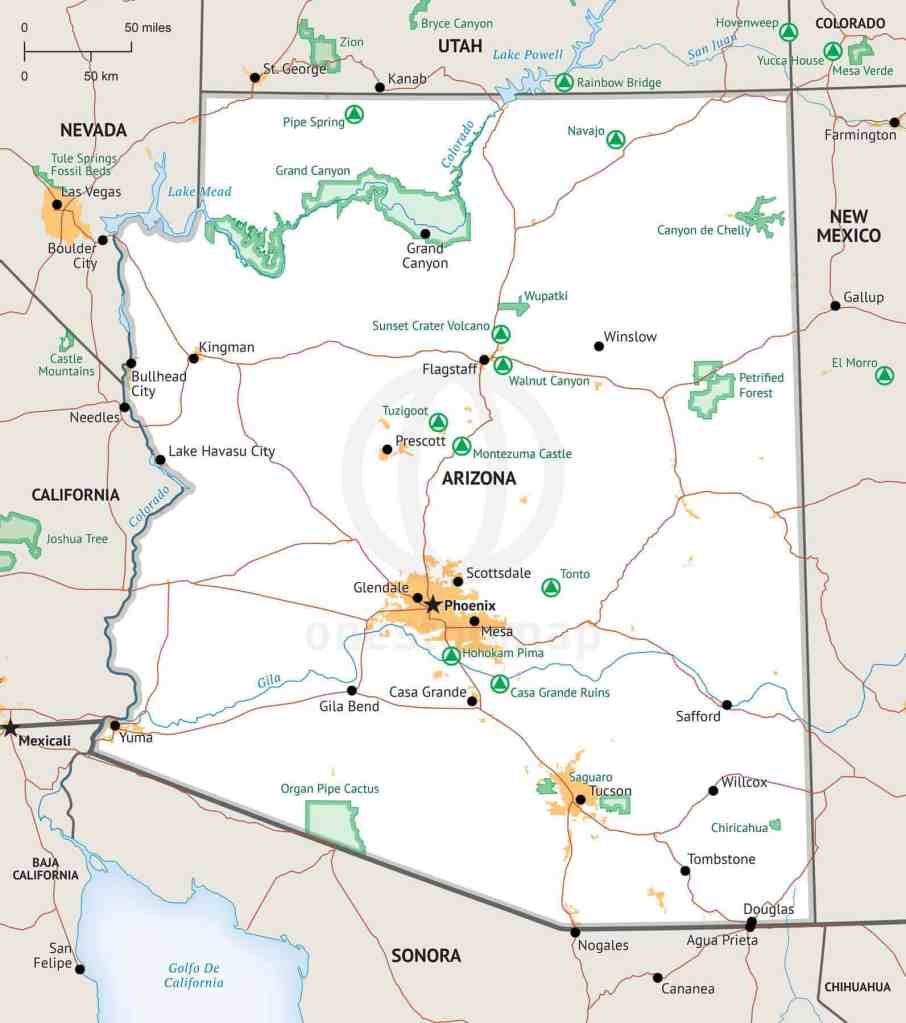
But range conditions varied across the state. While one article mentioned that cattle were starving north of the Grand Canyon, that statement would hold true for any sheep on the ranges here. In my previous blog, you may have seen, I talked about the “illegal” stockmen from Utah who were using the range to the detriment of the Arizonans.  The Arizona stockmen had reported the range in “deplorable condition, having been stripped bare by the trespassers from Utah.”  The newspaper reported that “two years ago, this range had plenty of feed, but once the stockmen from Utah found it, it had been rapidly turning to sand and dried sage brush.”

In consequence of the poor condition of range pastures during the latter part of 1920 and the first five months of 1921 in Arizona, cattle and sheep came through the winter with greater losses and in poorer condition than usual. The mortality of cattle was reported at 100 per thousand, compared with 25 per thousand last year and 61 per thousand, the ten-year average. The loss of sheep was reported at 115 per thousand, compared with 53 per thousand last year and 43 per thousand, the ten-year average. The mortality of lambs were particularly heavy, estimated at 100 per thousand. This compared with a loss of 50 per thousand during 1920 and 81 per thousand, the ten-year average.

The last week of May saw little improvement in ranges as the rainfall was only light to moderate with no appreciable amounts added to the rain gauge. The southern portion of Arizona was suffering the worst as the area had received no appreciable amount since the week of April 6th, almost two months ago. Stock water was low due to no run-off from the storms. Livestock had been dying because of lack of water and poor range feed. Only two areas within the state were said to be good: Near Flagstaff and Pinedale.  Sheep were improving now that they had arrived on the summer ranges. Shearing that had taken place in the north showed that fleeces were not up to standard in quality or weight.

The Coconino Sun, Flagstaff reported little improvements in sales of wool. Freight rates from Phoenix to Boston were still exorbitant amounting to ten per cent of the present market value of the wool. Wool from San Francisco was half that cost to Boston. C. J. Babbitt said that it was unfair especially since wool is not a perishable commodity and needed no special care from the transportation companies. He cited the fact that cotton from Phoenix paid less than wool and believes that Arizona needed to fight the high transportation costs for wool.

A few sheep owners were mentioned: R. Tom Brown, E. H. Duffield, Harry Henderson and George F. Campbell.  Brown had brought his bands from their southern winter grazing area to an area near Mormon Lake. Duffield, previously a trainmaster, from William, was visiting old friends in Flagstaff for part of the last week in May. Mr. Henderson, previous sheriff of Coconino County, had arrived from Wickenburg where he had wintered his sheep. His sheep would arrive soon and he had grazing for them near Bellemont and Grand Canyon. Harry, told the Coconino Sun, “the hills down near Wickenburg have commenced to hair out with grass in good shape but the desert country is still bare.”  George F. Campbell had arrived the first part of the last week in May from his sheep ranches in the south. His sheep are on the road to their summer range east of Flagstaff. Harry Henderson has not been found in the newspapers before, but D. W. Henderson was listed as attending the Wool Growers’ Association annual meeting in July 1920. Are they the same person?  R. Tom Brown and George F. Campbell were both attendees of the mentioned conference as both served on the Advisory board of the Coconino National Forest for the Wool Growers’ Association. Duffield was not listed as attending the meeting so it may give a starting date for his beginnings in raising woolies.    
Arizona Supreme Court – Illegal grazing fees charged on Utah livestock owners -May 1921

Some weeks there is lots of news about the sheep industry-the men moving their sheep or shipments of lambs and wool, how many are being shipped and the amount of wool by different wool growers and then other weeks there is absolutely nothing or maybe just one story. The biggest story and the only story this week one hundred years ago was the rendering of a verdict by the Arizona Supreme Court declaring that it was illegal to tax sheep, goats, herds of cattle and horses from another state grazing on land in Arizona. Now that was a big concern to livestock raisers in Arizona who already were having hard times with the drought, low prices for their animal products – meat, wool, pelts, high supply costs, high freight costs and higher taxation.  These were the concerns for both the sheep men and cattle men in Arizona and would result in a joint annual meeting which took in July, but more on that meeting later. First let’s look at what brought about this decision of the Supreme Court of Arizona.

A resident of Utah, James Smith, had taken his case to the Arizona Supreme Court when he was charged in Mohave County by W. P. Mahoney, sheriff for illegal transporting sheep and grazing them on land in Arizona without paying grazing fees. Mohave County attorney and the chairman of the board of supervisors had gone to Phoenix in March to present to the Supreme Court of Arizona the county’s issue with Utah residents, like Smith, from grazing on land that they felt should only be used by livestock owners who are residents of their county or of the state. The local county court found Smith guilty and he was ordered to pay an undisclosed fee. So far this year, Mohave County had collected $15,000 from Utah sheep men. In question also were the grazing fees collected last year, in the amount of $20,000.  

The newspaper reported, “The decision of the state supreme court is a great disappointment to this county. Every year many thousands of sheep and cattle are driven across the line from Utah and graze in this county, crowding the stockowners who live here.”  Assistant County Attorney for Mohave County, George W. Harben believes that unless relief from the encroachment of Utah stock growers is afforded to Arizonan’s own residents north of the canyon, there is likely to be blood shed there, as a lot of bad feeling have naturally been engendered. “An attempt will be made,” Mr. Harben said, “to have the governor make for a special session of the state legislature to request for the enactment of a new law covering this matter.”  The newspaper speculated that a new law would be in the form of an assessment against the invaders for the expense of policing the border.  

Fourteen other Utah sheep owners had been charged and were scheduled for trial in Fredonia. It was unclear whether these trials would be held at the time of the writing of the article.  

This encroachment by Utah sheep and cattle men was taken up in the joint meeting of the Arizona Wool Growers’ Association and Arizona Cattle Growers’ Association in July.  It was put forth as a resolution to get the state legislation to act to prohibit or restrict access to the area north of the Grand Canyon.  So, obviously the governor never called for a special session of the state legislature or the legislators were in no hurry to help provide relieve to an important industry within Arizona. It will be a topic to watch for in future newspapers.


A Few Tidbits of Sheep History – Week of May 6th, 1921

There was not a great deal of news for the sheep industry for this past week one hundred years ago if only one newspaper is cited. So, using three different newspapers of northern Arizona and some news from the week before from each of these – The Coconino Sun, Holbrook Tribune and Kingman Miner, the following tidbits were found.

The Coconino Sun reported for the week of May 6th that the sheepmen were doing well in Navajo County. The newspaper had been told by local sheepmen that the conditions of the range and the sheep were excellent.  The sheepmen had reported very few loses in comparison to other areas of the state. The Candelaria’s had boasted that this had been the best season for them. A little later in the Coconino Sun, the newspaper picked up a story that was first reported in the Holbrook Tribune. From earlier reports the range was in fair condition over in Navajo County and two tidbits in the paper confirmed that the sheepmen were hopeful that conditions would remain throughout the summer.  The first report concerned Fred Purcell who had unloaded about 4,000 sheep in Holbrook that he had on the southern range in the Salt River Valley. Due to weather conditions, these sheep would have normally been trailed in 1921 and not put on railroad cars. Purcell had a summer range near Heber. From the Concho area in the county, Juan Candelaria and Sons had shipped wool from the Holbrook station back east. The numbers for his shipment, however, had to be in error as the newspaper stated that Candelaria had shipped 450 sacks of wool, amounting to 11,000 pounds. One sack of wool would have only been 24 pounds and most wool sacks were a minimum of 400 pounds.  This was not reported in any other newspaper and I have not found the Holbrook Tribune to verify the story.  So, a correction will be made if I do find that there is an error.

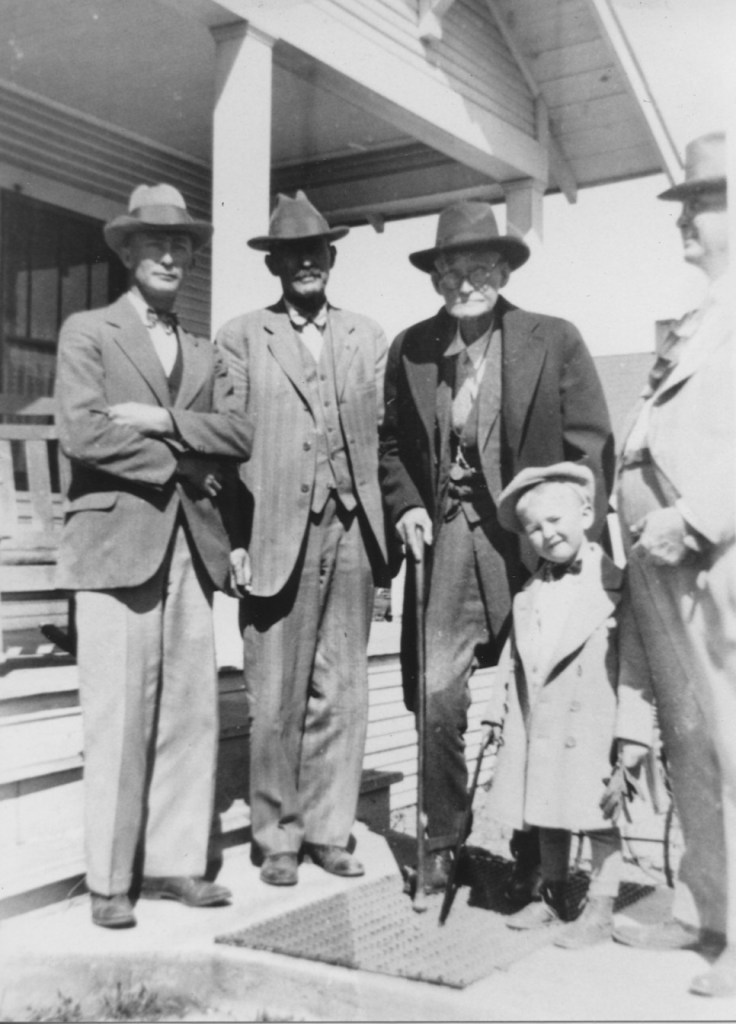
Continuing with other tidbits of sheep business happenings, there was sad news. In the May 6th edition of the Coconino Sun, the death of Harvey Hudspeth, a well-known sheepman in the Williams area was reported. In an earlier article in the Holbrook News, April 15, a reprint of an article from the Kingman Miner, it reported that Hudspeth was in the process of shearing 15,000 sheep along with The Grand Canyon Sheep Company (20,000 sheep), Cole Campbell (18,000), and the Aubrey Investment Company, (6,000). Mr. Hudspeth had been in Nelson to ship his wool to eastern markets. His death occurred when as he was crossing the tracks, his automobile was struck by the No. 9 train at Nelson.  It can only be surmised that Mr. Hudspeth had not seen the train as he had lost the sight of one of his eyes a few years ago and most likely, he just never saw the train coming.

Mr. Hudspeth, second man from the left. Photograph courtesy of the Williams Historic Photo Project.

Many of the wool raisers were shearing in the northern portion of Arizona where the winter had been mild. Feed was not in abundance on the normal winter grazing areas and the sheep men were looking for greener pastures for their flocks. Recent rains in April held promise that the grasses would be good for the flocks the summer of 1921.

Another sheep man also passed during the spring of 1921 – H. H. Scorse, age 71. He died from injuries he sustained in a hotel fire at Mesa. Mr. Scorse was originally from Chedder, England and came to the United States at an early age. He was well-known in the Holbrook area having a mercantile store and his ranch was south of town. He raised a family here. He was known for many things but one that stood out was his contribution to the Smithsonian Institute of Native American pottery. And the last tidbit of sheep happenings was not Arizonan news, but it does say something about the industry.  It had been reported by the “United States public health service has just bought 2,500 sheepskin coats for the tuberculous patients in its hospitals, so that they may be able to sit out in the air and the sun this winter. It’s the fresh air that counts”.  Just goes to show, how sheep had an impact in our country.