Depends on the Dogs

This story is about sheep and sheep dogs but nothing to do with Arizona but I suppose it could have occurred here.

One summer morning a man driving a car came upon a great flock of sheep coming towards him. The driver being courteous pulled over to allow the sheep to easily pass. Watching with interest, the shepherd, his dogs and sheep just kept coming toward him. As the flock passed him while he was sitting in his car, he became courteous about the sheep.

Stopping the herder as he went by his car, he asked the shepherd what would happen if he met a flock of sheep coming in the opposite direction? The man replied that both herders keep driving the sheep in the direction you want them to go and the one that has the best dogs gets the most sheep!

This is just one of many stories found when researching sheep industry that is just too comical not to share!

Hope you enjoy!

Sheep crossings

Found this on the front cover of Stockman magazine. There are some problems with their description.

“For many years the sheep and wool industry has played an important part in the economy of Arizona and the southwest.

“From the irrigated pasture lands of the Salt River Valley to the natural grazing range land near Springerville in the White Mountains some 200 miles to the north, each year sheep by the hundreds make their way across the rugged desert and mountain land along the Heber-Reno Stock Trail, cross rivers and streams to reach this summer grazing area.

“In more recent years a sheep bridge has been constructed across the Salt River northeast of Mesa to provide faster crossing and eliminate the loss by drowning previously experienced. Here on our cover are scenes of a typical crossing of the Salt. Sheep are funneled on the suspension bridge approach, and as the leaders are crowded forward the bridge swings and sways under the thousands of trampling feet.”

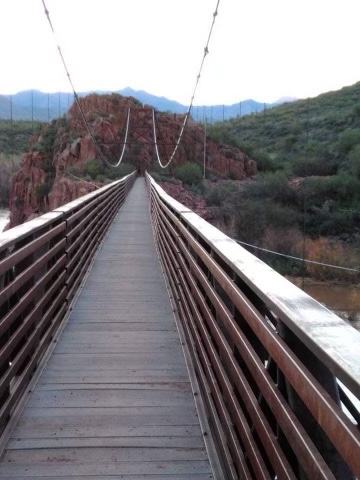
Author’s note: The picture of the bridge above is on the Verde River built during World War II by Frank Auza and other sheepmen. A new bridge was built across in the 1980s (I believe that is the correct time period because it was dangerous to cross when campers began taking its wood for camp fires.

Salt River Bridge

I received the above picture from Gerald Hancock whose grandfather, Gunnar Thude was in the sheep business.

Back to their description of the pictures: “Long time secretary of that organization, and one of the most popular and well respected men in the industry is the genial Harry Embach shown in the inset of our (Stockman Magazine cover picture. Mr. Embach has been secretary of the Arizona Wool Growers for more years than he cares to recall, though he insists they have been pleasant years.”

Verde River Bridge today. Courtesy of Gerald Hancock!

I have been to this new bridge and walked a portion of the trail. I would have loved to have been there when the sheepmen brought their sheep across. A perfect place for photographs would have been on top of that little hill or on that hill tucked away out of the way of the sheep and sheepmen and herders. The forest service would have a ranger here counting the sheep for assessment to the sheepmen for use of the trail on the forest.

Keep watch for more Arizona sheep history.

Lisa Had a Little Lamb “Baa” “Baa” 

The following article appeared in the January 1957 issue of Stockman.

Now no one could ever accuse sultry actress Lisa Ferraday of being a 4-H’er, but this is one publicity chore that the Hungarian-born television star actually enjoyed with all the enthusiasm of a born farm-hand. Actually, she had never been closer to a lamb than a fine woolen suit, but when Miss Ferraday received a contract to tour the United States with a baby lamb on behalf of Woolite, a new cold-water soap, she actually fell in love with Wooly Woolite. (Woolite dates to 1951 with it was introduced to protect wool, silks, nylons and other delicate fabrics from shrinking, stretching and fading.)

The glamourous actress has appeared opposite of host of screen idols – Burt Lancaster, Jon Hall, George Sanders and Fred Astaire among them – but it was her fleecy “co-star” who won her heart.

The daughter of Hungary’s Baron Nicholas De Mezey, Miss Ferraday was taught to speak fluent Rumanian, German, Hungarian, French, Italian and English – as a matter of fact, she was so well versed in just about everything but lambs. So with her usual thirst for information, Lisa set about to find out all there was to know about the lamb-kingdom. Just about a lamb-expert now, she can boast that she knows: how to give a lamb a bath.

Although the lambs’ usual comment on all this bathing is “Baa”, the lambs we know never had it so good.

Sidenote:  Lisa Ferraday was born on a 7,000 acre produce farm in Romania. She was no stranger to farm animals but no reference has been found that the family farm had sheep. Her father died when she was young and she and her mother moved to Paris where she took up acting. You may find more about Ms. Ferraday and her acting career with an internet search.

Wool for New 1959 Cars

Did you know that wool upholstery was used in many cars back in the 1950s?  While this story isn’t about Arizona and the sheep industry, who is to say that Arizona’s sheep wool wasn’t used in that upholstery? We may never know. Here is the rest of the story:

According to Edward Loerke, Detroit representative for the Wool Bureau, the Lincoln division of the Ford Motor Company delivered in early 1959 the new Continental town car upholstered entirely in gray wool broadcloth. The first limousine model to be introduced by Lincoln in more than 20 years, the town car brought to five the number of 1959 cars that carried wool upholstery as standard equipment.

The 1959 Imperial LeBaron and Crown Imperial feature wool broadcloth in deep tones of green, blue, brown, ruby and gray, while the Chrysler New Yorker four-door sedan used rich wool broadcloth in a variety of light and medium colors to blend with the exterior finish.

Cadillac’s Eldorado Brougham for 1959 was upholstered in solid and patterned all-wool broadcloth in light blue, light gray, and beige. These same colors were used in the interiors of the Buick Electra and Electra 225 series. In buying the Buick, the customer had a choice of either wool upholstery or a substitute fabric at no extra cost.

Many of a sheepmen told me that sheep rode in their cars when they were needed to be moved for various reasons. Why you ask would someone allow a sheep in their car? Well, the sheepmen told me the sheep paid for the car!

Somewhere in all my pictures given to me by the different sheepmen in Arizona, I had a picture of a sheep in a car, but its location eludes me at the moment! Will keep looking.

Wool Production Increases 1958

Arizona Wool production in 1958 was estimated to be higher by two per cent over that of 1957. Projection for 1958 is estimated at 3,141,000 compared to 3,055,000 in 1957. It was 10 per cent higher than the 10 year average for the years 1947-1956. The increase for 1958 was due to 2,000 more sheep shorn this year (431,000) and the increase in average weight per fleece.

The United States as a whole saw an increase of two per cent increase in wool shorn for 1958. There was an increase of three per cent more sheep shorn across the states but with a decrease of 1 per cent in average fleece weight. Total wool shorn was 240,446,000 pounds in the United States. There were 29,418,000 sheep shorn.

Arizona was only a small percentage of the total for the United States. At this time in Arizona there were few sheep outfits, but then Arizona never had more than 200 sheep outfits at the height of the industry, and it was probably more in the neighborhood of 150, and the state had just shy of two million sheep.

The above information comes from The Stockman, September 1958.

For comparison, as of January 1, 2023, the United States has 5 million sheep with sheep found in every state, including Alaska and Hawaii. Arizona is listed as having 90,000 sheep which includes those sheep on the reservations. Arizona ranks second in the number of total sheep operations, 7,509; and with Texas having nearly double that number, 14,672. These figures are found at http://www.sheepusa.org – The American Sheep Industry.

Fun facts from the past

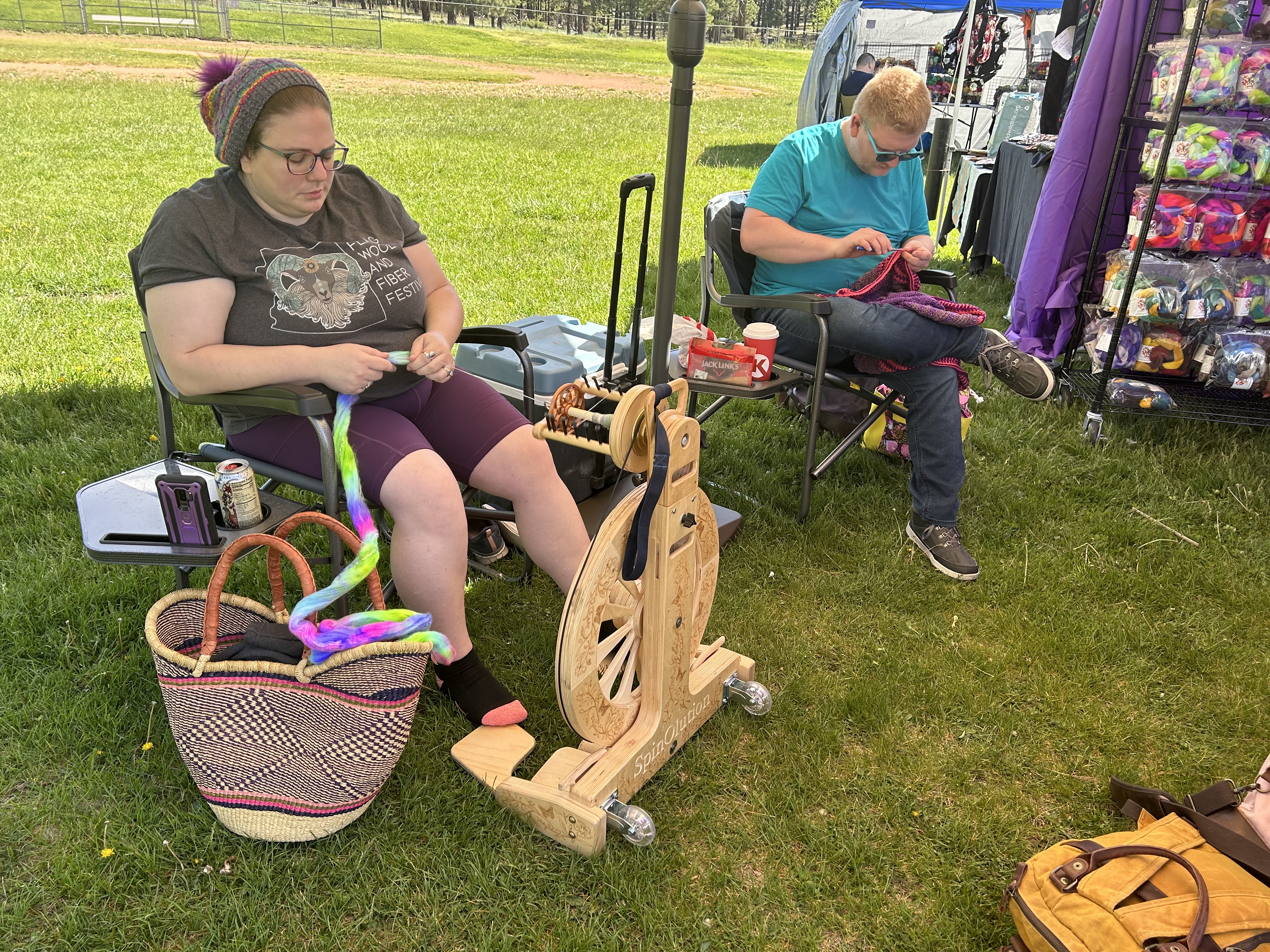
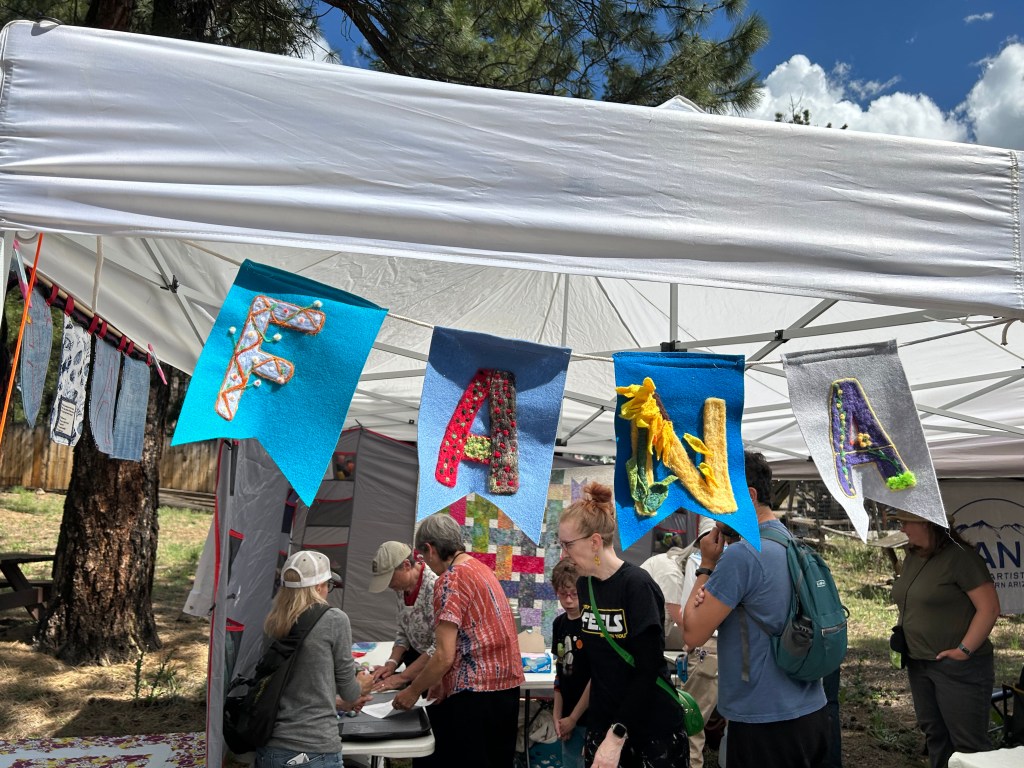
In my research last week I came across three little tidbits of information about sheep and wool. Since volunteering at the Flag Wool and Fiber Festival last weekend I think they are appropriate to record here! Neither have to do with Arizona, but ….

George Washington raised sheep at Mount Vernon and had at least a yard of wool cloth woven daily.

From England – Years ago in certain villages in Sussex, when a you g man went a-courting, his sweetheart knitted him a gaily-colored wool pullover which, when worn, became a symbol of their engagement.

Last fun fact- in 1958 there were 96 sheep and wool organizations representing 260,000 sheep farmers and ranchers in all 48 states. And for you who do t know your history, Alaska and Hawaii were states yet!

And that’s the sheep industry in 1958. I’ll have more in a day or so!

Enjoy.