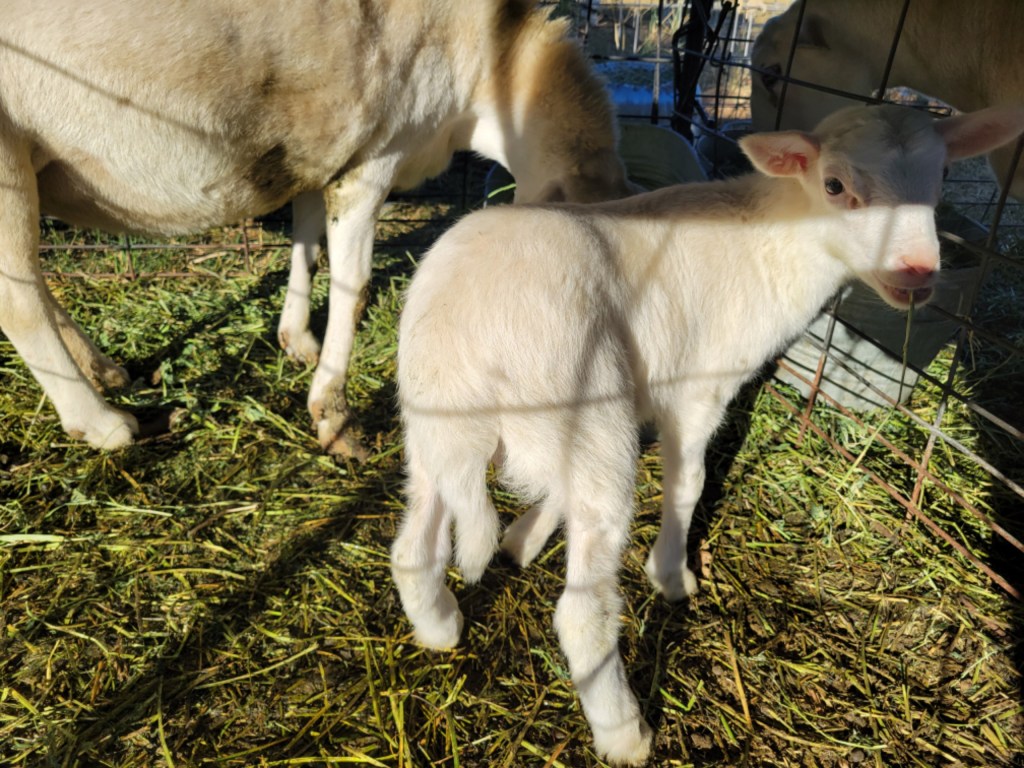
Sheep at Calabazas

If you haven’t heard the name Calabazas you are about to learn a little history of the state of Arizona and the sheep industry. Calabazas was also known as San Cayetano de Calabazas.  It is only a ruin today sitting on the banks of the Santa Cruz River, in a suburb of Nogales, Arizona.  The information about this site comes from a little eight-page pamphlet picked up at the Tumacacori Mission Site. Other  information comes from Arizona and the Grand Canyon State, a two- volume book covering each of the 15 counties within the state and many notable Arizonans and their biographies.

The first record of Calabazas came from a record of a baptism that occurred there on April 20, 1756. Other sources list the baptism date as June 2nd. The same year is given so the exact date is not that important since this is not about that baptism. Calabazas means gourds or squash a species that grew wild in the area. Calabazas and another obscure place, Guevavi, were visitas of Tumacacori meaning they would be visited by a priest but the priest was not stationed at either place. Calabazas wasn’t located on a permanent spring or source of water but located above the Santa Cruz River. Just like today the river was considered to be an intermittent stream.  

In 1844 Calabazas, Guevavi and Tumacacori were owned by Manuel Gándara who paid $500 for it and for more than 50,000 acres. In Arizona and the Grand Canyon State, it states that “Soon cattle stood shoulder-deep in grass on the river bottoms once more, and thousands of sheep grazed the hillsides.”  In 1853 Gándara leased the land to Payeken, Hundhausen and Company, a corporation mostly owned by Germans. They raised large numbers of sheep and goats on the property. The number of sheep and goats is unknown.

The story unfolds more. Calabazas was a mission ranch and had cattle, sheep, horses, a few goats and burros according to the park service’s little pamphlet. A drawing in the pamphlet shows cattle being herded one direction with sheep being herded the opposite direction It goes on that cowboys lived here with their families and “rode herd on mission livestock.” The Apaches caused the visita trouble with their raids. But the story that was the most interesting about the place comes from Arizona and the Grand Canyon State. Quoting from the book, “A member of an 1854 survey party, after a cold snowy night encampment along Sonoita Creek, witnessed a noon-time raid on the Calabazaz. The Commandante of the presidio at Tucson, having  been tipped off to the impending Apache attack, had concentrated 60 Mexican cavalrymen and 40 ‘tame’ Indians at the ranch. When the alarm sounded, women and children ran screaming toward the buildings and herders frantically tried to crowd 6,000 sheep into the corrals.”

We thus learned a little about the sheep industry that occurred in Southern Arizona. We know that at one time there were 6,000 sheep in the area of Calabazas. From Arizona and the Grand Canyon State we learn that by a tour taken between 1885-1886 by Lieutenant John Bigelow of the 10th U.S. Cavalry, i.e., the Buffalo Soldiers, Calabazas was nothing but a ruin. Most settlers had left when the soldiers were withdrawn from the area to fight the War Between the States which allowed the Apaches to attack the settlers, killing them and their livestock or rustling their cattle and sheep.

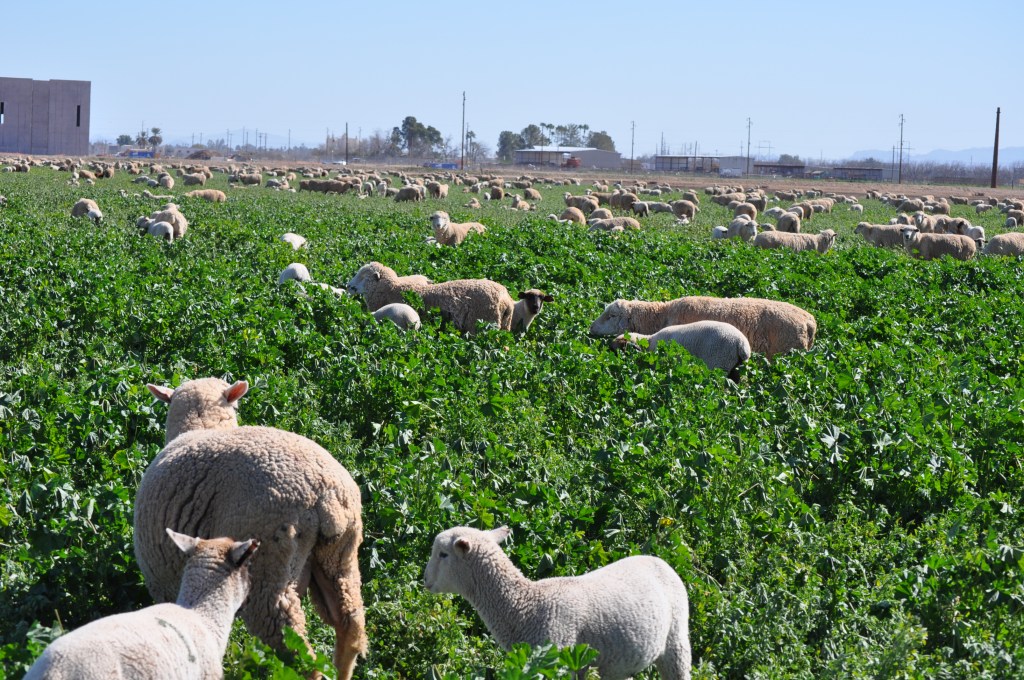
Just pictures today

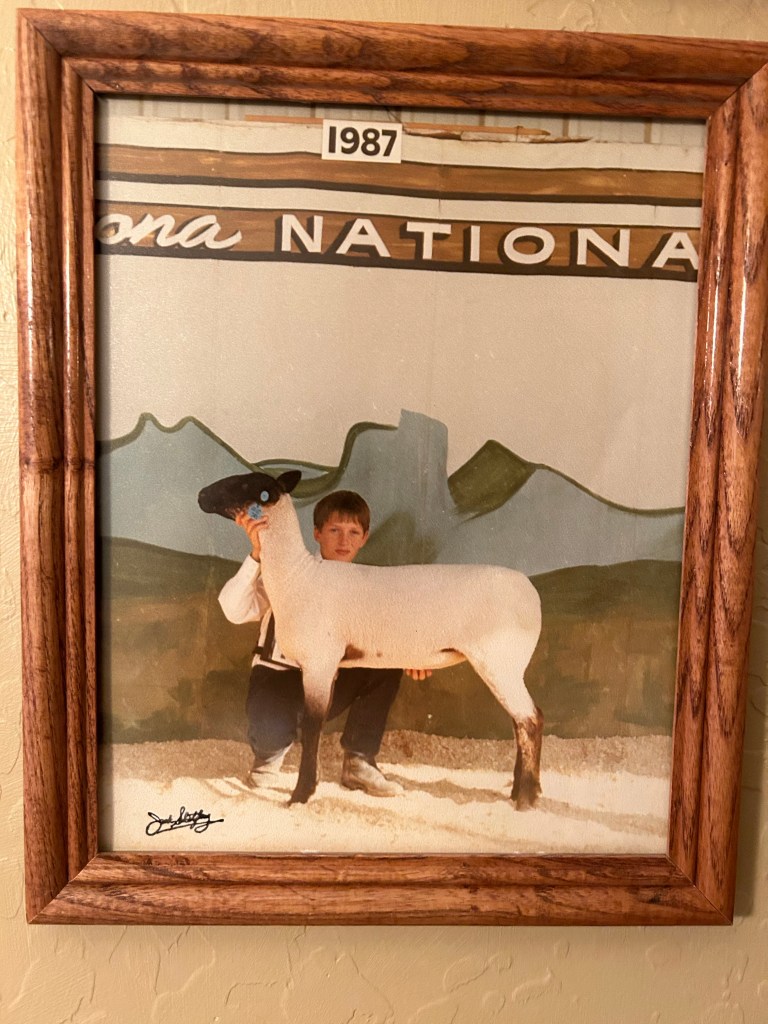
Janice Bryson’s son showing his sheep many years ago.

Janice Bryson’s grandson mutton busting.

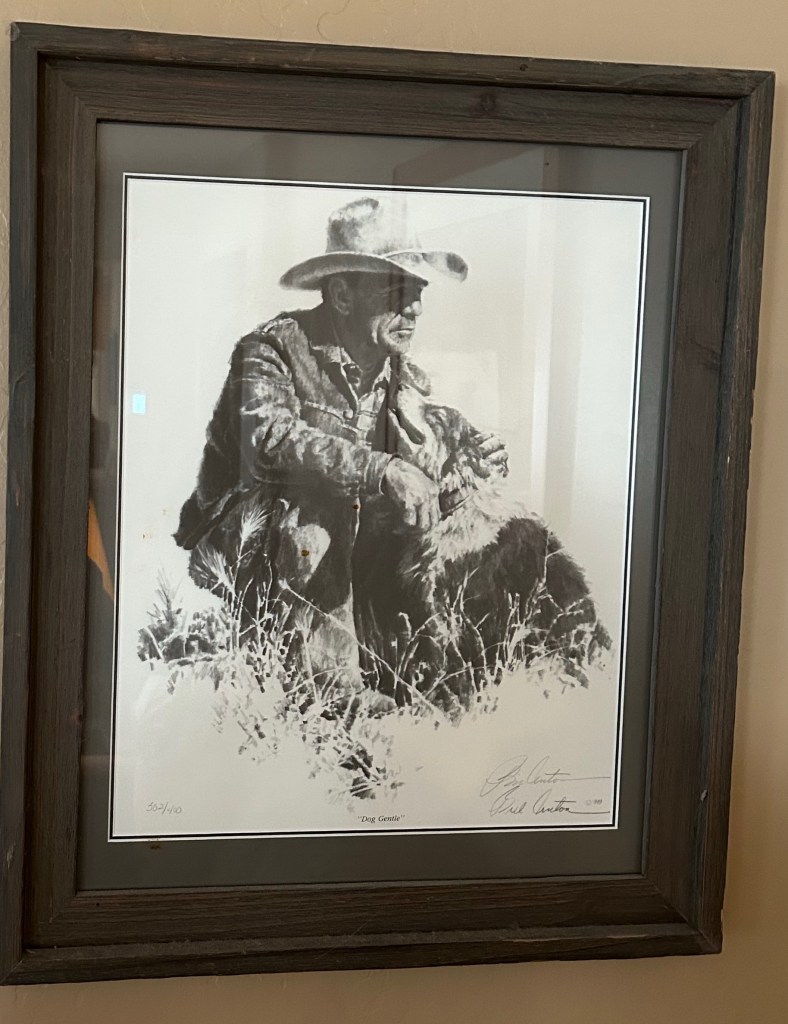
Frank Erramuzpe with his trust sheep dog.

Janice Bryson’s family were sheep raisers in the late 1890s til the mid 1900s. An earlier blog told about the Ryan family.

Frank Erramuzpe followed in his father’s footsteps raising sheep. He retired from sheep raising in the early 1970s. He passed away last year.

Next time we will return to early newspaper stories or more on the Arizona Strip sheep raisers as I continue my research.

The Rest of Then and Now

The men 30 strong, had organized themselves in squads searching every canyon and ravine. Certain signals were agreed upon. So if any trace should be found they could soon be called together. They finally crossed his track followed it on and on and on – it seemed in creditable (sic) a child of seven could walk so far with out food nor water. Now a track: now a bit of clothing on the bushes on and on they went, their hopes rising with each new evidence that they might yet find the little fellow still alive. They heeded not the pangs of hunger nor the weary fatigue of their own bodies – on and on they wet as far as their horses could go. Still the tracks went on, they left their horses with tow of the party, took water and a little brandy, and crept along the ledge over precipices – down ledges they slid – till finally there they saw him on the very brink of a perpendicular ledge, his clothing torn from his little body, feet bleeding, flesh torn by the thorns of the underbrush. So crazed by fatigue, fright, thirst and hunger, they dared not disturb (sic) him lest he plunge over the brink and be lost forever.

Not a man spoke a word, not a sound dared they make. The father went back from the terrible scene and called the lads name ever so softly. He became conscious, turned saw his father with outstretched arms and sprang back and ran to the fond embrace. The men seeing him safely back from the brink rushed to him with water and with a few drops of brandy added to a few spoonsful of water in a baking powder can revived him sufficiently to be carried back to camp. They wrapped him in a Navajo blanket and took him on the horse. He seemed to be terribly frightened at this mode of travel. He squirmed loosed from the blanket, so he was placed in the saddle with his father behind and his arms around the terrified lad.

It was many days before he regained his sanity and became normal. Then they finally arrived at the Park all the men had heard the good news of his rescue and the whole party had assembled. The father asked the men how much he owed them for their efforts. They had put in six days and nights searching. They all answered as one man – “Nothing!”

That completes the story of the unknown sheepherder and his lost little boy.

Stay tuned for more stories coming this week.

Then and Now Continued

“The sheep were moved from one canyon to another according to feed conditions. At this particular time they were being driven down the canyon near Bright Angel, the herd split in two sections, father and son became separated, each following a different herd in different canyons. The boy wandered on and on – until he was out of gun shot.

“The father hunted for days not daring to give up the hunt long enough to go for help. Thinking of course he would run across the little fellow in each revine or on top of each ridge. He finally was obliged to give up the lonely hunt and send for help.

“He found the cowboys at VT ready and willing at a minute notice to mount their horses and ride in haste to rescue the lost child. As the word spread over the country that the boy was lost, men sprang in to their saddles and were off to join in the search. Word finally reached Kanab. A rescuing party was formed in a few hours. Women came from every direction with food and supplies for the hunters. When they were off they stood around in terrifeid groups too grief stricken to go back to their homes. The children felt the terror in the air. And every night in every home a prayer was offered to God that the little fellow would be found alive and brought home in safety to his grief stricken parents. The women of the little town took turns watching and waiting comforting the prostrate mother as best they could.”

Final installment tomorrow!

Then and Now by Rachel W. Dalley

It has been awhile since I have had time to post a story. So today’s story actually comes from Rachel W. Dalley. In research at the Southern Utah University in October, this story was in a file about the Woolley family. It has little to do with sheep but sheep were the reason for the circumstances of the story. It seems only logical that this situation was repeated in many sheep raiser’s families. When the story was first written is unknown. There were two pages found together in the file and the second page was titled “Then and Now Part II” and dated July 1938. Part II has nothing to do with sheep, sheepherders, dogs, donkeys or a little boy as the story that is about to be told. Thus the story could have taken place in 1938 or 37 years before. The reader can decide for themselves on the date.

So in her own words, lets look at the story over the next couple of days.

“If we could let our minds wander back 37 years and see this beautiful peaceful valley as the lonely sheepherder saw it. Tall grass beautiful flowers blooming in profusion. The silence was broken only by the bleating of the sheep or the tinkle of the bell of his donkey as they followed the herd. This lone herder had brought his seven year old boy along for company, justs to have some one to talk to besides the dog and donkey. The omenous silence, the great aloneness-the monotony of the sameness of each day to the last one just gone by. This monotony became so oppressive that it was really dangerous for one man to spend so many weeks and months alone. So the little boy was brought along for company.”

Guest Writer – Janice Bryson

A story written by Janice Bryson for the Arizona CattleLog, December 2013, about the Atkins Family tells ofa sheepman on the Arizona Strip. There were Atkins that had sheep on the Strip but I will relate their story later in future blogs. For now, we will just stick with this sheepman.

Joy illustrated the remoteness of the strip with the story of sheep man Wayne Gardner. He was a prominent St. George resident who grazed sheep on the Arizona strip. A fierce snowstorm hit the strip in January 1949, Gardner was worried about his sheep and his herder Ed Harrington. He left home early one morning and his family raised the alarm when he did not return. Due to the continuing storm, Maurice Miles and Rudger Atkin flew to the vicinity of the sheep camp and dropped a note to Harrington. Through signaled replies, they determined that Gardner had not arrived and Harrington needed help. No sign of Gardner could be located from the air. Two weeks after Gardner left home, a search party traveled three days through the snow to rescue Harrington and move the sheep to lower country. Gardner’s hat was located but no sign of the man. The Sheriff called off the search until the snow melted but was convinced to try again one more time. Searchers with hunting dogs traveled to the area and the body of Gardner was discovered 75 yards from the sheep camp. He had walked twelve miles from his pickup in snow up to his waist. His frozen body, covered with snow, was found leaning against a Cedar tree as he had apparently stopped to rest and froze to death.

A sad ending for just one of about twelve families that raised sheep on the Arizona Strip. Other sheepmen stories from Utah and Nevada will be posted soon. 

Arizona Strip Sheep

I will get back to writing about the Etchamendy’s next week but today in researching the sheep industry of the Arizona strip I have found some early sheep ranchers.

One source said that in the early 1900’s a minimum of 50,000 sheep grazed the Strip. Who these sheep belonged to is still being researched and more information will follow soon.

Mohave County tax records for 1936 showed 56 people owned a total of 64,470 sheep. In comparison 5 people owned 1,590 goats and 131 people owned 20,523 cattle which included milk cows.

A few names – Mr, Trumbull, Wayne Gardner and Persia Heston. The records showed that Gardner had 600 ewes and 15 bucks. Heston had 1,008 ewes and 20 bucks. Heston lived in Alton, Utah. He along with the other 77 taxpayers from Utah and Nevada would pay taxes in Arizona. Of those 77 taxpayers 52 lived in St. George, Utah and 16 lived in Mesquite and St. Thomas, both in Nevada.

These three cities were close to the Arizona Strip and would be easy to trail sheep down into this area. A bridge had been built over the Virgin River for easy access for the sheep. I’m looking for a picture of the bridge and will add when I find.

So a start on the history of the Arizona Strip sheep industry. Stay tuned as next will be information on Woolley who had sheep that he leased to others that had those sheep on the Strip. Woolley lived in Kanab, Utah. And then there are the sheep brought into Pipe Springs in the mid 1800s.

Sheep Families to be inducted

Two sheep families have been selected to be inducted into the Arizona Farming and Ranching Hall of Fame for 2023. They are John and Frances Aleman and the Etchamendy Family – Arnaud, Jean, Jean Baptista (JB) and Martin. Both the Aleman’s and the Etchamendy’s are of Basque descent. John Aleman came from Spain while the four Etchamendy’s are of French descent. Just a little information is given here but more will follow with pictures.

John and Frances Aleman.

John Aleman came to the United States in March 1914 settling in the Winslow area. He was led here by a boyhood friend, Juan Bicondon, who had migrated a year earlier. Juan wrote to John, “a land full of golden opportunities, knee high grass where sheep and cattle grazed as far as the eye could see, and cowboys riding horseback with forty-fives on their hips and Winchesters on the saddle.” John wanted to see this land for himself. He began as a camp cook there before moving to Flagstaff where he went to work for MP Espil and MI Powers at Frisco Mountain Sheep Company. By 1926 with saving his money he partnered with Mike Echeverria in the Cross Mountain Sheep Company. He partnered with Joe and Leon Pouquette also before he started the John Aleman Sheep Company in 1952.

John married Frances Abbie Hendrix in 1936. The couple had met when she came to Arizona and was visting her father’s ranch near St. Johns. Frances became very active in promoting lamb and wool. Along with Ora Chipman, of Utah, they co-founded the Make It Yourself with Wool competition. That competition, now called Make It With Wool, is still strong in both Arizona and Utah and many other states. The competition will be held in November in Arizona. (Pictures to follow once the competition is over.) Winners from each state move on to the national competition held during the national conference of the American Sheep Industry, held in January.

Just one more note about Frances taken from the nomination form submitted by her daughter-in-law. “In 1968 the American Sheep Producers Council started the annual Aleman-Chipman Scholarship Award for the senior winner in honor of their contribution to introducing young people from across the country to the beauty of woolen garments.”

Etchamendy Family.

Arnaud was the first of the family members to migrate to the United States in 1930. He began to work as a sheepherder until he was able to purchase his own sheep company. Once he became an American citizen though he was drafted into the military during World War II which forced him to sell his beloved sheep. After his 27 months of service, he returned to Arizona and purchased more sheep. He brought over his nephew Jean in 1949.

Jean and his uncle worked together for many years. Then Jean partnered with a boyhood friend, Jean Arriage who had come over in 1957. That partnership only lasted a year and then Jean went out on his own. Upon Arnaud’s death, Jean helped his aunt, Ramona with the sheep until her passing in the 1970s.

JB was the next brother to migrate to the United States also in 1957. He began his sheep career in California but within a year he was in Arizona working along side his brother and their uncle. The youngest Etchamendy, Martin would come in 1961. JB and Martin worked many years together until Martin returned to France. Martin would return and begin to run sheep again, mostly in California where he still to this day has a flock of sheep. Martin is 83 years young and still visits his sheep everyday with the exception of vacations and when he is not the grand marshal of the Basque activities in his hometown of Bakersfield, California.

All four of the Etchamendy’s wives were active in the Arizona Wool Producers Auxiliary (its title today) promoting sheep and wool along with Frances Aleman. The men would serve on the various boards of the Arizona Wool Growers’ Association.

There is a great deal more about each of the four Etchamendy’s and John and Frances Aleman and the Make It With Wool competition that can be written about. Over the next several weeks more information will be given with pictures. Hopefully, I will be able to photograph the Make It With Wool, Arizona competition this November.

This Week in 1922 Nothing Happened!

Well, there wasn’t much going on in the sheep business at least. This was the only article I could find in researching newspapers across the state for 1922. For those from the Buckeye, Arizona area, this will be of interest to you!

On September 19, 1922, The Arizona Republic reported that the Long Brothers were engaged in constructing a large and modern concrete sheep dipping vat. It was necessary because of the number of sheep they owned. The pit was to be 45 feet long with a 20 by 20 feet drain floor.

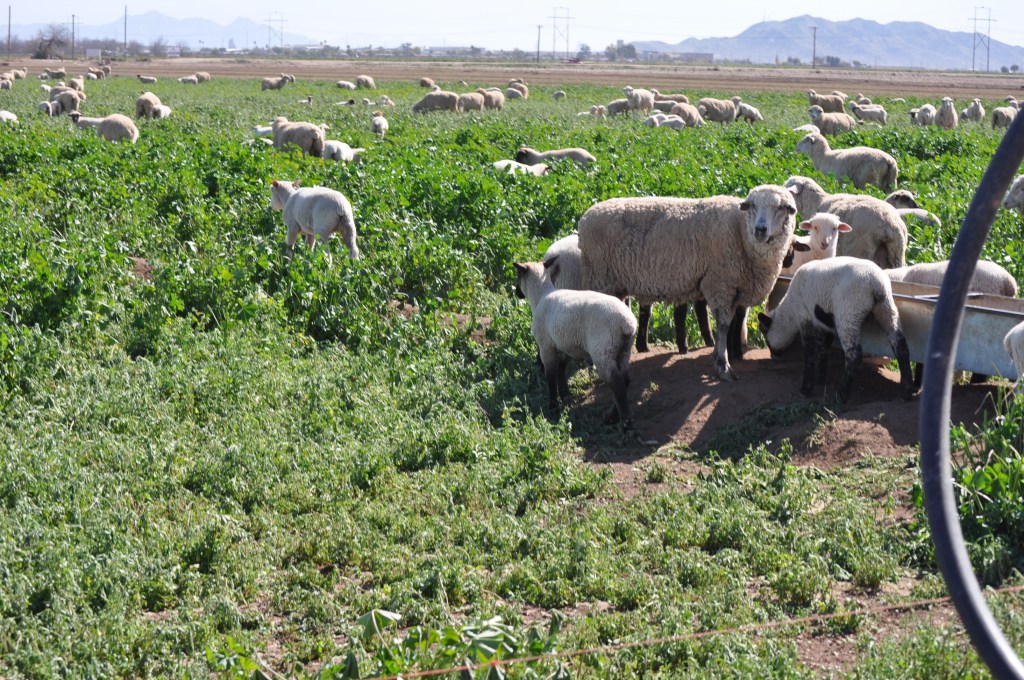
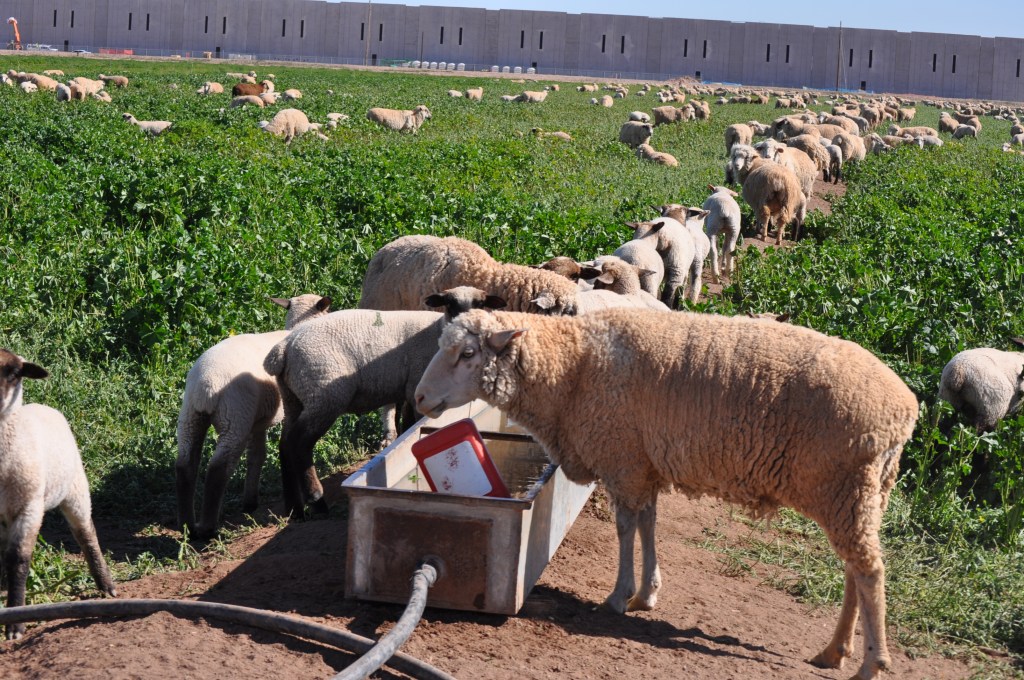
From talking with one of the descendants of the Longs, I believe that this vat was south of the present-day post office in Buckeye, Arizona. The Buckeye area was a winter sheep grazing location for many sheep families in the early to mid-part of the 1900s. It was still farmland and not with all the housing developments and warehouses that have sprung up in the last 10 years and taken over our precious farmland. We are losing farmland every day in the Salt River Valley and it was one of the reasons so many sheep ranchers sold out in the 1970s – 1990s among other reasons. Without farmland for winter grazing, the sheep had no place to go.

Friends have told me of the days up to the 1970s when they would be caught on road behind sheep being moved between one field to another. While they complained about it then because they were in a rush to get where they were going, they all have told me that they miss seeing the sheep grazing in the fields around Buckeye.

While there are not the large numbers of sheep grazing on the pastures today in the Buckeye area, one can still find pastures that still have less than 100 but you must be diligently looking for them.

And that is the story for this week one hundred years ago!

A lamb on one of the sheep farms today in Buckeye.