137 Years Plus of Arizona Sheep Producers

This year, 2023, marks the 137 year of Arizona sheep industry, raising sheep for their wool and meat. In 1886, sheep men realized the importance of joining together for the good of their industry and to preserve a way of life that many coming to the United States had participated in in their own countries but could not sustain that lifestyle in their own country for a variety of reasons. Sheep raising had taken place in Arizona from the time of the Spaniards who brought them into the pueblos of New Mexico and the Navajo brought them into Arizona. And Father Kino is also credited with bringing domestic sheep into Arizona in the late 1680s. But this was the first time the men joined together to promote the industry. While not germane, the cattle people didn’t organize as early as this. Forgive me if the date slips my mind!

In 1961, the 75th anniversary of the industry, The Arizona Wool Growers’ Association, took place in Flagstaff as it had in past years.  The men and a few women would have the opportunity to “talk shop” – discuss common problems of the sheep raisers, the problems of the trade and seek ways of maintaining their rightful position in the ever-changing industrial world that had seen synthetics developed that resulted in a decline for wool to be used for fabrics. Today, there is no meeting of the sheep families in Arizona as there is only one family of three generations still in the business of raising sheep.

In 1961, sheep numbers had been decreasing and in fact, every year since the end of World War II when wool was used for service personnel uniforms, backpacks, blankets, and other items. Military uniforms, or at least dress blues, are once again being made from wool. But the amount of wool needed to produce these uniforms will never equal what had been used by the military in the past.

There are sewing contests across the country to promote the use of wool by both men and women. In Arizona the contest is sponsored by the few ladies and those interested who have joined together and are known as the Arizona Wool Growers’ Auxiliary. Each year, the contest is held in November and price money is given for the first, second and third place winners in each of the categories.

Other ways that were used in the past to increase the interest in and buying of wool and sheep meat will be presented in a future blog.

A Man, A Few Sheep and Greenlee County, Arizona

In April 1923, The Morning Sun, Yuma, reported how one farmer in Greenlee County showed the value of raising sheep on the Arizona farm. Quoting the newspaper the man showed “just what can be done by a progressive man, alone.” The man moved into the county a few years ago bringing with him in a wagon a few Mexican ewes. As of the writing of the article one of these ewes was still on his farm. She had proved her worth by producing some of the best shearing ewes. The ewe “is of the open-faced, clean-legged kind, with a good smooth covering of flesh”. Rambouillet bucks were used for breeding when he first began until the quality of wool had increase and, as of the writing of the article, now used pure bred Hampshire bucks. Very robust lambs are now being obtained. He cannot keep up the demand for market lambs and had used his power to encourage other farmers to also raise sheep. The man believed that two or three other flocks would do well in the area.

The man had used the sheep to clear out Johnson grass in one of his pastures. The article also stated that “The worth of sheep on ditch banks is well known all over the State, and once a man has tried it, he is only the more convinced that this is, by far, the best solution, even though a little extra initial investment is required for fencing the ditch banks and obtaining the foundation flock.”

The article concluded that sheep raisers figured that one lamb paid for the ewe’s winter keep and the wool and other lamb, as most ewes have two lambs, represent the profit to the farmer.

What is unfortunate about this article is that we do not know when the man started his sheep flock, the number of sheep he ran after his initial bringing of the ewes into Greenlee County, where he obtained the bucks for breeding, no do we know who he was. But sometimes that is all the information one can find in the early newspapers and as more newspapers are read, hopefully more information will come to light about the gentleman!

Sheep Poem by Lester H. Fuller

Just a little sheep poem found in The Coconino Sun April 6, 1923.

Ba, ba, ba, there comes a band of sheep,

Can you see the dust arising from the thousands of tramping feet?

But we must have those creatures to produce our meat and wool.

Oh, how the cattlemen cuss, ‘cause they get their stomachs full.

I was once a cowboy myself, and rode upon the plains;

To see sheep eat the forage, I thought it was a shame.

But if you will stay with them, watch and take care good,

You sure will get the money. Lord knows, every sheepherder should!

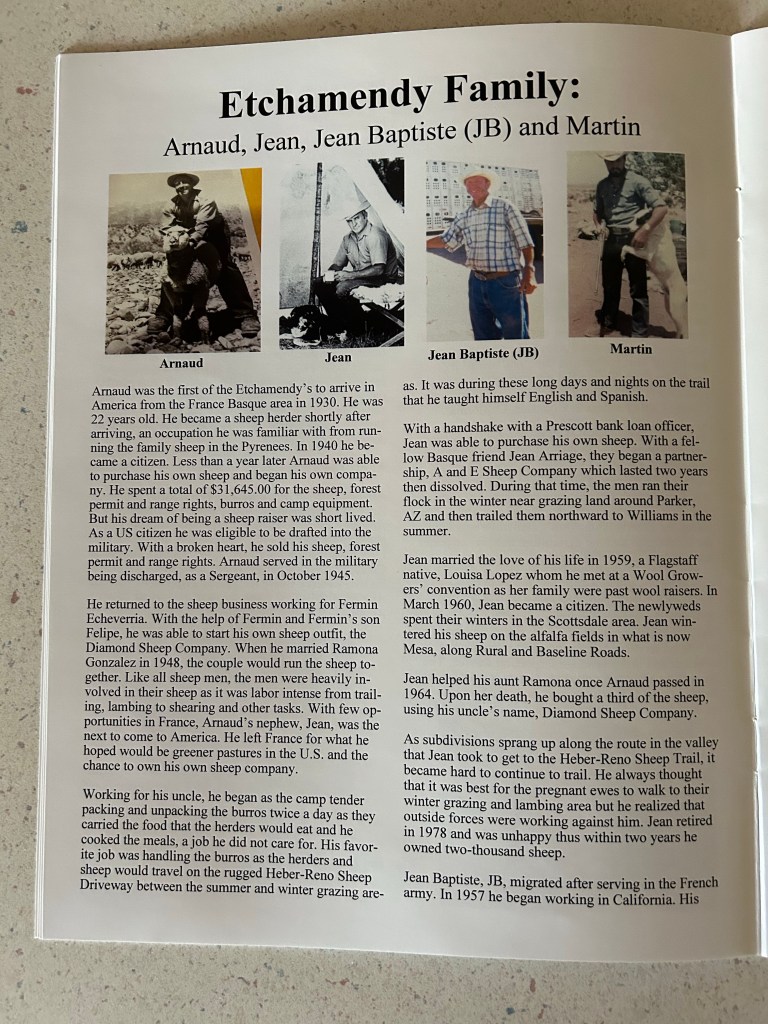
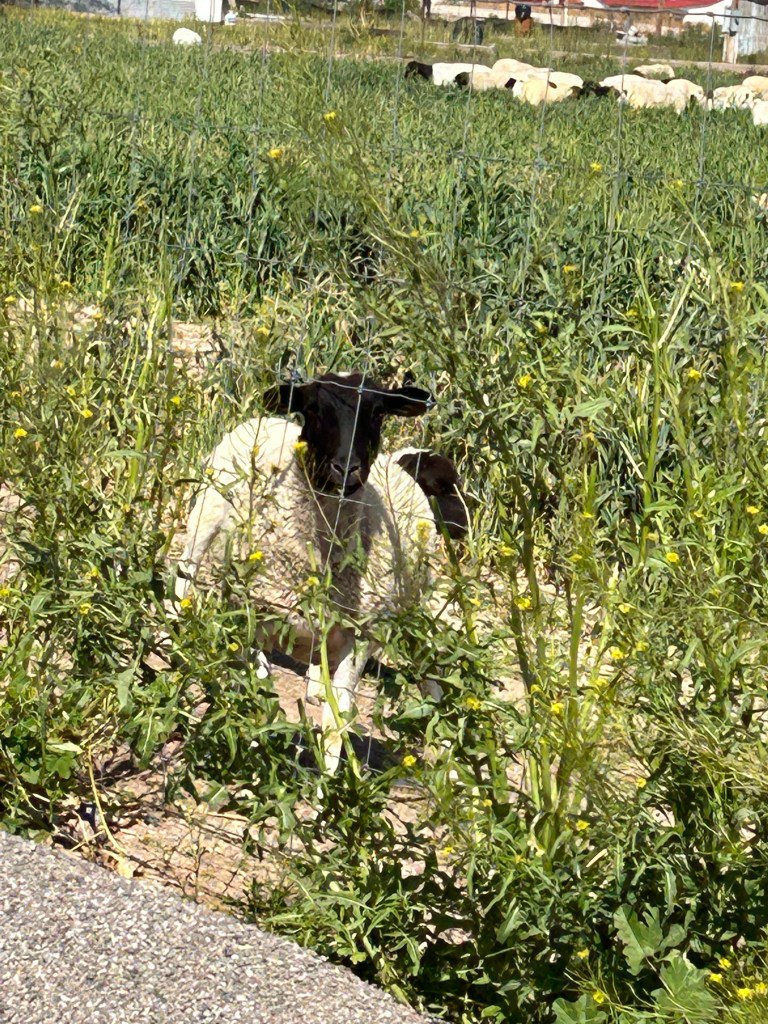
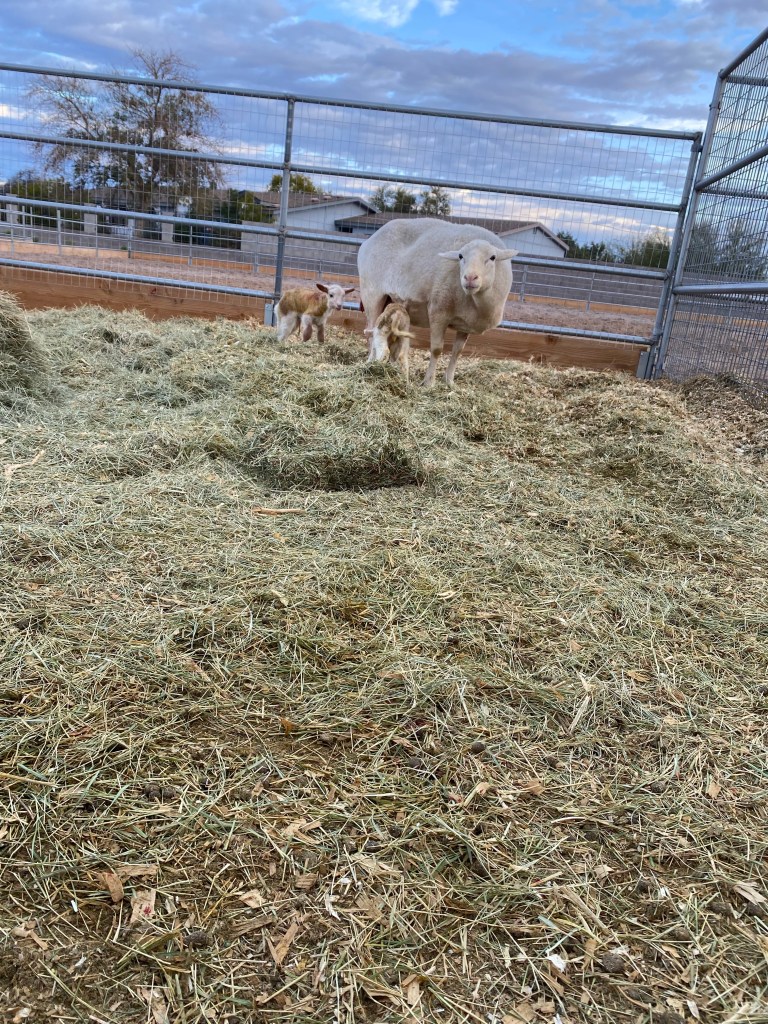
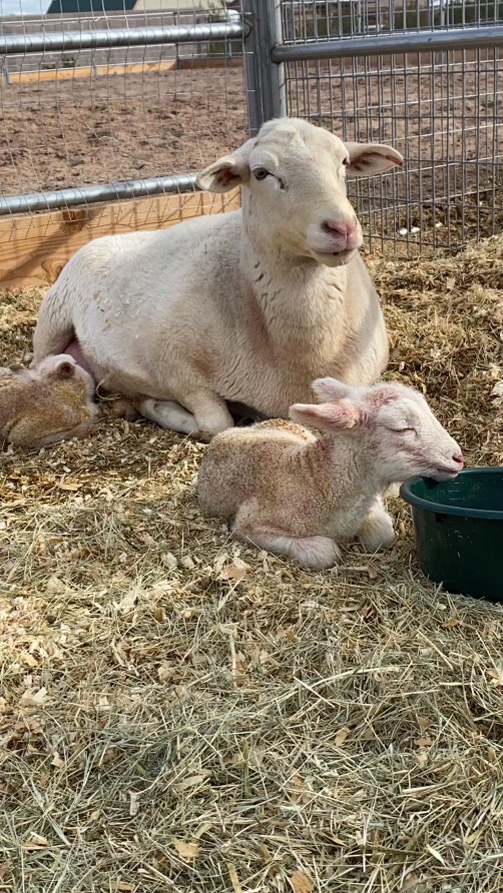
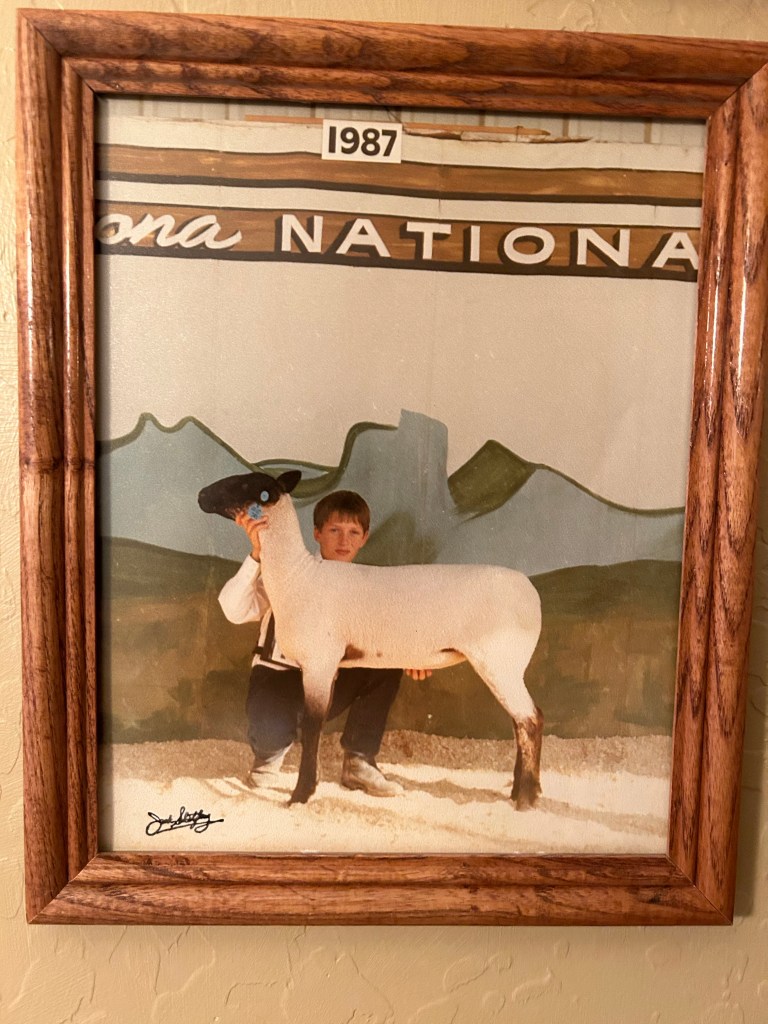
The first picture below was taken in the 1990s of the Etchamendy Brothers Sheep Company. The second is a picture taken this past February in Casa Grande.

Yuma’s Sheep

A new name in the sheep industry in Arizona was found while researching newspapers from 100 years ago this month. The headline “Yuma Lambs Bring Good Prices in L. A. Markets was found in The Morning Sun, Yuma, March 24, 1923.  It seems that James Maxey had just shipped three carloads of lambs to the Los Angeles market. He had a ranch in the upper valley of Yuma.  Quoting from the article, “they were born after November 16, and weigh now slightly more than seventy pounds each. They were sold on contract for fourteen cents, which is considered a very good price. Mr. Maxey has gone quite extensively into sheep raising and he is of the belief that sheep raising for both wool and mutton will put the Yuma country on the map and bring more real money to the valley than many other lines of farming.”

The Yuma area did have other sheep families and their stories will be told as my research continues. More research of The Morning Sun, Yuma must be undertaken to see what other tidbits are found on Mr. Maxey and his sheep and the other sheep families in Yuma. I’ll keep you posted on my findings.


Etchamendy Sheep Family

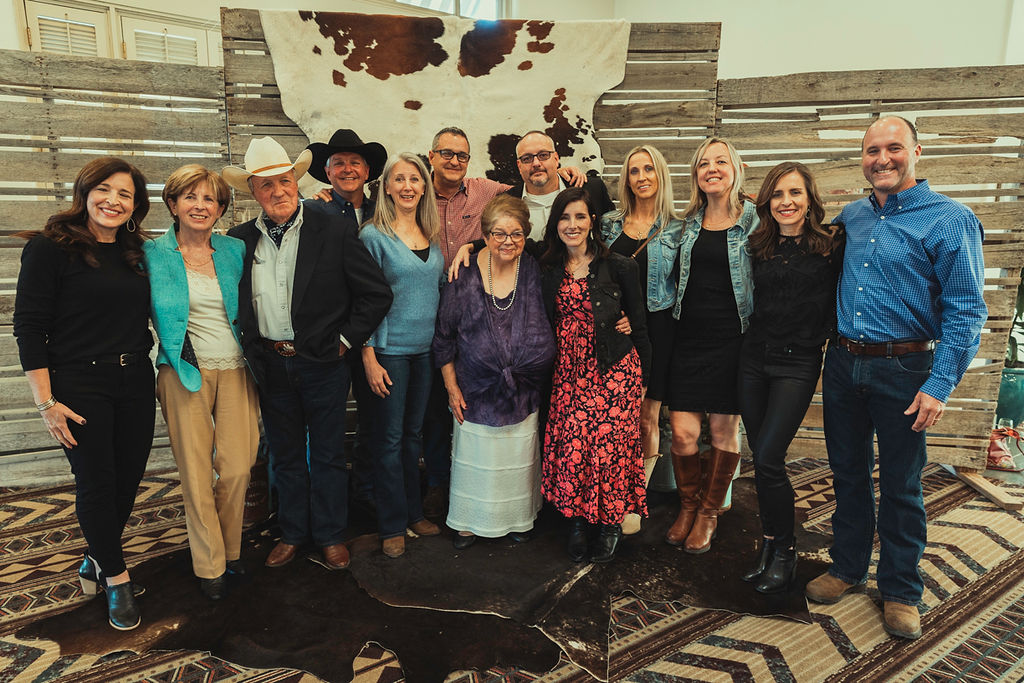
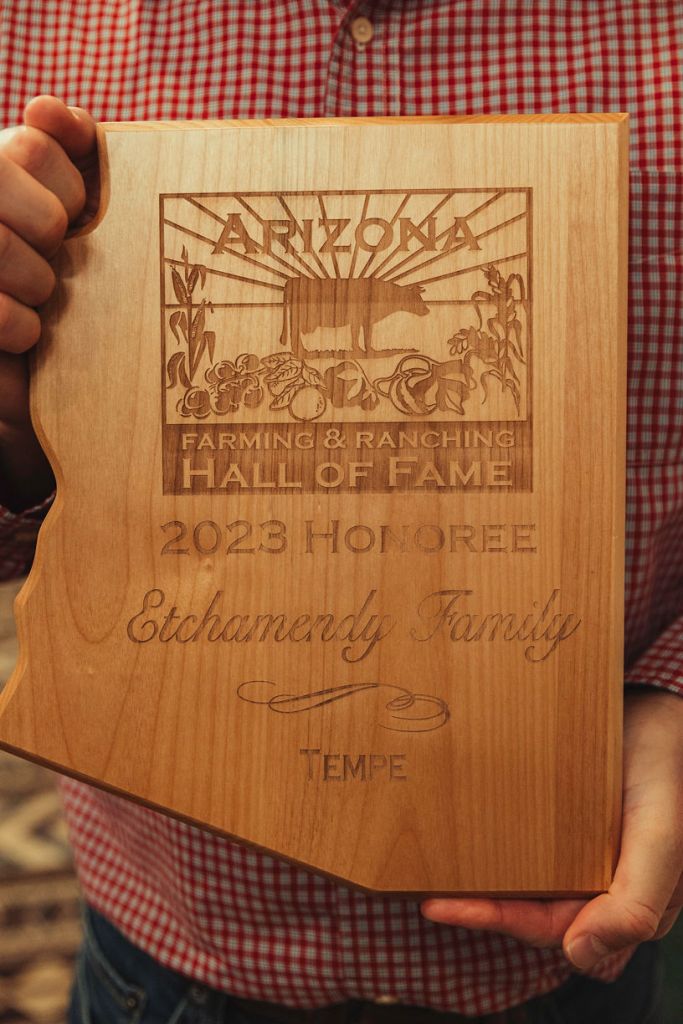
Last Saturday night, March 4, 2023, Arnaud, Jean, JB and Martin were inducted into the Arizona Farming and Ranching Hall of Fame. It was a great evening and the Etchamendy’s certainly deserved this honor. Accepting the award for the family was Martin, the last surviving Etchamendy man in the sheep business. He still has sheep but he has his flocks in the Bakersfield are of California.

One last picture

Sheep in the Buckeye Valley Again

For several weeks I have been watching a small flock of sheep in a field in the Buckeye area. At one time thousands of sheep could be seen in the winter time grazing on the grasses here. The sheep had been either trailed, pre 1950s and then trucked afterwards to the Buckeye area from their summer grazing area in the high country of northern Arizona. At this time the ewes were pregnant and would start to have their lambs between November-February.

The sheep could cause traffic jams as they were moved from one pasture to another. They had the right of way and heaven forbid you were in a hurry to get someplace. Sheep only move as fast or slow as they want. It took careful planning and help of trained dogs to get the sheep between pastures. Shearing would follow in February.

Just a little history from the past.

Thude’s are Back Raising Sheep

Well that isn’t quite true.

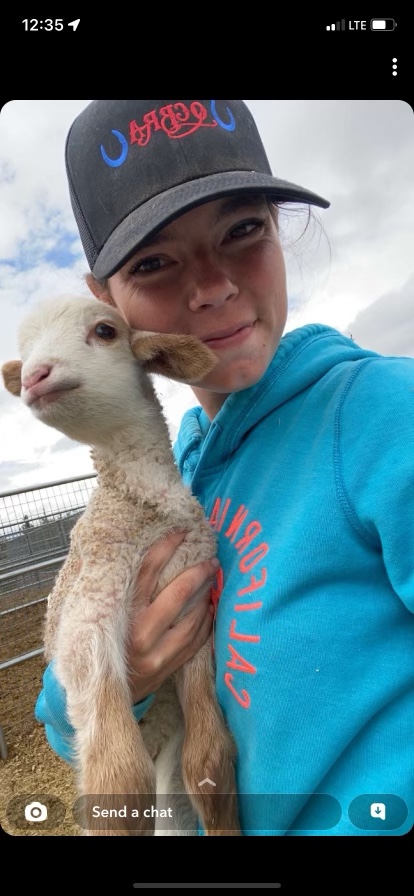
This is Staci Hancock Smith. She is carrying on the tradition of raising sheep.

Staci is the great great granddaughter of Gunnar Thude. Gunnar has been mentioned before on this blog and the years he raised sheep passing on the love of the sheep to his daughter Elma Sanudo. This is Elma’s great granddaughter.

While she may have only a few at the moment, who knows what may happen. Tomorrow we will look at sheep back in the Buckeye Valley!

Sheep at Calabazas

If you haven’t heard the name Calabazas you are about to learn a little history of the state of Arizona and the sheep industry. Calabazas was also known as San Cayetano de Calabazas.  It is only a ruin today sitting on the banks of the Santa Cruz River, in a suburb of Nogales, Arizona.  The information about this site comes from a little eight-page pamphlet picked up at the Tumacacori Mission Site. Other  information comes from Arizona and the Grand Canyon State, a two- volume book covering each of the 15 counties within the state and many notable Arizonans and their biographies.

The first record of Calabazas came from a record of a baptism that occurred there on April 20, 1756. Other sources list the baptism date as June 2nd. The same year is given so the exact date is not that important since this is not about that baptism. Calabazas means gourds or squash a species that grew wild in the area. Calabazas and another obscure place, Guevavi, were visitas of Tumacacori meaning they would be visited by a priest but the priest was not stationed at either place. Calabazas wasn’t located on a permanent spring or source of water but located above the Santa Cruz River. Just like today the river was considered to be an intermittent stream.  

In 1844 Calabazas, Guevavi and Tumacacori were owned by Manuel Gándara who paid $500 for it and for more than 50,000 acres. In Arizona and the Grand Canyon State, it states that “Soon cattle stood shoulder-deep in grass on the river bottoms once more, and thousands of sheep grazed the hillsides.”  In 1853 Gándara leased the land to Payeken, Hundhausen and Company, a corporation mostly owned by Germans. They raised large numbers of sheep and goats on the property. The number of sheep and goats is unknown.

The story unfolds more. Calabazas was a mission ranch and had cattle, sheep, horses, a few goats and burros according to the park service’s little pamphlet. A drawing in the pamphlet shows cattle being herded one direction with sheep being herded the opposite direction It goes on that cowboys lived here with their families and “rode herd on mission livestock.” The Apaches caused the visita trouble with their raids. But the story that was the most interesting about the place comes from Arizona and the Grand Canyon State. Quoting from the book, “A member of an 1854 survey party, after a cold snowy night encampment along Sonoita Creek, witnessed a noon-time raid on the Calabazaz. The Commandante of the presidio at Tucson, having  been tipped off to the impending Apache attack, had concentrated 60 Mexican cavalrymen and 40 ‘tame’ Indians at the ranch. When the alarm sounded, women and children ran screaming toward the buildings and herders frantically tried to crowd 6,000 sheep into the corrals.”

We thus learned a little about the sheep industry that occurred in Southern Arizona. We know that at one time there were 6,000 sheep in the area of Calabazas. From Arizona and the Grand Canyon State we learn that by a tour taken between 1885-1886 by Lieutenant John Bigelow of the 10th U.S. Cavalry, i.e., the Buffalo Soldiers, Calabazas was nothing but a ruin. Most settlers had left when the soldiers were withdrawn from the area to fight the War Between the States which allowed the Apaches to attack the settlers, killing them and their livestock or rustling their cattle and sheep.

Just pictures today

Janice Bryson’s son showing his sheep many years ago.

Janice Bryson’s grandson mutton busting.

Frank Erramuzpe with his trust sheep dog.

Janice Bryson’s family were sheep raisers in the late 1890s til the mid 1900s. An earlier blog told about the Ryan family.

Frank Erramuzpe followed in his father’s footsteps raising sheep. He retired from sheep raising in the early 1970s. He passed away last year.

Next time we will return to early newspaper stories or more on the Arizona Strip sheep raisers as I continue my research.

The Rest of Then and Now

The men 30 strong, had organized themselves in squads searching every canyon and ravine. Certain signals were agreed upon. So if any trace should be found they could soon be called together. They finally crossed his track followed it on and on and on – it seemed in creditable (sic) a child of seven could walk so far with out food nor water. Now a track: now a bit of clothing on the bushes on and on they went, their hopes rising with each new evidence that they might yet find the little fellow still alive. They heeded not the pangs of hunger nor the weary fatigue of their own bodies – on and on they wet as far as their horses could go. Still the tracks went on, they left their horses with tow of the party, took water and a little brandy, and crept along the ledge over precipices – down ledges they slid – till finally there they saw him on the very brink of a perpendicular ledge, his clothing torn from his little body, feet bleeding, flesh torn by the thorns of the underbrush. So crazed by fatigue, fright, thirst and hunger, they dared not disturb (sic) him lest he plunge over the brink and be lost forever.

Not a man spoke a word, not a sound dared they make. The father went back from the terrible scene and called the lads name ever so softly. He became conscious, turned saw his father with outstretched arms and sprang back and ran to the fond embrace. The men seeing him safely back from the brink rushed to him with water and with a few drops of brandy added to a few spoonsful of water in a baking powder can revived him sufficiently to be carried back to camp. They wrapped him in a Navajo blanket and took him on the horse. He seemed to be terribly frightened at this mode of travel. He squirmed loosed from the blanket, so he was placed in the saddle with his father behind and his arms around the terrified lad.

It was many days before he regained his sanity and became normal. Then they finally arrived at the Park all the men had heard the good news of his rescue and the whole party had assembled. The father asked the men how much he owed them for their efforts. They had put in six days and nights searching. They all answered as one man – “Nothing!”

That completes the story of the unknown sheepherder and his lost little boy.

Stay tuned for more stories coming this week.