
Just videos of my visit.
Tag: Arizona Wool Growers Association
Fashion Show Prep
The first dress rehearsal for the fashion show at Friendship Village during September Sheep Week.
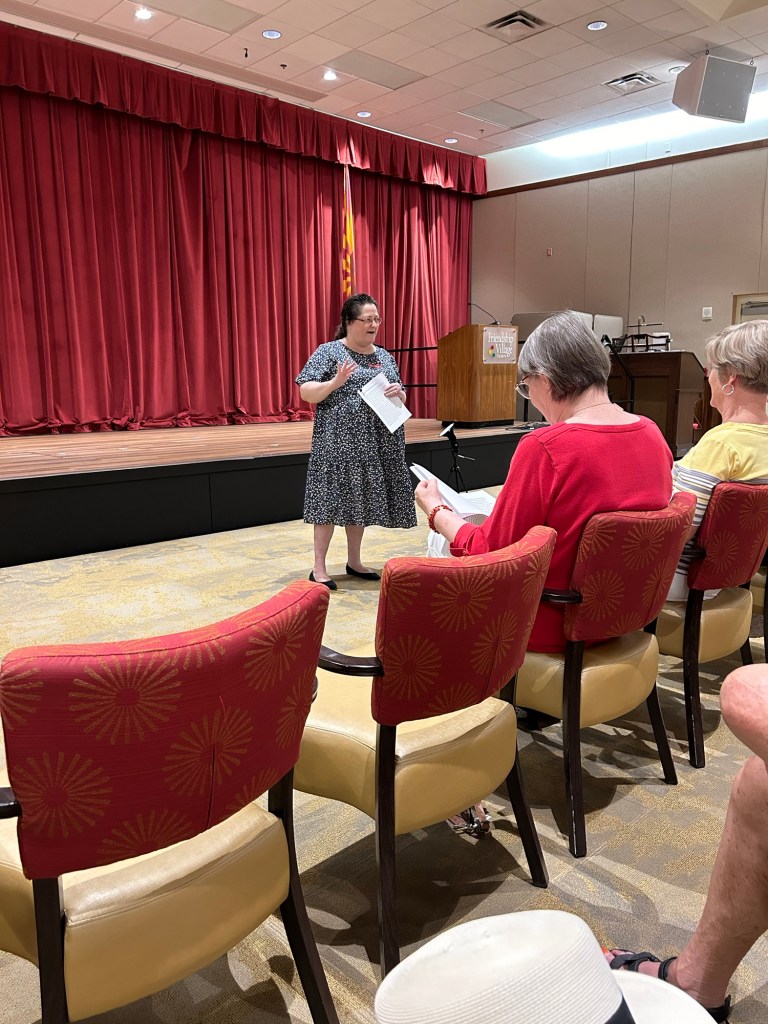
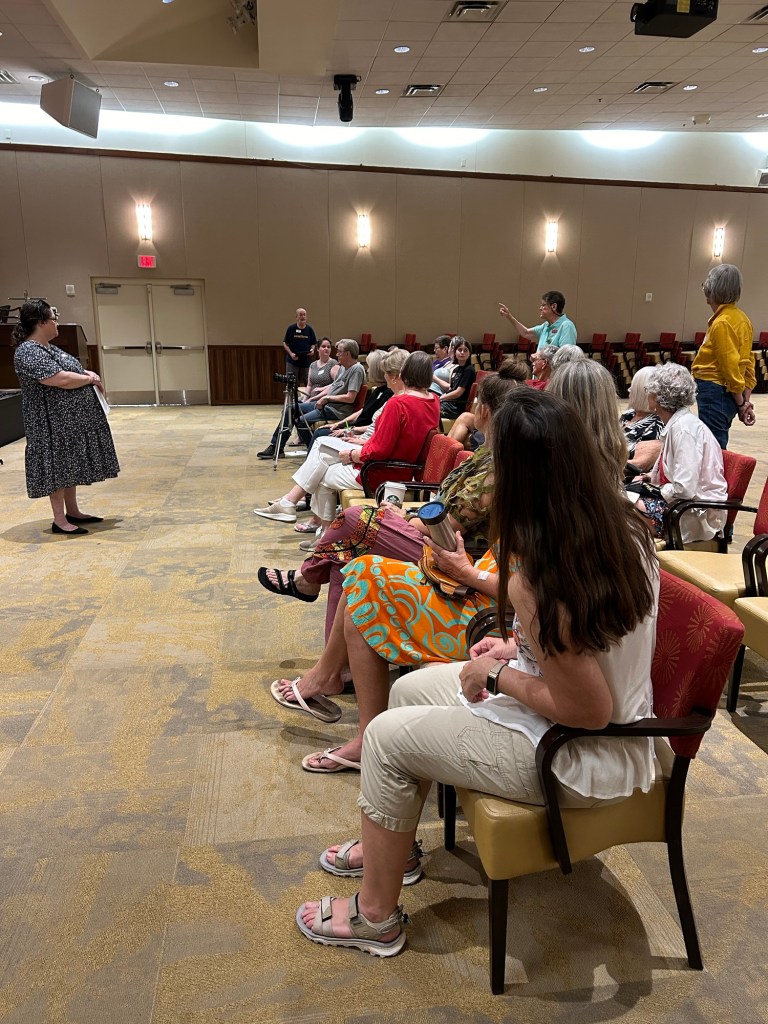

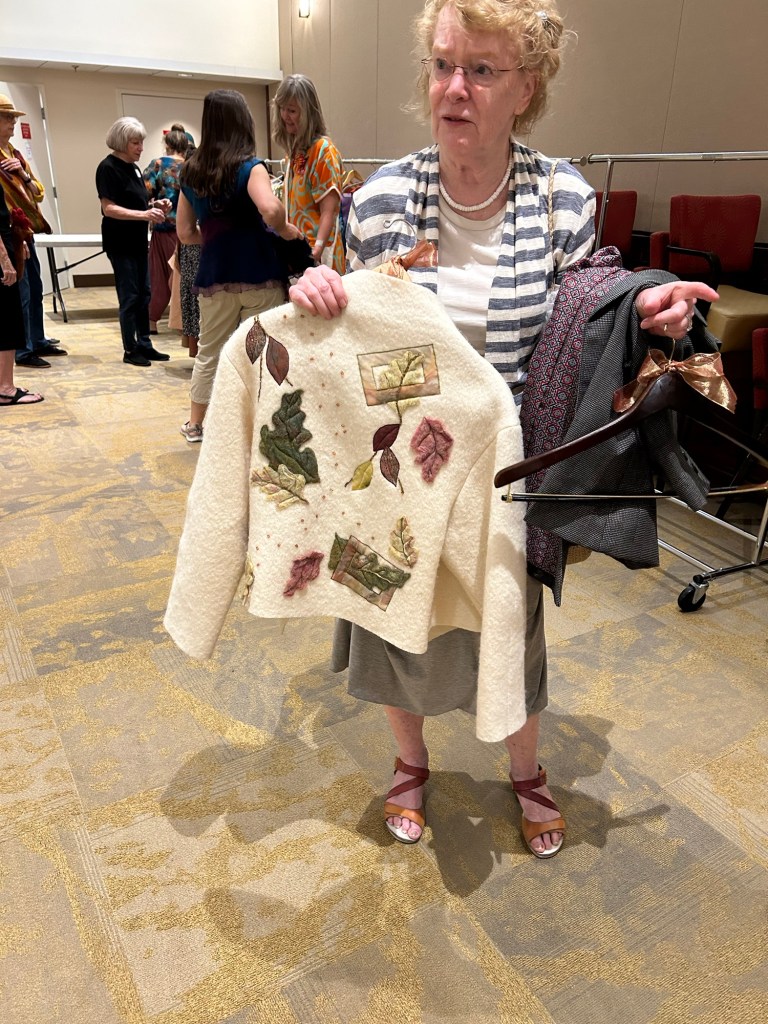

All but a couple of items were felted wool. More pictures to come!
Nothing Exciting Happened Feb 1924
Since there was little happening during the month of February 1924 in the Arizona sheep industry, I have just compiled all of the information here. Ranges were still pretty good for the sheep even though no rain had fallen over the previous five weeks. The sheepmen were only beginning to be concerned about the lack of moisture and were hoping that there would be some soon. Shearing was progressing in the Salt River Valley and elsewhere. Wool was being ready for shipment eastward. In most cases it was being sent to the west coast to be shipped by water to the East Coast mills. Water shipment would save the sheep men money on transportation cost.
It was estimated that 278,659 head of sheep and goats (there was no breakdown of numbers between the two animals) would be grazing on the ten national forests in Arizona for the upcoming summer grazing period. Some newspapers reported that only eight national forests would be used for grazing. At the winter business meeting for the Arizona Wool Growers’ Association, the sheep men would receive information on the new grazing fee schedule. For 1924, sheep would be assessed $0.25 per head for grazing on forest service land. More will be written about this as found in the newspapers or other sources of information.
Sheepmen and outfits mentioned in the February newspaper included M. J. Riordan, Harlow Yaeger, Nolan Snodgrass, S. W. Jacques, D. H. Henderson, Larkin W. Carr, Governor Safford (he was in the sheep business and was expecting to add to his flock), E. H. Duffield Sheep Company, and Howard Sheep Company. Of these names Harlow Yaeger deserves further comment as his wife died leaving him with two small children, Mary 7 and Lonnie, 3 to raise. At the time of her death, she was in a sanitarium in California, distraught over the death of her oldest daughter. Mr. Yaeger had his sheep in Diablo Canyon area. I am still researching through various sources if Jacques was a relative of my husband’s family as I have a document showing that was a spelling of the family name in France.
Lastly, valuation of sheep was reported for Coconino County and Navajo County for 1923. In Coconino County there were 240,173 sheep valued at $1,200,865.00, with 4,529 bucks valued at $68,040. There was a decrease of 9,000 sheep but the valuation was up by $202,725. Navajo County had 55,381 sheep valued at $275,905.00 and 509 bucks at $7,635.00. No reports of decrease in sheep were given for Navajo County. Valuation of a ewe was $5 per head and $15 per buck for both counties.
While news of the sheep industry was sparse in February we did learn some information that furthers our knowledge of what was happening in the industry. Research of newspapers for March are being completed and any information of importance of the sheep industry will be posted.
Finishing January 1924 News
Sheep men were concerned in January 1924 with varies problems such as rabies, freight rates and range land.
Several articles appeared in the January newspapers on the problem of rabies that, if not checked, could have dire consequences for the sheep men who were just lambing this month. It was reported that there were more coyotes than ever in Arizona with concentration of them in the central and southern parts. It was very concerning the high numbers of coyotes in the central area with this part of the sheep lambing grounds. It was believed that the disease had spread to domestic dogs when coyotes invaded ranch yards and bitten the dogs. It was stressed to the sheepmen that all coyotes and stray dogs be killed to keep the disease from further spreading within the state.
Reduction in freight rates for wool from Phoenix and Flagstaff were recommended to the interstate commerce commission through cooperation of the American Wool Growers’ Association membership at their annual meeting. Arizona’s freight rates were higher than other western states whether the wool was shipped to Pacific coast points or directly to Boston via railroad. For example San Francisco could ship to Boston from $1.35 to $1.70 per hundred pounds while Phoenix the charge was $3.00. A reduction in transportation cost meant a larger savings to the sheep men.
Along with the discussion of freight rates from Arizona was a discussion of having a warehouse to store the wool for when the market was more favorable. Dumping the wool on the market when prices were low was not a good economic decision but without a storage facility, little options did the wool growers have. Construction of a warehouse and a manufacturing facility in Los Angeles have been planned by the Pioneer Pacific Worsted Mills. Construction was to begin immediately. (As to this topic, a more thorough search needs to be made to find more details upon which finding them they will be reported in a future blog).
Flagstaff sheepmen who use the desert in and around the Salt River Valley were becoming concerned that the lands that they formerly grazed were becoming more scarce each year. More and more of the land was being passed into private ownership taking these lands away from the wool raisers. As this land became more scarce, rental prices advanced to be out of the reach of many of the smaller sheep outfits. (Note: This was one of the reasons that the men who had raised sheep sold out and pursued other avenues of work.)
A few little tidbits found:
- A brand was applied for by T. A. Nicholas of Florence during the month. I don’t remember seeing his name in later years newspapers.
- A lawsuit had been filed by sheep and cattle men from Utah who were being charged 25 cents a head on all sheep and 50 cents a head for cattle for inspection for their animals to use the Northern Strip, i.e. the Arizona Strip. They believed that it was unconstitutional for one state to charge another state duties that were more than what the inspection cost would amount to. An update will follow as more papers are researched.
- Sheep men or an outfit cited for various reasons included John Hennessy, A.A. Johns, and Grand Canyon Sheep Company
- A film about the Salt River Valley featured sheep herds.
Stay tuned for February 1924.
1970: 100th Anniversary of Sheep Trails
The Arizona Wool Growers’ Association marked the 100th anniversary of Arizona sheep trails at their annual summer meeting in Flagstaff. The industry had its beginnings in the 1860s but trails were not established until the northern sheepmen recognized that by “moving of their sheep to warmer winter climates lambing and shearing could be advanced by about three months.” Migration of the sheep would begin mid-October when frost appeared on the mountains.
At one time, there were many trails in Arizona used by the sheepmen but by 1970 there were only four actively used trails: Beaverhead-Grief Hill; Mud Tanks-Government Gap; Heber-Reno and Black Canyon. Most sheepmen were not trailing their sheep by this time as truck or rail were more common methods used. But there was still the hardy sheepman who would walk their sheep on one of these trails.
The trails in Arizona range from 200 to 300 miles in length. The flock will have a change in altitude of about 6,000 feet. The sheep would travel from five to ten miles per day grazing on the available grasses. One herd of sheep would start on the trail and then another would follow at a distance of a few miles to keep the herds separated.
A herder and camp tender would accompany each herd. All their supplies that would be needed for this journey of four to six weeks were carried by burros. Everything was neatly packed in wooden pack boxes which were then secured by rope handles that were tied to the crosspiece of a pack saddle each burro wore. Their boxes would have food, drinking water, and camp equipment, i.e, Dutch oven, coffee pot, bedrolls for both herder and camp tender. The food would consist of food for the two men but also dog food for the ever-important dogs that would accompany each herd southward. These dogs kept the sheep moving, locate strays and stragglers and some of the dogs were to protect the sheep from predatory animals such as coyotes, wolves, or lions.
The procedure was the same no matter if the herd was heading to summer grazing or to the desert for lambing and shearing.
The last time the Heber-Reno trail was fully used was in 2011 when Mr. Dobson, owner of the Sheep Springs Sheep Co., retired from the sheep industry. The Auza Sheep Company is still using a trail when the weather conditions permit – not to dry or the rivers not running to high so men and sheep and burros can safely cross. It has been several years now since they trailed their sheep.


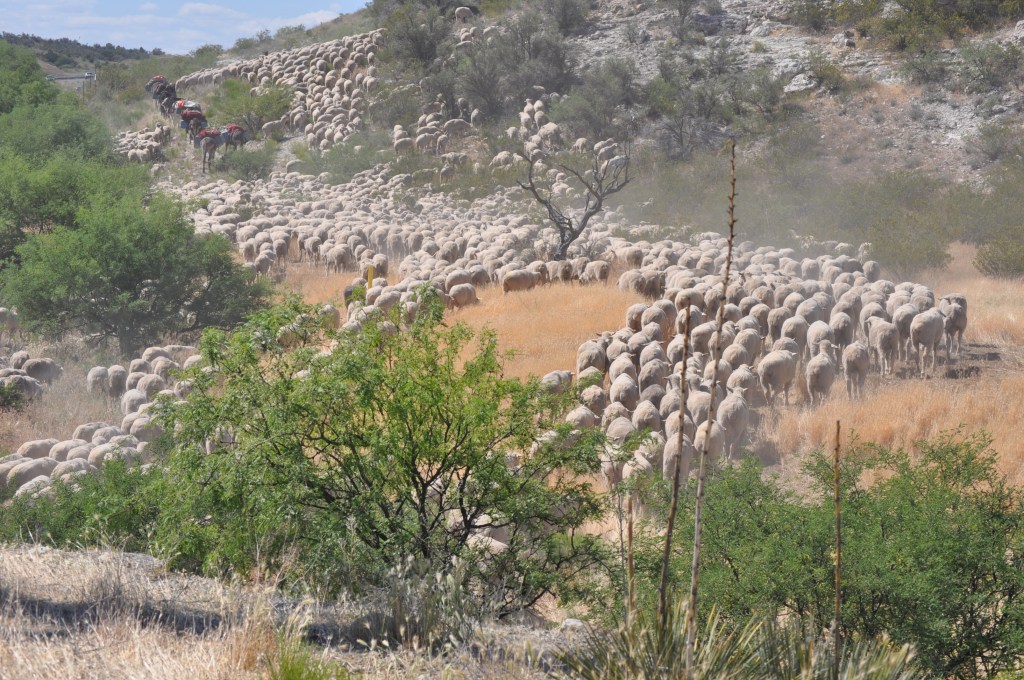
Top picture – Dobson’s Sheep Springs Sheep Co, Dobson’s sheep in Sycamore Canyon (courtesy of Cindy Shanks) and Auza Sheep Co. Sheep near Cottonwood.
At the 100th anniversary of the trails, the sheep men and their auxiliary each held meetings. The sheep men gathered at the Flagstaff Arizona Bank and the women met at the Monte Vista Hotel. The big social event of the meeting was the barbecue of lamb and beans which was held at Ft. Tuthill. The public was invited to the “lamb affair.” Adults paid $1.50 and $1 for children. Frank Auza was responsible for the barbecue of the lamb. Mrs. John Aleman, Jr. and Sylvia Manterola headed up the serving of food. Sheepmen who helped procure the lamb were John Aleman, Sr., John Aleman Jr., Albert Pouquette, Joe Auza, and Joe Manterola. The women’s auxiliary fund-raiser was the wool quilt (written about in previous blogs) with the brands of the sheepmen to be raffled. Mrs. Basilio Aja oversaw the raffle. Mr. and Mrs. Robert Aja of Williams were responsible for the dance held after the barbecue.
AWGA Auxiliary 1969
Researching the sheep industry in old newspapers I come across some of the most interesting items that I have heard mentioned by today’s auxiliary members but hopefully with this information and others that I found I am starting to piece together the rests of the puzzle.
The Arizona Wool Growers’ Association Auxiliary met July 16 in Williams at the home of Albert Pouquette. The primary reason for the meeting was the installation of the new officers. Other business was the auxiliary was looking for old wool clothing to be used in their “Old with New” apparel display for the fall. The women were working on a big relief map showing the sheep trails in Arizona. They also wanted to have a men’s fashion show along with a men’s barbecue cooking presentation for their Education Promotion. They were preparing for their sheep industry education promotion week to be held in October at Chris-Town shopping center. Another project that the ladies would be working on was a wool quilt which would feature appliques of old sheep brands. This project was going to start on August 6 at Basilio Aja’s home south of Williams.
The question that is raised here is what happened to the map showing the sheep trails? And another question is this the quilt that the ladies finally made?
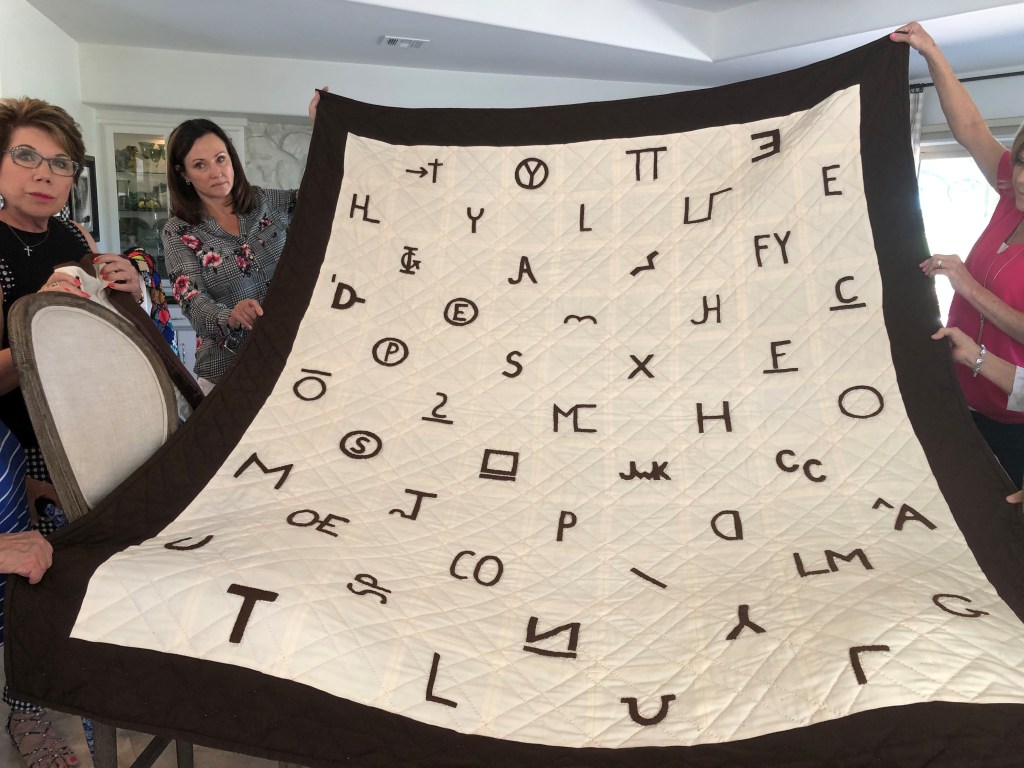
And just to let everyone know these were the officers of the auxiliary elected: Mrs. Jean Etchamendy, first vice-president; Mrs. M. P. Espil, second vice-president; Mrs. Arnaud Etchamendy, secretary-treasurer; Mrs. John Aleman, Jr, parliamentarian; Mrs. John Simpson, auditor; Mrs. Phillip Echeverria, historian; Mrs. Basilio Ajo, corresponding secretary; Miss Sylvia Manterola, lamb promotion chairman; Mrs. Steven Zvoner, state director of “Make It Yourself with Wool.”
If you recognize your brand or anyone else’s please comment on this post. Thanks.
John Sr. & Frances Aleman
Congratulations to John Sr. and Frances Aleman family for their nomination posthumously into the Arizona Farming and Ranching Hall of Fame. They will join other sheep families that have been honored in the past. The induction ceremony will take place in February 2024 at the Wigwam Hotel, Litchfield Park.
This blog has written about Frances Aleman in the past. Included is some information on John Sr. as well as Frances.
The Aleman family is only one of the many families who made the great sheep era here in Arizona possible. There once were almost two million sheep in Arizona and now there is only a few thousand, not counting those sheep on the Native American reservations or small flocks owned by individuals. The Aleman’s contributed in their own ways to its legacy in the promotion of lamb and wool both here in Arizona and nationally.
Juan Manual Aleman, a Spanish-Basque from the Pyrenees Mountains of Spain, was born August 1894. He came to America in March 1914 and started as a camp cook for a sheep company in Winslow, Arizona. A few months later he moved to Flagstaff and went to work for MP Espil & MI Powers at Frisco Mountain Sheep Co. He worked here for 12 years saving his money until 1926 when he partnered with Mike Echeverria in the Cross Mountain Sheep Company near Seligman, Arizona. In 1935 he joined in partnership with Joe and Leon Pouquette northeast of Williams, Arizona. After saving his money he was finally able to start the John Aleman Sheep Company in 1952. In 1967 his son, John Jr., joined him and they changed the name to John Aleman and Son Sheep Company.
He was an active sheep producer in Arizona for 58 years, a member of the Arizona Wool Growers Association of which he was a director for 27 years as well as a director for 20 years on the Kaibab Advisory Board. He was listed in Who Is Who in Arizona in 1958.
John met his wife, Frances Abbie Hendrix, who was born in Illinois and migrated out to Arizona from St. Louis in 1929, at her father’s Box H Ranch near St. Johns, Arizona. They enjoyed a very unique courtship riding the range on horseback and working with the sheep. They were married July 1936 in Phoenix. It was the beginning of a wonderful life they spent together for over thirty-six years.
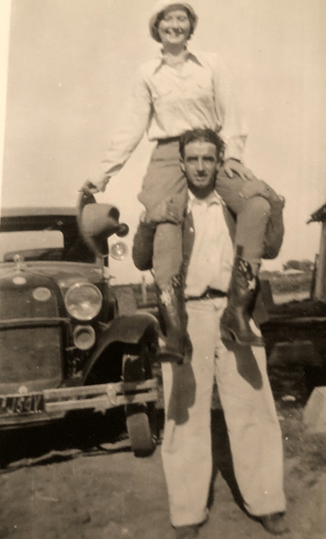
Frances became very active in promoting lamb and wool and in 1948 she, along with Ora Chipman, of Utah, co-founded the Make It Yourself With Wool competition which was sponsored by the Women’s Auxiliary to the National Wool Growers’ Association. In 1968 the American Sheep Producers Council started the annual Aleman-Chipman Scholarship Award for the senior winner in honor of their contribution to introducing young people from across the country to the beauty of woolen garments.
In 1958, Frances, along with several other women in Arizona’s sheep industry, started the Arizona Wool Growers’ Auxiliary. She was the Charter President and served for twelve consecutive years. She also served in each of the National Women’s Auxiliary offices and was elected President of the national in January 1971 and served for two years. Then she served an additional two years as the National Press Correspondent later being appointed as the Historian Chairman for the American Sheep Industry. It was here that she spent over 3½ years gathering histories from sheep families across the country for the book “Sheep and Man An American Saga” printed by the American Sheep Producers Council in 1978.
Throughout these years, in addition to Make It Yourself With Wool, she organized and worked on many lamb and wool promotions including the National Miss Wool beauty pageant, demonstrations at numerous grade schools, high schools, ASU, UA, 4-H clubs, Boy and Girl Scouts, the Arizona State Fair and on television and numerous newspaper interviews.
An annual Lamb and Wool Fall Fiesta was held at Chris Town Mall where a complete sheep camp was set up including ewes and lambs and a sheep shearing exhibition. On the last day of the fiesta a full-fledged sheep camp dinner was served to an average of over 1,000 people. In 1968 she was named Woman of the Year by Chris Towners Business & Professional Women’s Club. She also served several years on the advisory board of the Town and Country Life Conference at the University of Arizona and was honored for her service.
She worked tirelessly to promote lamb and wool even while moving two times a year up and down the mountains between Buckeye and Williams, following her husband’s sheep outfit. As a young girl, Frances suffered with tuberculosis losing part of a lung which weakened her and caused many bouts of illness and hospitalization throughout her life. She had a strong will and recovered many times to return to doing the things she loved so dearly, her family, cooking and especially her passion, promoting lamb and wool wherever she could .
She was a devout Baptist and taught Sunday School at the First Baptist Church in Buckeye and helped to support two missionaries. Her husband John Sr. was a devout Catholic but they respected and supported each other’s beliefs.
Together they had one son, John Jr, who was born in 1943. He started working summers out at the Williams ranch at age 9, staying for a week at a time, helping the sheepherders, loading and moving the burros from camp to camp and hauling water, building fences and helping with the sheep. He joined his father in ownership in 1967 along with his wife, Claudia Jo Nichols whom he had married in 1961. They had two children, John III and Heidi Jo. The couple took over running the company when John Jr.’s father passed away in 1972. John Jr. and Claudia divorced in 1977. He ran the company until 1978 when he sold the ewes and the ranch to Joe and Carmen Auza. They continued to run feeder lambs together until 1980 when he married Kathy Wolfswinkel and started Aleman Sheep and Machine Company in Higley, Arizona.
John Jr.’s daughter, Heidi Aleman-Serrano, joined his wife, Kathy, in continuing to help with the annual Make It With Wool state competition and continuing to sponsor the Aleman Memorial Scholarship in memory of Frances, John Sr and John Jr. This year Make It With Wool will celebrate its 75th anniversary as a national competition. It is believed that Frances would be very happy that this competition is still going strong today. The family is proud of its part in the heritage of the sheep industry here in Arizona.
137 Years Plus of Arizona Sheep Producers
This year, 2023, marks the 137 year of Arizona sheep industry, raising sheep for their wool and meat. In 1886, sheep men realized the importance of joining together for the good of their industry and to preserve a way of life that many coming to the United States had participated in in their own countries but could not sustain that lifestyle in their own country for a variety of reasons. Sheep raising had taken place in Arizona from the time of the Spaniards who brought them into the pueblos of New Mexico and the Navajo brought them into Arizona. And Father Kino is also credited with bringing domestic sheep into Arizona in the late 1680s. But this was the first time the men joined together to promote the industry. While not germane, the cattle people didn’t organize as early as this. Forgive me if the date slips my mind!
In 1961, the 75th anniversary of the industry, The Arizona Wool Growers’ Association, took place in Flagstaff as it had in past years. The men and a few women would have the opportunity to “talk shop” – discuss common problems of the sheep raisers, the problems of the trade and seek ways of maintaining their rightful position in the ever-changing industrial world that had seen synthetics developed that resulted in a decline for wool to be used for fabrics. Today, there is no meeting of the sheep families in Arizona as there is only one family of three generations still in the business of raising sheep.
In 1961, sheep numbers had been decreasing and in fact, every year since the end of World War II when wool was used for service personnel uniforms, backpacks, blankets, and other items. Military uniforms, or at least dress blues, are once again being made from wool. But the amount of wool needed to produce these uniforms will never equal what had been used by the military in the past.
There are sewing contests across the country to promote the use of wool by both men and women. In Arizona the contest is sponsored by the few ladies and those interested who have joined together and are known as the Arizona Wool Growers’ Auxiliary. Each year, the contest is held in November and price money is given for the first, second and third place winners in each of the categories.
Other ways that were used in the past to increase the interest in and buying of wool and sheep meat will be presented in a future blog.
Sheep crossings

Found this on the front cover of Stockman magazine. There are some problems with their description.
“For many years the sheep and wool industry has played an important part in the economy of Arizona and the southwest.
“From the irrigated pasture lands of the Salt River Valley to the natural grazing range land near Springerville in the White Mountains some 200 miles to the north, each year sheep by the hundreds make their way across the rugged desert and mountain land along the Heber-Reno Stock Trail, cross rivers and streams to reach this summer grazing area.
“In more recent years a sheep bridge has been constructed across the Salt River northeast of Mesa to provide faster crossing and eliminate the loss by drowning previously experienced. Here on our cover are scenes of a typical crossing of the Salt. Sheep are funneled on the suspension bridge approach, and as the leaders are crowded forward the bridge swings and sways under the thousands of trampling feet.”
Author’s note: The picture of the bridge above is on the Verde River built during World War II by Frank Auza and other sheepmen. A new bridge was built across in the 1980s (I believe that is the correct time period because it was dangerous to cross when campers began taking its wood for camp fires.

I received the above picture from Gerald Hancock whose grandfather, Gunnar Thude was in the sheep business.
Back to their description of the pictures: “Long time secretary of that organization, and one of the most popular and well respected men in the industry is the genial Harry Embach shown in the inset of our (Stockman Magazine cover picture. Mr. Embach has been secretary of the Arizona Wool Growers for more years than he cares to recall, though he insists they have been pleasant years.”
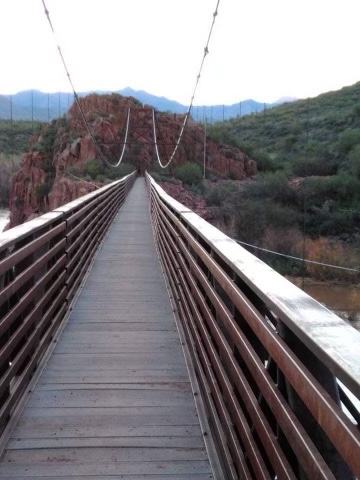
I have been to this new bridge and walked a portion of the trail. I would have loved to have been there when the sheepmen brought their sheep across. A perfect place for photographs would have been on top of that little hill or on that hill tucked away out of the way of the sheep and sheepmen and herders. The forest service would have a ranger here counting the sheep for assessment to the sheepmen for use of the trail on the forest.
Keep watch for more Arizona sheep history.
Sheep Families to be inducted
Two sheep families have been selected to be inducted into the Arizona Farming and Ranching Hall of Fame for 2023. They are John and Frances Aleman and the Etchamendy Family – Arnaud, Jean, Jean Baptista (JB) and Martin. Both the Aleman’s and the Etchamendy’s are of Basque descent. John Aleman came from Spain while the four Etchamendy’s are of French descent. Just a little information is given here but more will follow with pictures.
John and Frances Aleman.
John Aleman came to the United States in March 1914 settling in the Winslow area. He was led here by a boyhood friend, Juan Bicondon, who had migrated a year earlier. Juan wrote to John, “a land full of golden opportunities, knee high grass where sheep and cattle grazed as far as the eye could see, and cowboys riding horseback with forty-fives on their hips and Winchesters on the saddle.” John wanted to see this land for himself. He began as a camp cook there before moving to Flagstaff where he went to work for MP Espil and MI Powers at Frisco Mountain Sheep Company. By 1926 with saving his money he partnered with Mike Echeverria in the Cross Mountain Sheep Company. He partnered with Joe and Leon Pouquette also before he started the John Aleman Sheep Company in 1952.
John married Frances Abbie Hendrix in 1936. The couple had met when she came to Arizona and was visting her father’s ranch near St. Johns. Frances became very active in promoting lamb and wool. Along with Ora Chipman, of Utah, they co-founded the Make It Yourself with Wool competition. That competition, now called Make It With Wool, is still strong in both Arizona and Utah and many other states. The competition will be held in November in Arizona. (Pictures to follow once the competition is over.) Winners from each state move on to the national competition held during the national conference of the American Sheep Industry, held in January.
Just one more note about Frances taken from the nomination form submitted by her daughter-in-law. “In 1968 the American Sheep Producers Council started the annual Aleman-Chipman Scholarship Award for the senior winner in honor of their contribution to introducing young people from across the country to the beauty of woolen garments.”
Etchamendy Family.
Arnaud was the first of the family members to migrate to the United States in 1930. He began to work as a sheepherder until he was able to purchase his own sheep company. Once he became an American citizen though he was drafted into the military during World War II which forced him to sell his beloved sheep. After his 27 months of service, he returned to Arizona and purchased more sheep. He brought over his nephew Jean in 1949.
Jean and his uncle worked together for many years. Then Jean partnered with a boyhood friend, Jean Arriage who had come over in 1957. That partnership only lasted a year and then Jean went out on his own. Upon Arnaud’s death, Jean helped his aunt, Ramona with the sheep until her passing in the 1970s.
JB was the next brother to migrate to the United States also in 1957. He began his sheep career in California but within a year he was in Arizona working along side his brother and their uncle. The youngest Etchamendy, Martin would come in 1961. JB and Martin worked many years together until Martin returned to France. Martin would return and begin to run sheep again, mostly in California where he still to this day has a flock of sheep. Martin is 83 years young and still visits his sheep everyday with the exception of vacations and when he is not the grand marshal of the Basque activities in his hometown of Bakersfield, California.
All four of the Etchamendy’s wives were active in the Arizona Wool Producers Auxiliary (its title today) promoting sheep and wool along with Frances Aleman. The men would serve on the various boards of the Arizona Wool Growers’ Association.
There is a great deal more about each of the four Etchamendy’s and John and Frances Aleman and the Make It With Wool competition that can be written about. Over the next several weeks more information will be given with pictures. Hopefully, I will be able to photograph the Make It With Wool, Arizona competition this November.
 ArizonaSheepHistory.wordpress.com