
Just videos of my visit.
Tag: Auza Sheep Company
Auza’s Sheep Company
I don’t know how many times I have taken this journey, but it is always fun, educational and worth the time to travel to the Auza’s Sheep Company. From my house to their office driving through the Phoenix metropolitan traffic can be a challenge but worth it once I arrived.

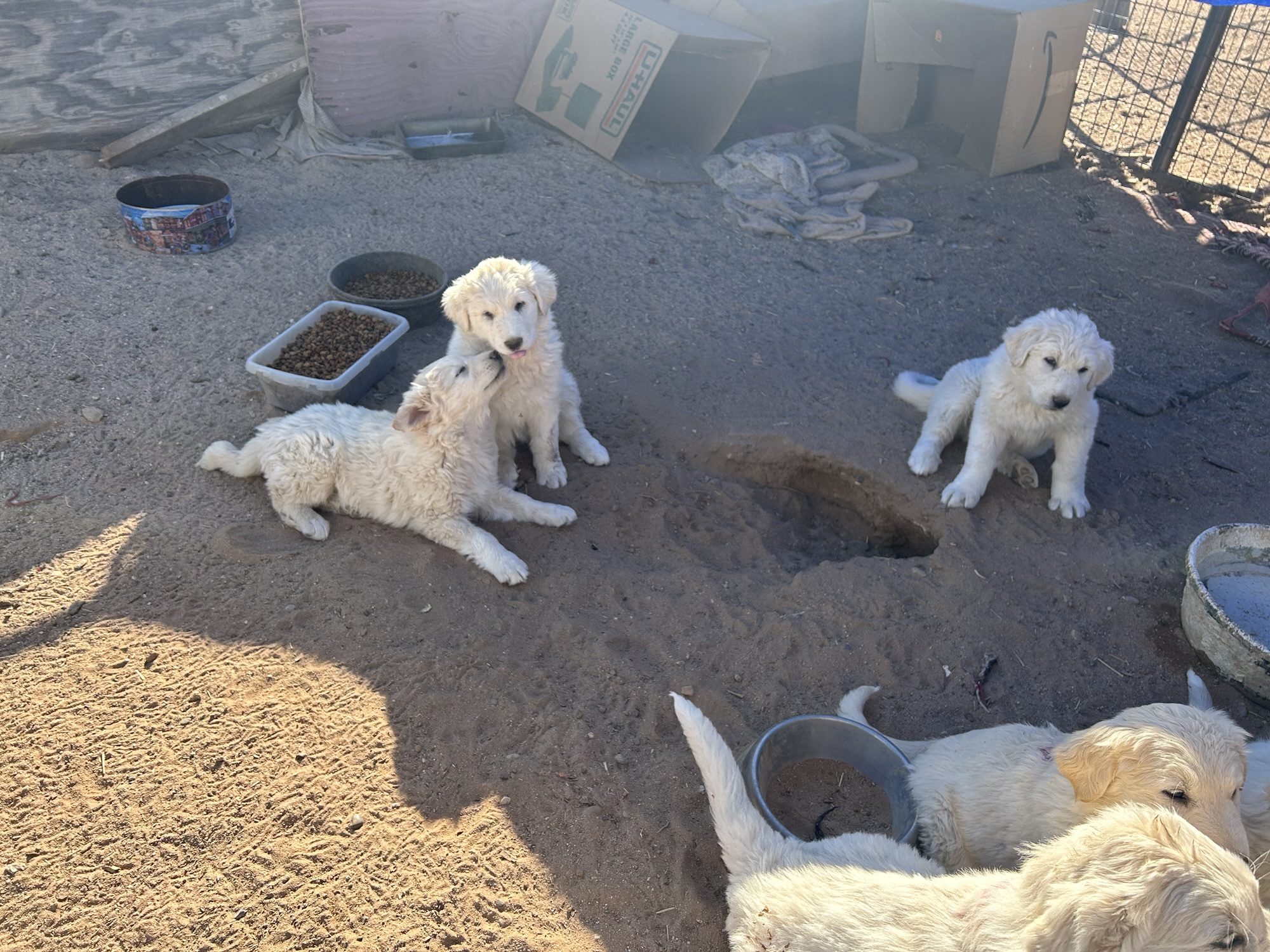
The day started at the Auza’s seeing the new Great Pyrenees puppies. I had never seen the puppies before and could have spent the day with them. They are so adorable and friendly but watch when they are out with the sheep. A different story if you mess with their sheep! But these little guys have some training to go through first.


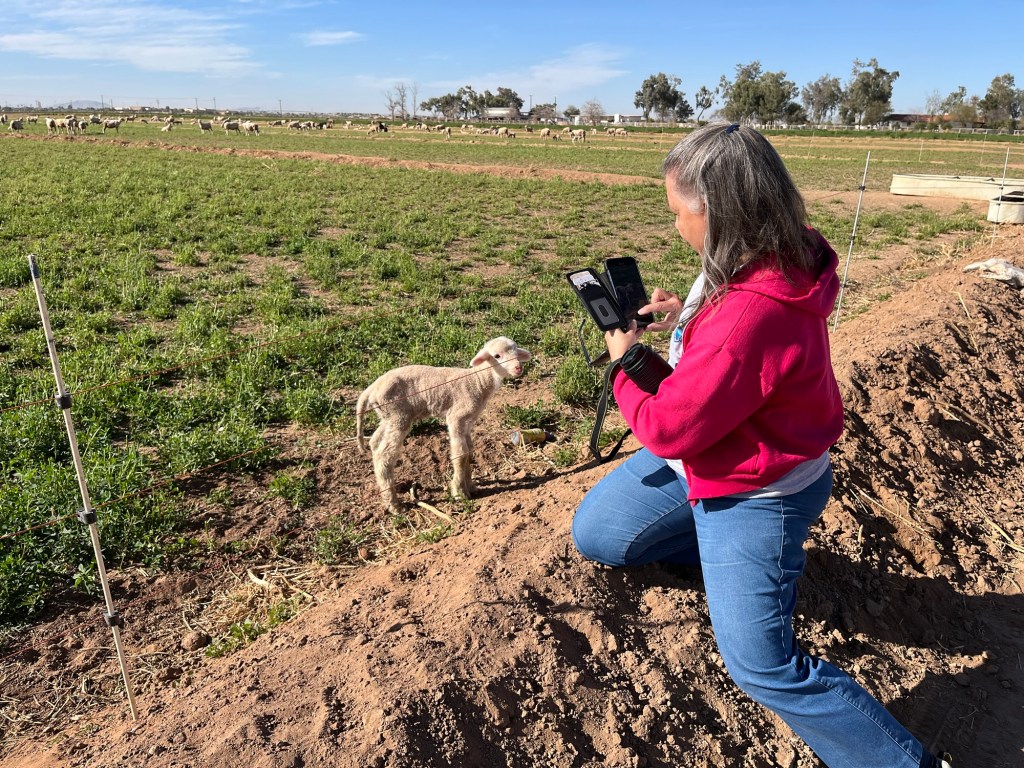
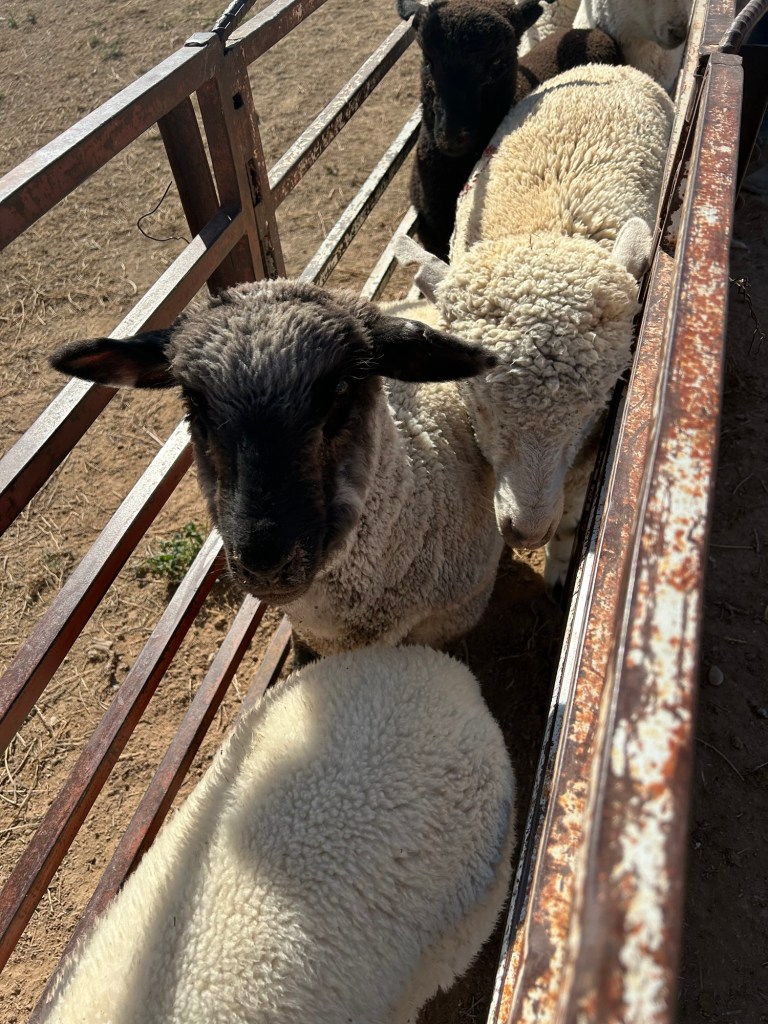
After leaving the puppies we drove to see the lambs which are also adorable and so cute. I could take them home with me! Several were close to the road and came to visit. These lambs were being bottled feed.


Mama’s with older babies were in the adjacent field.

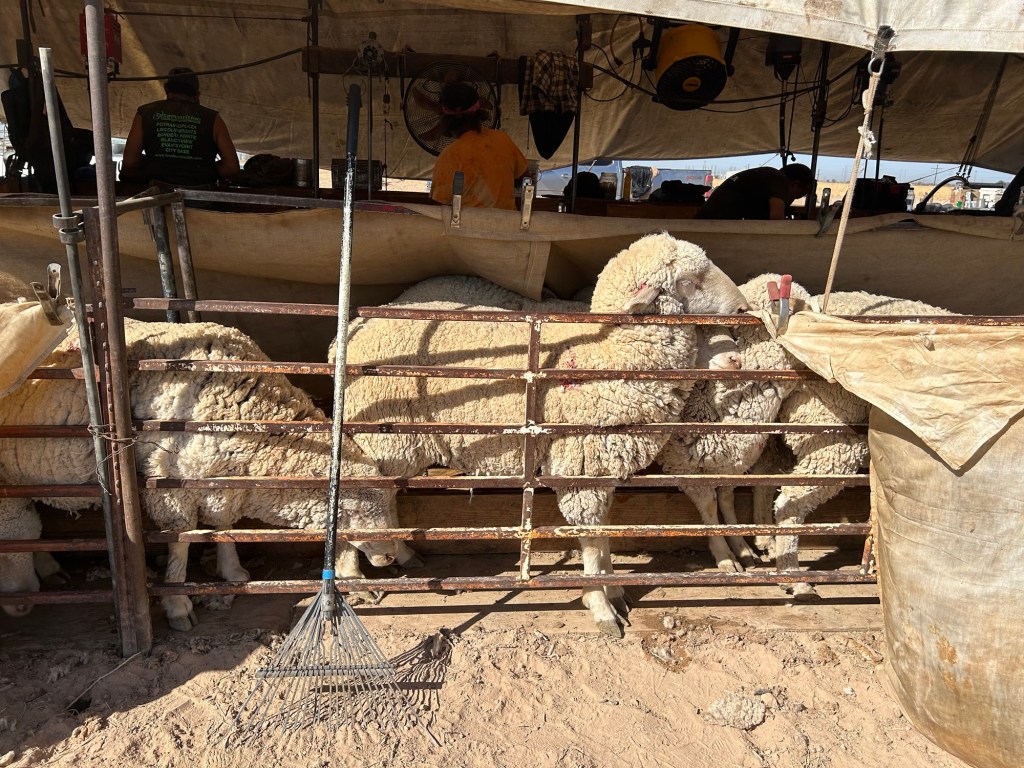
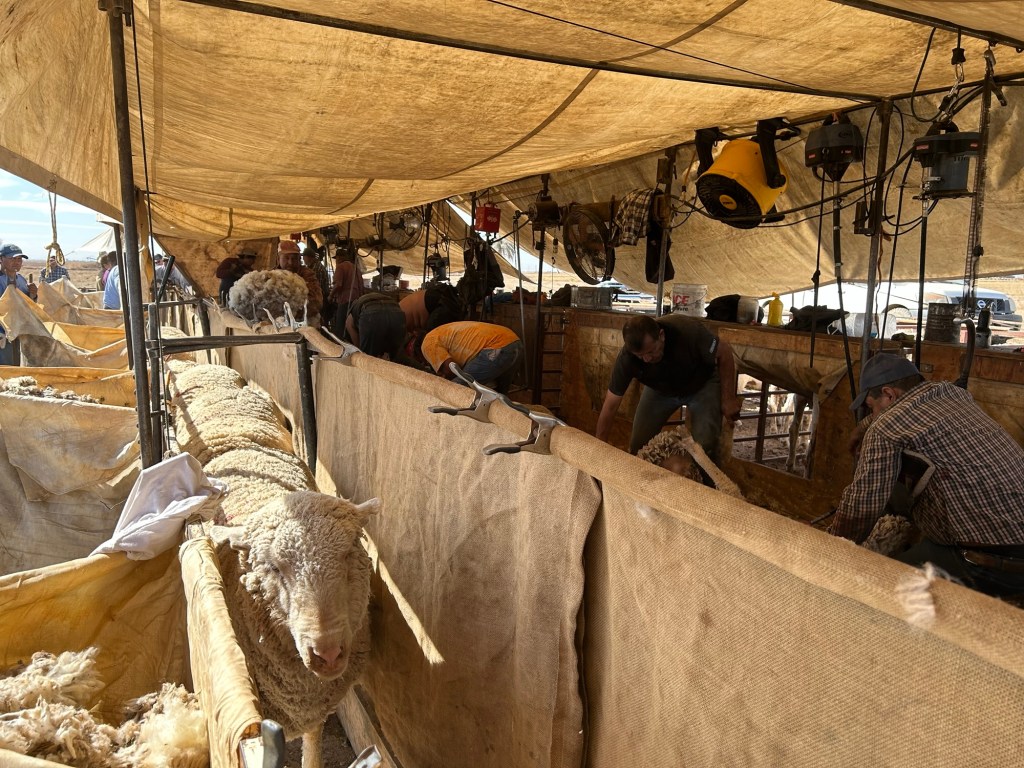
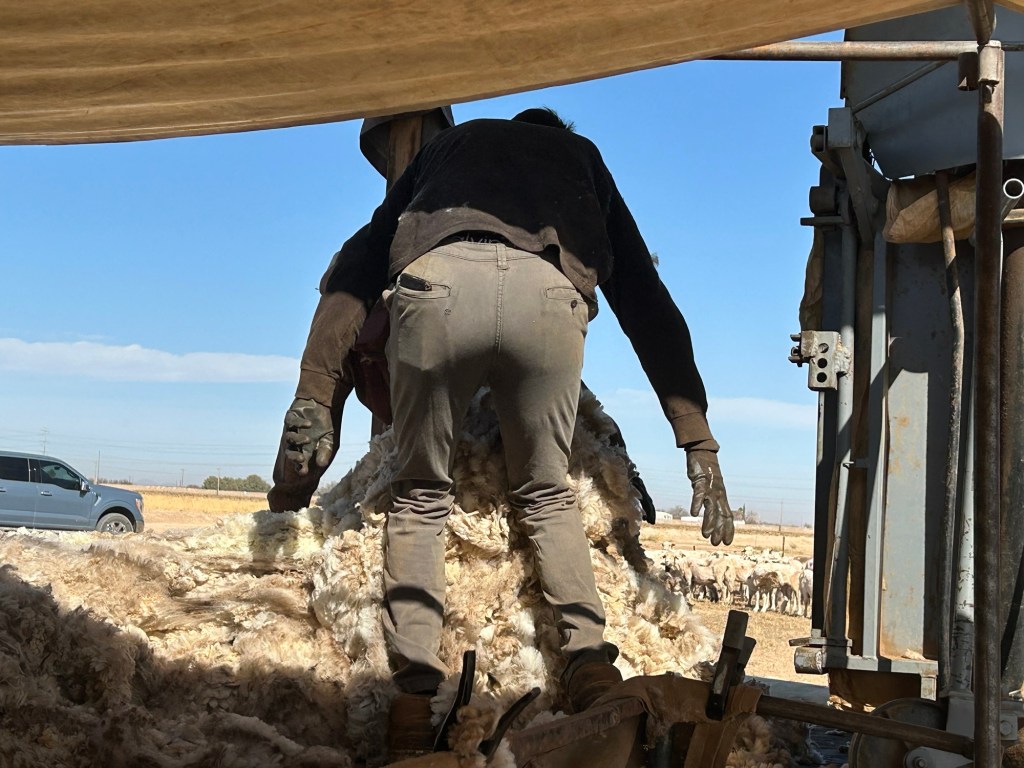
Our last stop was the shearing operation. This is organized chaos. Lambs crying for their mamas which are being sheared, ewes wanting to get ahead or see what the line hold up is, men pushing the ewes along the line for the next available shearer, the shearing, the gathering of the wool and putting it in the machine to be pressed down until the bag is about 400 pounds!
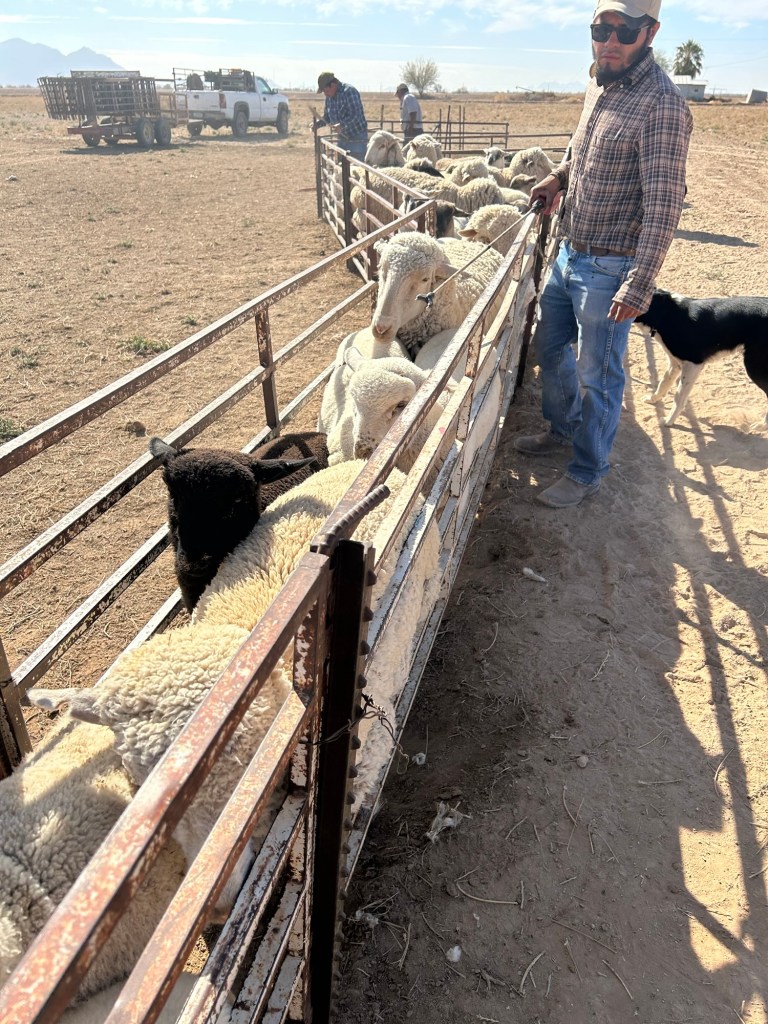
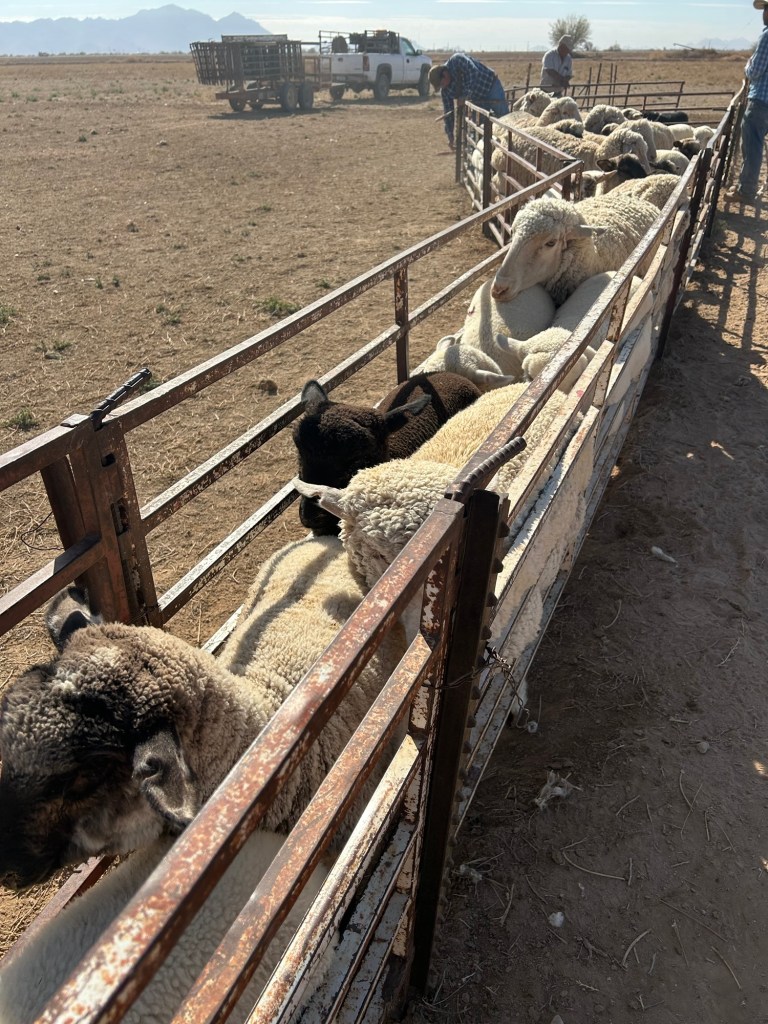

The last step after shearing is the vaccination process and the camp is broken down and moved to the next location. But the men will stop first for their lunch before shearing all afternoon.
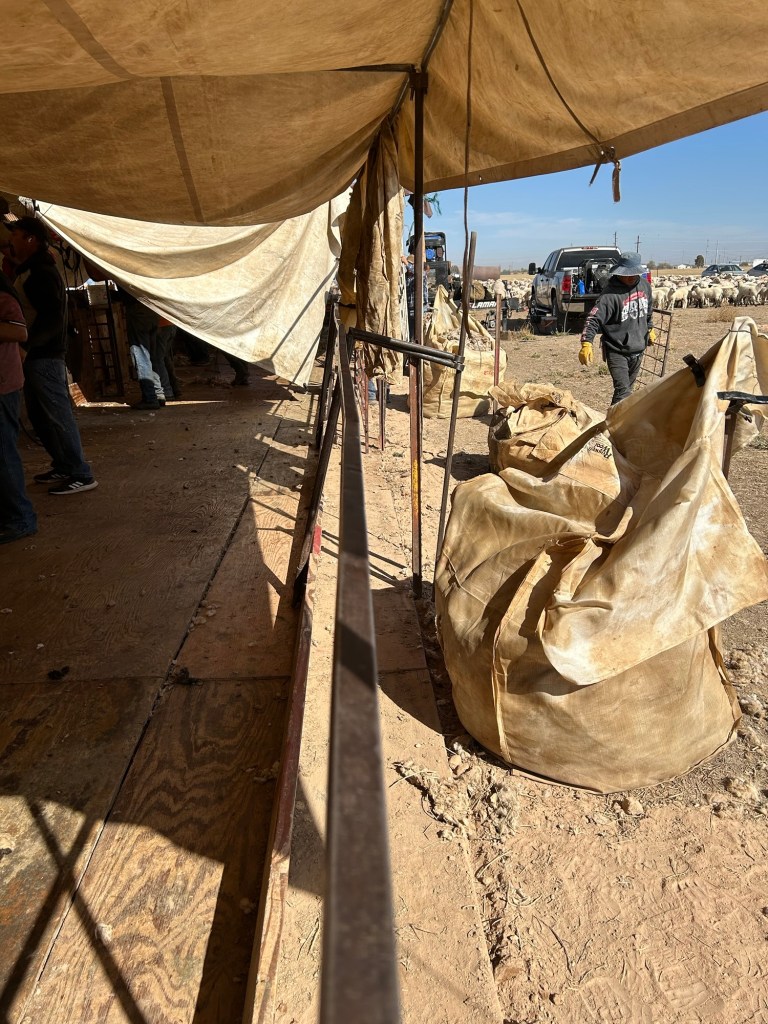
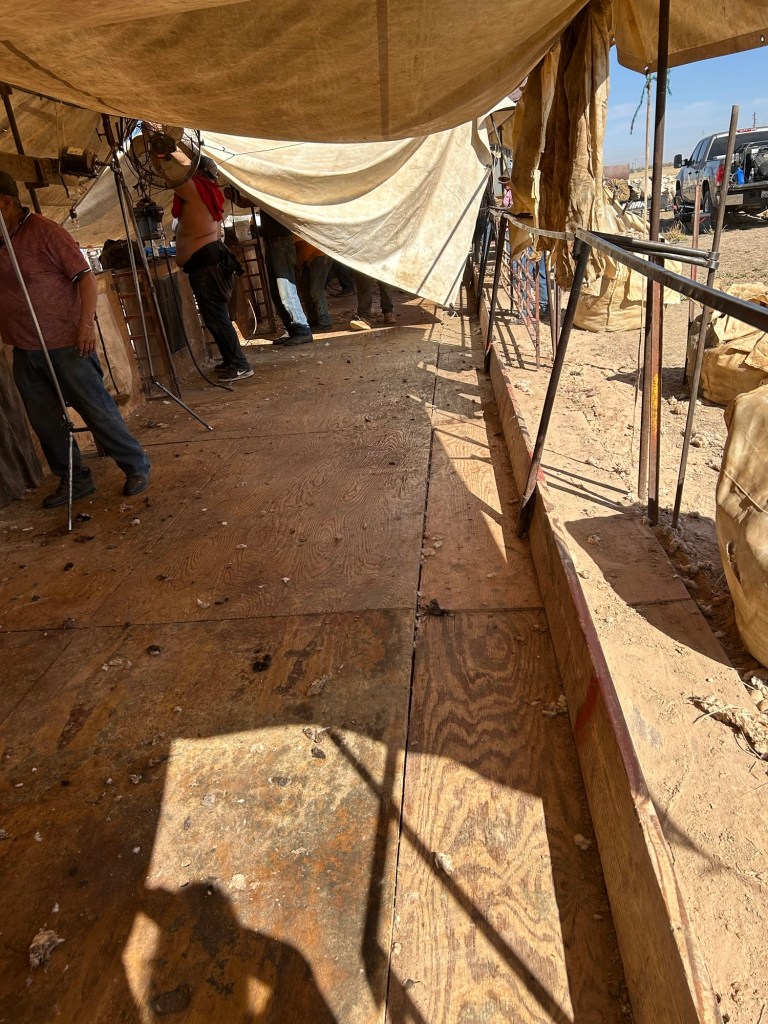

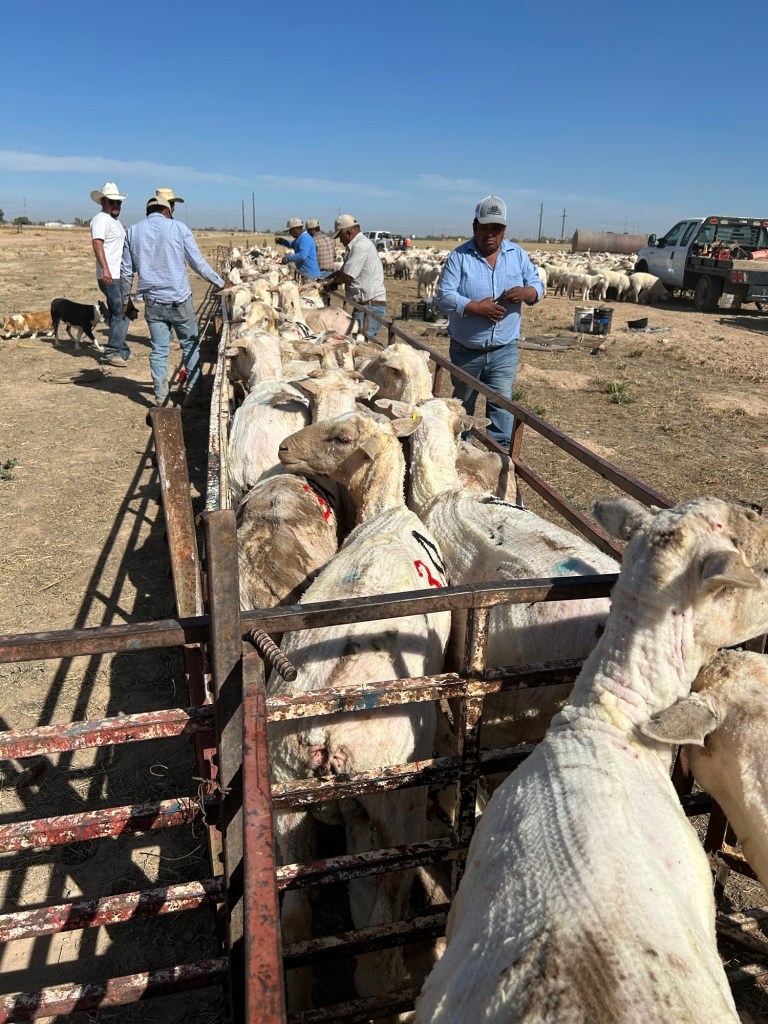

As soon as I can upload a couple of videos I will put on another post. For now enjoy. I hope to see you back for my next post.
1970: 100th Anniversary of Sheep Trails
The Arizona Wool Growers’ Association marked the 100th anniversary of Arizona sheep trails at their annual summer meeting in Flagstaff. The industry had its beginnings in the 1860s but trails were not established until the northern sheepmen recognized that by “moving of their sheep to warmer winter climates lambing and shearing could be advanced by about three months.” Migration of the sheep would begin mid-October when frost appeared on the mountains.
At one time, there were many trails in Arizona used by the sheepmen but by 1970 there were only four actively used trails: Beaverhead-Grief Hill; Mud Tanks-Government Gap; Heber-Reno and Black Canyon. Most sheepmen were not trailing their sheep by this time as truck or rail were more common methods used. But there was still the hardy sheepman who would walk their sheep on one of these trails.
The trails in Arizona range from 200 to 300 miles in length. The flock will have a change in altitude of about 6,000 feet. The sheep would travel from five to ten miles per day grazing on the available grasses. One herd of sheep would start on the trail and then another would follow at a distance of a few miles to keep the herds separated.
A herder and camp tender would accompany each herd. All their supplies that would be needed for this journey of four to six weeks were carried by burros. Everything was neatly packed in wooden pack boxes which were then secured by rope handles that were tied to the crosspiece of a pack saddle each burro wore. Their boxes would have food, drinking water, and camp equipment, i.e, Dutch oven, coffee pot, bedrolls for both herder and camp tender. The food would consist of food for the two men but also dog food for the ever-important dogs that would accompany each herd southward. These dogs kept the sheep moving, locate strays and stragglers and some of the dogs were to protect the sheep from predatory animals such as coyotes, wolves, or lions.
The procedure was the same no matter if the herd was heading to summer grazing or to the desert for lambing and shearing.
The last time the Heber-Reno trail was fully used was in 2011 when Mr. Dobson, owner of the Sheep Springs Sheep Co., retired from the sheep industry. The Auza Sheep Company is still using a trail when the weather conditions permit – not to dry or the rivers not running to high so men and sheep and burros can safely cross. It has been several years now since they trailed their sheep.


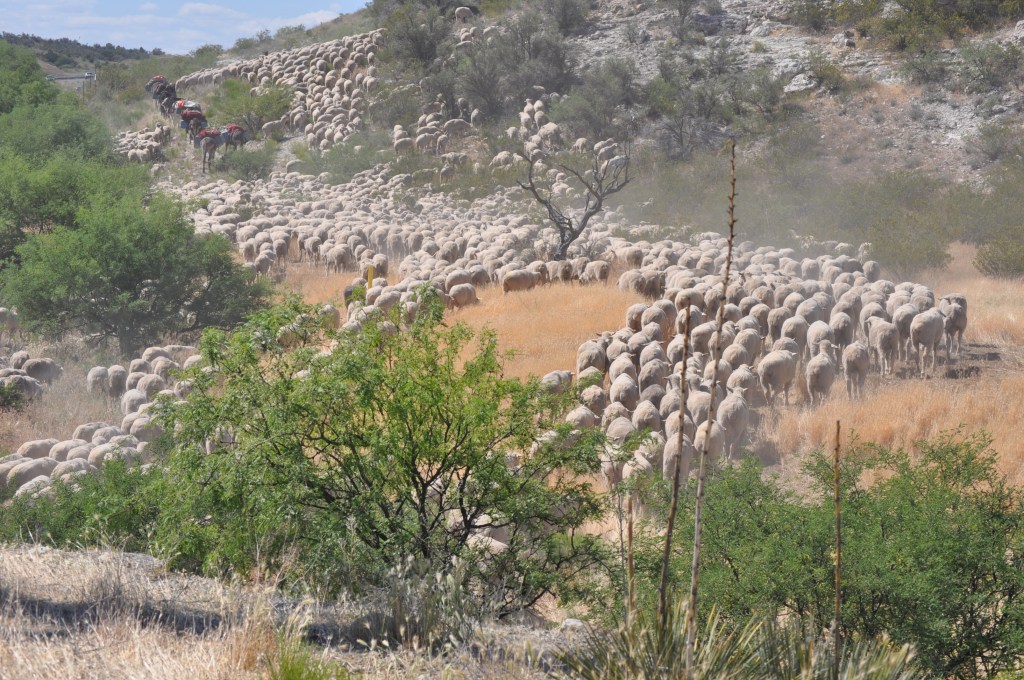
Top picture – Dobson’s Sheep Springs Sheep Co, Dobson’s sheep in Sycamore Canyon (courtesy of Cindy Shanks) and Auza Sheep Co. Sheep near Cottonwood.
At the 100th anniversary of the trails, the sheep men and their auxiliary each held meetings. The sheep men gathered at the Flagstaff Arizona Bank and the women met at the Monte Vista Hotel. The big social event of the meeting was the barbecue of lamb and beans which was held at Ft. Tuthill. The public was invited to the “lamb affair.” Adults paid $1.50 and $1 for children. Frank Auza was responsible for the barbecue of the lamb. Mrs. John Aleman, Jr. and Sylvia Manterola headed up the serving of food. Sheepmen who helped procure the lamb were John Aleman, Sr., John Aleman Jr., Albert Pouquette, Joe Auza, and Joe Manterola. The women’s auxiliary fund-raiser was the wool quilt (written about in previous blogs) with the brands of the sheepmen to be raffled. Mrs. Basilio Aja oversaw the raffle. Mr. and Mrs. Robert Aja of Williams were responsible for the dance held after the barbecue.
A Day Trip to See Sheep
My husband and I had a great time with the Auza’s yesterday and seeing their sheep. They are always so gracious to take me to get my sheep fix. So just a few pictures from yesterday.

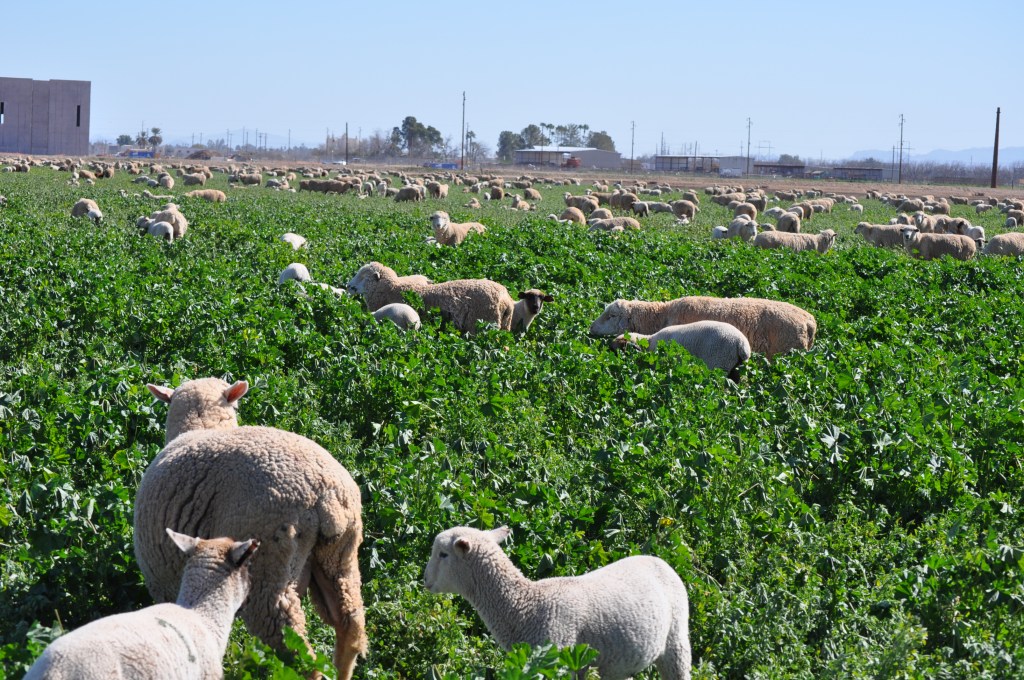

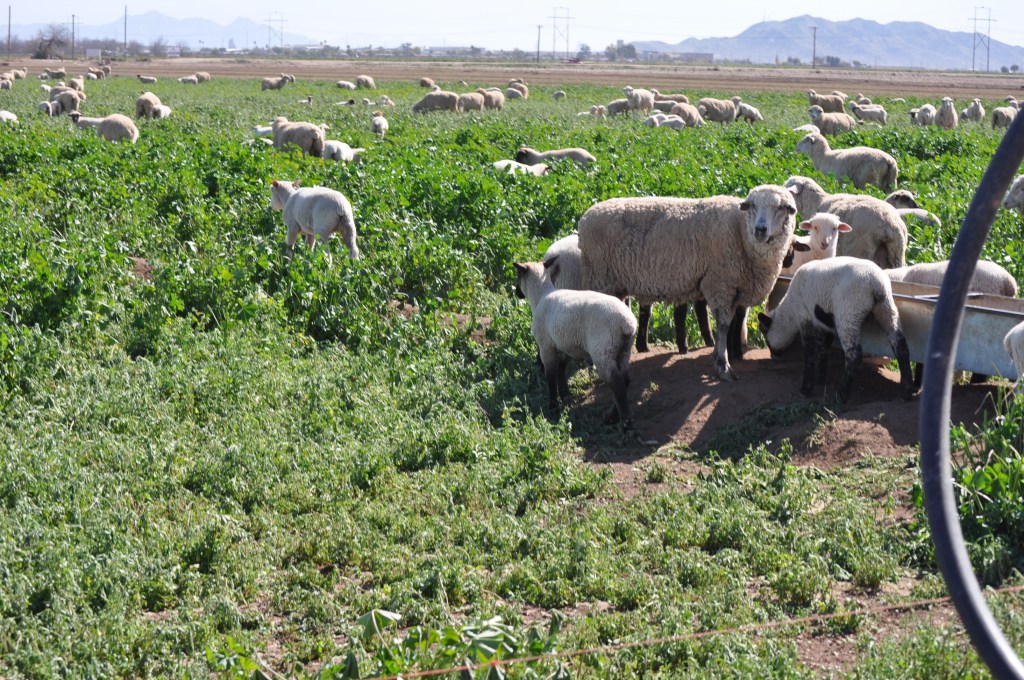
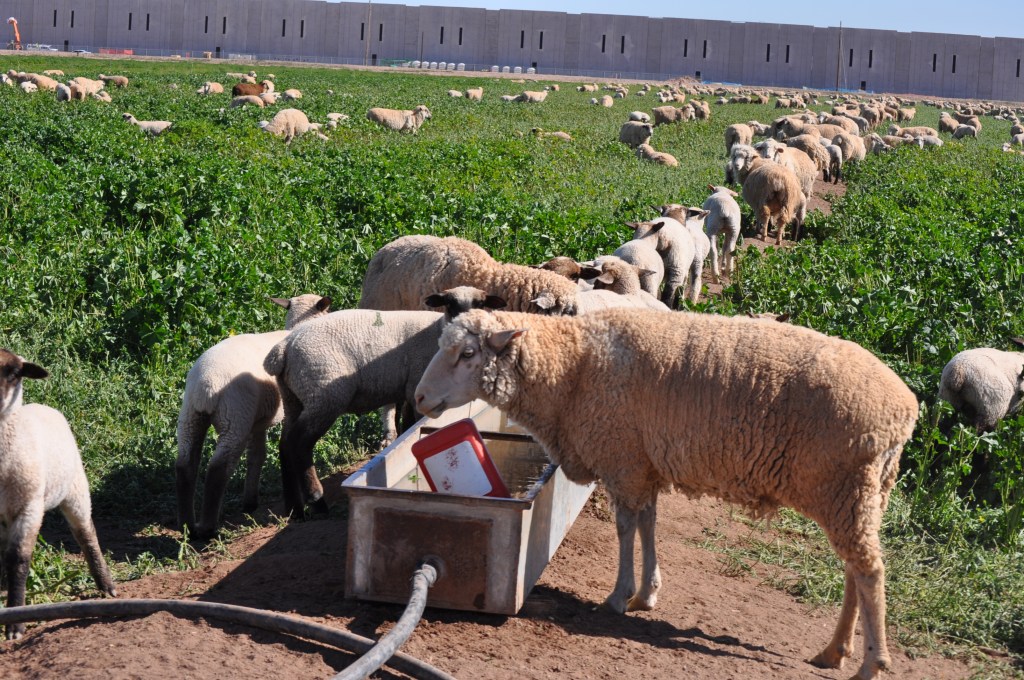
I will post more pictures soon. I am working on a story about sheep at a mission in southern Arizona too.
The Shearers
Imagine having to spend most of your workday bent over a ewe or ram holding the animal between your legs or putting pressure with one foot on her stomach so you can spend three minutes shearing her. It is backbreaking work but the men that I met this morning had been doing the work for many years as they traveled the west going from one rancher’s flock to another to shear the wool, a renewable product! Shearing takes place mostly in February in Arizona, although it can be earlier or later depending on the schedule of the shearers. There are no shearing outfits in Arizona. However, that does not mean there are no shearers; these men and maybe women, shear small flocks near them. They are willing to shear these small flocks as they may have sheep of their own and need to stay near their homes. The shearers today came from California. They had already sheared sheep this week so their tents had been set up in the field as they had planned to shear in the same location for a few days. They will move their operation at least once before they will move onto another state and begin the process all over again.
When they arrive, the rancher and family along with his herders will have the fences set up to drive the sheep through a maze into the shearing pen. Some of the sheep are brought into the pens the night before to be the first to begin getting their wool cut. More sheep will be brought in by the herders throughout the day. The shearers will set up their electric shearers and about 9 a.m. will begin the process that lasts for about three hours with only short breaks to stand up tall stretching their backs, move the wool from the sheep they had just sheared and then, it is back to grabbing the next ewe or ram to shear. Rams are sheared but there was none this day while I was watching. Some of this was shown in pictures on yesterday’s post.
Sometimes a small sheep herder in the area will bring their sheep to be sheared as it is too expensive of an operation for them to have the shearers come to them.
There is some redundancy in the two videos. The last shows the line of the sheep as they wait for shearing and what happens as the shearers grab one of them. Both videos shows the activity that goes on within the shearing pen – the shearing, the grabbing of the wool and getting it out of the way for the next shearing job, and the men as they continuously work. Notice that the floor is a piece of plywood that can get slippery from the lanolin found in the wool.
Tomorrow we will look at what happens to all that wool that has been sheared. Each sheep gives 10 to 12 pounds of wool.
 ArizonaSheepHistory.wordpress.com