
Much is known about Jean Pierre Espil, at least most of his life here in Arizona, but, what is unknown is how old he really was, his route into the United States and how he arrived into the United States. Here is just a few tales of Jean Pierre Espil and how he got started in Arizona.
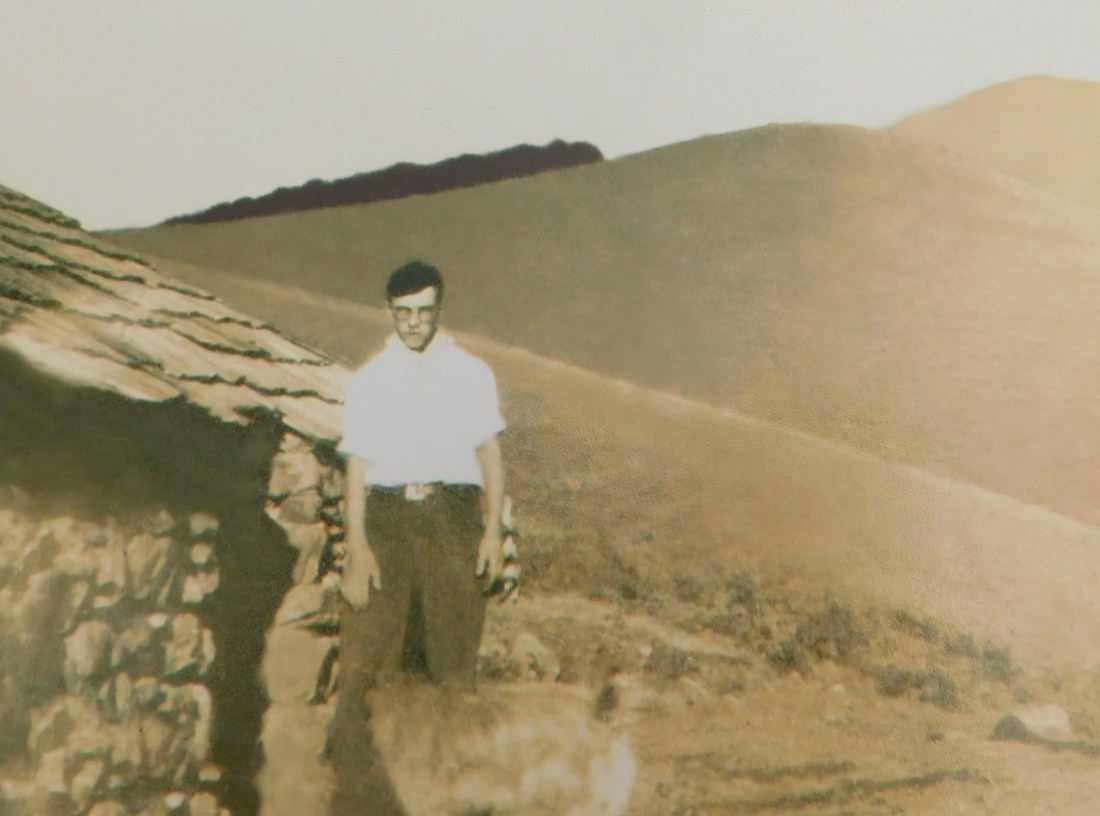
Jean Pierre Espil was know as “Pete”. The best estimate of his arrival into the Arizona territory would be the early 1890s. Early information about Pete comes from the wife of L.A. (Louie), the third child of Pete and his wife, Isadora Aristoy. Marion Ansley Espil had a special relationship with her father-in-law, learning many details of his early life and how he arrived in the United States and ultimately settling in Arizona. Pete was born in Bagneres-de-Bigorre, Hautes Pyrenees, part of the French Basque country. The family and even Pete, never knew his correct birth date, although 1870 is the most likely date. The family had heard two stories about “Pete’s” arrival into the United States; one story puts the arrival in New Orleans and the other, it was California. Pete told Marion he arrived into New Orleans, which allowed him and his cousin, Martin, to use their French, for they knew few English words and those were “fried eggs and ham.” Having to endure many meals of fried eggs and ham, he never ate them again once his English improved.
Pete’s and Martin’s reason for migrating to the United States was simple. In the Basque culture, the oldest son, of which neither were, would be the only one to inherit the family home and land leaving younger brothers to find other means to support themselves. Sometime in the late 1870s or early 1880s, Pete, who may have been as young as eight or as old as 12 (remember we don’t know when he was born), and Martin boarded a ship to the United States. Sticking with the story that Louie Espil’s wife told, they landed in New Orleans on a cargo ship; most likely working their way across the ocean, but, it has also been said that they were stowaways! From there, the two young men took the Santa Fe Railroad to California arriving in Los Angeles and then made their way to Sacramento by stagecoach. Martin had secured a sheep herder job prior to leaving France and Pete had hopes of also securing a job. Wet weather in the Sacramento area was not to Pete’s liking and he headed south to Long Beach doing unknown work. Later he found work with the sheep herding outfit, Miller and Lux Land and Livestock Company, back near Sacramento. His length of stay in California was affected by two factors. In the late 1890s and early 1900s, wool was the important commodity in raising sheep. Oil content of the wool greatly reduced its value and in the area were the sheep were grazed, oil from the ocean bottom would surface and drift into the inlets where the ocean water would mix with the fresh water and thus would get into the sheep’s wool. The other factor affecting Pete was that Mr. Lux was a gambling man and lost the wages of the sheep herders in a card game. So, after seven years of working for the company, Pete had experience but only a $20 gold piece to show for the seven years of hard work.
Pete boarded a train eastbound with maybe the thought of returning to his home land and maybe discouraged from his treatment the last seven years. What we know is he got as far as Flagstaff, an environment with the mountains surrounding the town which made him feel like he was back in France. Leaving the train, he met Harry Embach, a Philadelphia lawyer and a giant in the organization of the Arizona Wool Growers Association. The two men would remain friends for the rest of their lives. Embach helped secure him a job with the Babbitts. It is unknown how many years he worked for the Babbitts or what his job was. The Babbitts were known cattlemen, but they also had sheep. He may have worked as a herder for them.
He next worked for Hugh Campbell, a banker and a sheep rancher. During this time, herders usually asked their employers to keep their wages until they requested them. The herder could ask for monetary payment or in some cases, they would ask for sheep to begin their own herd, hoping to build up a herd to venture out on their own. Until both herds were too large, the herder remained employed. It would only make sense that Pete would be skeptical of asking his employer to retain his wages after his experience in California, but for some reason, he trusted Campbell. Unfortunately, Campbell was just like Luz, as Campbell took Pete’s wages and a good portion of the bank’s money. But there was a silver lining for Pete as he made out better than in California. The bank officials asked if he would run Campbell’s sheep until they could be sold; and for his work he would be paid with the lamb crop. Pete was on his way to his own sheep company which he named the Espil Sheep Company.

 ArizonaSheepHistory.wordpress.com