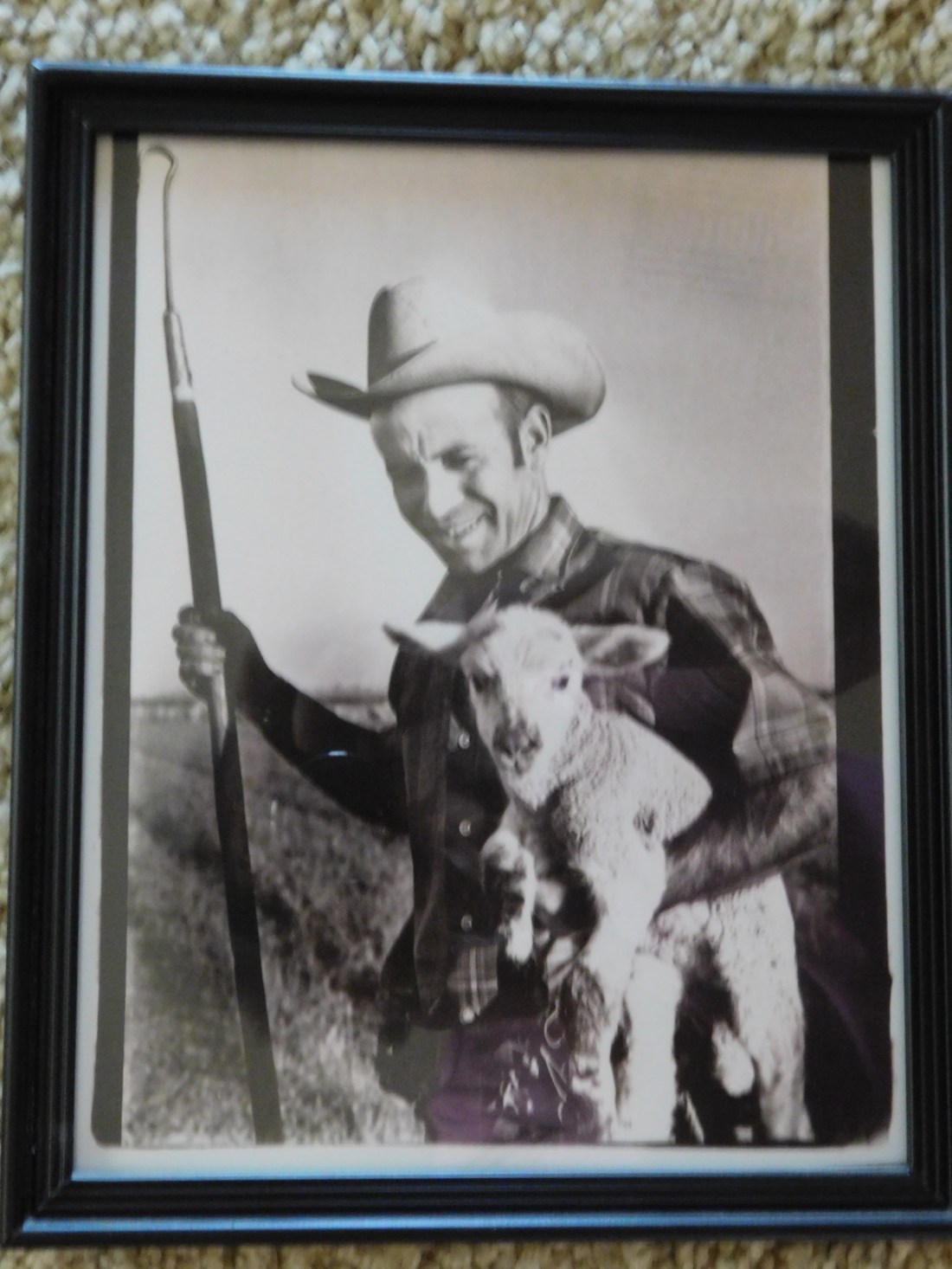
Early sheep rancher John Hyrum Fuller

The Arizona National Livestock Show Ranch Histories mainly has stories of the men and women who had cattle in Arizona but once in awhile there are stories about some of them having sheep and sometimes both sheep and cattle. (there are 36 volumes in this and I am slowly making my way through them.  More sheep stories will be written as the sheep ranchers stories are told in these volumes).

Once such person who had first sheep than cattle and then seemed to have both was John Fuller who bought H. S. Bly sheep outfit with Mr. Pollock in 1911.  Bly’s sheep and now Fuller-Pollock were located south of Winslow.  They wintered around Jack’s Canyon and had a camp west of Sunset Mountain which today is off of Hwy 87 which takes you to Winslow.  They didn’t keep the sheep long but sold and the permit for grazing sheep was turned to one to run cattle.  In 1913, Fuller bought the sheep outfit of Harry Melburn which had his sheep in the area of Canyon Diablo and also bought Dick Hart’s sheep which were on the range south of East Clear Creek.  The sheep were wintered on the range north of the forest boundary and East Sunset Mountain and East Clear Creek.  This is all near Hwy 87.    Fuller also owned Moqui Ranch.  In 1916 a terrible snowstorm meant the loss of many sheep and cattle.  He sold the ranch, sheep and some of the cattle to Mr. Pollock.

Winslow-1.10

Chevelon Creek runs through the old sheep headquarters of the Ohaco Sheep Company, Ltd. which I have previously written about.  Clear Creek is clearly marked.  Lower Tillman was the area that Fermin Echeverria ran sheep.  Canyon Diablo on this map shows it to be north of I-40 but there was also one south of the interstate and may have been a continuation of the canyon.  I am not sure.  North of the area marked Cottonwood Wash and bordering the Navajo Nation, Aja had their ranch.  This area is all the Mogollon Plateau and as the darker area appears on the map, this would be the area below the Mogollon Rim.  Sunset Mountain would be most likely above where Clear Creek is marked.  I will update as I track down a better map, but this will give those readers not familiar with Arizona a general idea of where the sheep were run.  I might add at this point that the Mogollon Rim was also the border of where sheep were allowed, north of it, and where cattle were allowed, anywhere.  For more on sheep-cattle conflicts there are many internet sources to learn about this somewhat misnamed feud.


Ohaco Sheep Company, Inc.

In the late 1910s and early 1920s any person who was not a citizen of the United States could not hold forest leases for their sheep.  These forest leases were important for the grazing of the animals in the summer in the northern and eastern portion of the state. One of the ways Basque sheepmen were able to get started in the sheep business or stay in the sheep business was to form partnerships and corporations with other Basque men who were citizens.  Four men would eventually join forces sharing equally in the expenses and profits of the Ohaco Sheep Company, Inc.  The four men were Michel Ohaco, Fermin Echeverria, Jose Antonio (Tony) Manterola and Mario Jorajuria.

The four men began the company based on trust and a handshake.  Michel Ohaco  became a citizen in 1921.  He ran the company under his name obtaining all forest service permits and land.  But, all four of the men put in equal amounts to get the company going.  They ran their sheep under the name of the Ohaco Sheep Company between 1923-1933.  Then it was made a corporation when Arizona law required that 80% of the shares had to be owned by U.S. citizens.  This was accomplished through Michel’s wife, Louisa, holding shares for Tony.  Fermin’s wife, Benancia, held shares for her husband and Mario.  Michel was the president, Louisa the vice president and Benancia was the secretary of the corporation.  The Ohaco’s held 301 shares together and Benancia held 299.  This corporation functioned between 1933 and 1941.  Property was bought, leased forest land obtained, equipment bought, herders hired.  The integrity and honesty of those men and their wives worked well for everyone.  Fermin got his citizenship in 1938 and Tony in 1939.

In 1941, Michel sold out and obtained the Chevelon Butte Ranch, sheep, equipment and other things.  The Ohaco Sheep Company, Inc. then was owned by Fermin, Tony and Mario.  In 1945, Tony Manterola, who had always wanted to own his own sheep company, bought Dr. Raymond’s Flagstaff Sheep Company.  He also got equivalent proceeds for the corporation.  That left two owners, Fermin and Mario.  Mario sold out in 1951 and the corporation was run with Fermin and his sons.

What is the importance of this story is the trust each man held with the other partners.  Based on a handshake they all prospered and when the times were bad they shared the burden together.

By no means is this the whole story as the men worked together in the decade of the 1910 under various sheep company names.

Picture1Michel Ohaco


Picture3Fermin Echeverria (picture taken on his 50th wedding anniversary)Picture2Jose Antonio (Tony) Manterola with his wife Marianne.  When I am able to obtain a picture of Mario I will add it.


Basque Boarding House?

IMG_6971

I was in Winslow over the weekend for a sheep presentation for the Old Trails Museum.  What is always a plus with these presentations is the people I meet and the stories that they can contribute to the history of the sheep industry in the state.  So far, I have information on four boarding houses, three in Flagstaff and this one in Winslow.  I put a question mark as I do not know for certain that this one was a Basque Boarding House.  I know the ones in Flagstaff were.  I know there has to be more and I just love the thrill of the hunt for them.  As I learn more about when it was a boarding house and other details, I will update this blog.  This is the boarding house in Winslow.

PLEASE READ THE FOLLOWING FROM THE START EACH TIME AS I ADD NEW INFORMATION AND MAKE CORRECTIONS TO THE STORY.  IT IS NOT ALWAYS POSSIBLE TO GET ALL THE INFORMATION FROM ONE PERSON AND THERE ARE MANY PEOPLE WHO ARE EDUCATING ME ABOUT THE HAPPENINGS AT THIS BOARDING HOUSE!

I have recently learned that this was a Basque boarding house in Winslow.  It was run by Tony and Carmen Chacon.  Carmen’s father was Rafael Sarabia who ran sheep in the area.  It is my understanding that Rafael passed in 1932 but the Sarabia Sheep Company was still operating during the period of 1937-1940 based on dues that were paid to the Arizona Wool Growers Association.  Who ran the outfit for him is still in question but it may have been Tony Lopez.  This information comes from the Wool Growers Association files.  Unfortunately, the document which states Lopez ran the sheep also said Sarabia died in either 1938 or 1939.  Still some missing information that needs to be found as I talk to the families of Sarabia and Ylarraz as they both were related.  Sarabia’s granddaughter, Amparo, married Gregorio Ylarraz.

Future research with one of the two daughters of Tony and Carmen Chacon and another of the Ylarraz’s I have learned more about this boarding house.  Before I continue about the boarding house, introductions to some of those who have given me information and are related to Rafael Sarabia.  Rafael had four daughters: Carmen, Amparo, Elizabeth and Doris.  Carmen was the oldest and I do know that Amparo was next.  Carmen married Tony Chacon and they would run the boarding house.  Amparo married Gregorio Ylarraz and had four children: Mel, Doug, Jan Marie and Theresa (spelling may not be correct).  Hopefully this will help with the following story as I continue it over the next several days.

Carmen and her three sisters were sent to a convent school in Tucson when their mother died at a very young 39!  Carmen was the oldest of the four girls and thus when her father needed her help in running the boarding house she left school in Tucson and came back to Winslow to help her father.  Carmen was about 15 years old.  At the end of the school year, the other three sisters moved home also.  An interesting side note is that the convent school was run by nuns who were Basque.  At this time I have not been able to get any information on the convent or the nuns.  Another mystery to pursue.

In speaking with Irene Aja about the boarding house, she remembered it so well that she could draw a floor layout of the house!  She spent time here in the early 1940’s and has a wonderful memory.  She remembered the four connected buildings in the back of the house.  One she remembered where many of the men bunked together and one of the buildings was used to store items that the herders had no place for when they were out with the sheep. Irene remembers as a teenager going to the boarding house from her dad’s ranch, The Tillman, for a week during the summer as her dad trusted Carmen and the other herders to watch out for her.  As a young lady, this small town offered more than the ranch ever could.

More to come……..


What do you do with sheep dung?

So what do you do with sheep dung?  If you are a Navajo you sell it to the Hopi pottery makers who use it to fire their pots in.  Now that is a good use of a material and gets rid of it also.  So it that good environmental practices?  I hope to speak to the woman and ask her how long the Navajo have been selling their dung.  I just keep hearing more and more little stories connected to sheep.  The sheep keep weeds down under solar panels and wind mills, and in vineyards (the sheep will eat the grapes if the grapes hang too close to the sheep), and it has been known for years their use to reduce undergrowth in our forest reducing the potential of forest fires.  Let’s hear it for the sheep.

The First Arizona Basque Bash


If you were an Arizona Basque, the place to have been this past weekend was at the first Basque Bash where 150-180 of your fellow Basque attended a fun gathering at the Auza Ranch.  There was food and lots of getting reacquainted with past friends.  As an invited guest and the historian for the Arizona sheep industry, I was able to gather information on many Basque whose parents or grandparents were in the sheep business.  Some of their names I was hearing for the first time!  The families who helped me gather the information for my book about their families and others who had at one time been in the sheep business, had forgotten about them, too.  The event started with MariAlice Bidegain who had wanted a family reunion for a long time and once it got started it just blossomed into all Basque in the state being invited.  One of the Bidegain’s was Pete Bidegain, a French Basque.  He left France in 1906 and went to Flagstaff a day after arriving in America.  In his years as a sheep man he worked for the Campbell Brothers and Dr. Raymond.  I will add more on the story once I have the details written in a more concise matter and can add from the family members what they remember.   I have added just a few pictures from the event!

Not a lover, or even a fondness for sheep!

One evening I began to glance through the stories of ranchers in the Pioneer Stockman Ranch Histories, Vol XIX (year 2000).  There are many little snippets of information on the sheep industry found within these stories.  I had picked up the book to read about another person but got curious about the other ranchers within the pages of the tome. The first person in the book was C. Dilbert Pierce, a cattleman.  Now I’m not here to write about cattle, but sheep, and Pierce didn’t have sheep.  He had bought a small ranch east of Meyer on the Agua Fria River with a good portion of it being state lease land.  It just so happened that the state lease land had a sheep trail crossing it! In Pierce words, “The first year I learned why we bought this ranch perhaps on the cheap side.  One of the sheep drives from the Salt River Valley to Arizona high country went the length of the ranch.  The sheep cleaned up the grass and everything else edible as they passed through.  Today, the sheep are trucked — anyway we sold this place.” (pg. 7)  Clearly, Mr. Pierce did not have a fondness for sheep!  Unfortunately, Mr. Pierce does not state the year that he bought the ranch.  It will be another item to add to my list to determine a date, who he bought the land from and who bought it.  The reason this would be of interest is the that trail is still viable today and actually is the only one still in use.


“Giving Sheep a Job”*

In an article in The Buckeye Star, July 6, 2018, a flock of 200 sheep are being used in the Willcox area to keep Johnson grass, tumbleweed and mesquite trees from overgrowing the solar panels.  The Red Horse II solar and wind farm belongs to a Houston company and “contracts with Tucson Electric Power to provide renewable energy”.  Rusty Cocke owns the sheep grazing here.  Any shade on the solar panels reduces the efficiency of the units.  The arrangement is good both for the owners of the solar panels and Rusty as landscaping services are less for the owners and Rusty has plenty of feed for his sheep.

Sheep and goats are used in other locations than Arizona to eat invasive vegetation.  Some wineries are also using the animals before the grapes begin to form on the vines to keep undergrowth in check.  If the vines are high enough the sheep will not graze on the grapes.  The article states that Rusty would like to help the vineyards in southern Arizona.  Sheep, cows and goats can be used to keep our forest healthy and less prone to forest fires.  Each have their own niche.

As a side note, I learned this summer from a sheep owner in Kentucky that sheep really like beets too.  Ballyhoo Farm, Bagdad, Kentucky has also advertised her sheep to be used as lawnmowers in her area.  Many homes have huge yards and what better way to keep the graze trimmed.  It is better for the environment and free fertilizer is added to the grass.  Sheep would be quieter than the lawn mower even if it would take a little longer for the grass to be trimmed.  A good sheep dog would be all that is needed. I would call that a win-win situation.

This title is a copyrighted quote by Minna White who has given me permission.  Thank you Minna.  It is a great title for this blog!

Verde River Sheep Bridge

33. Verde River Sheep Bridge

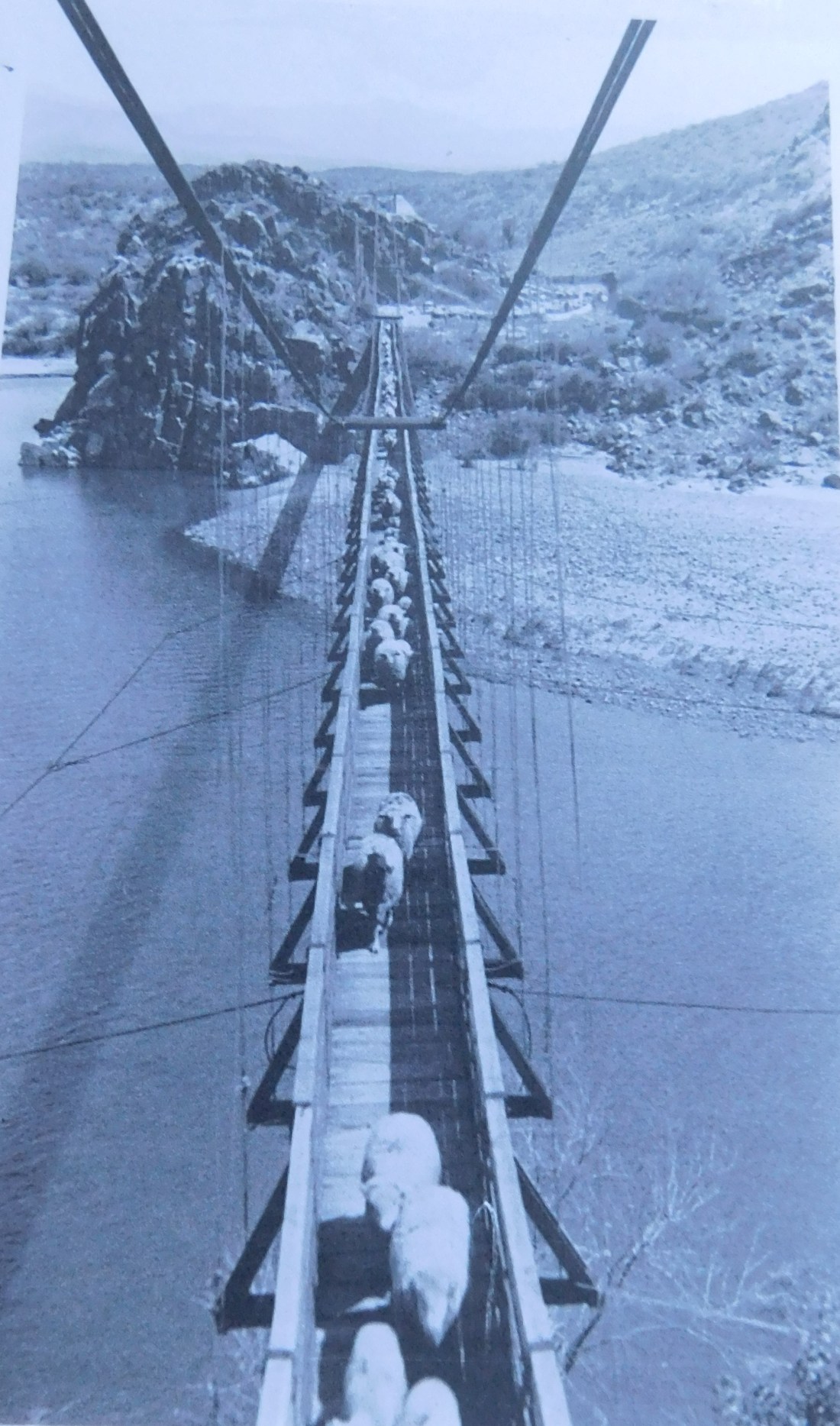
An historical picture of the Verde River Bridge.

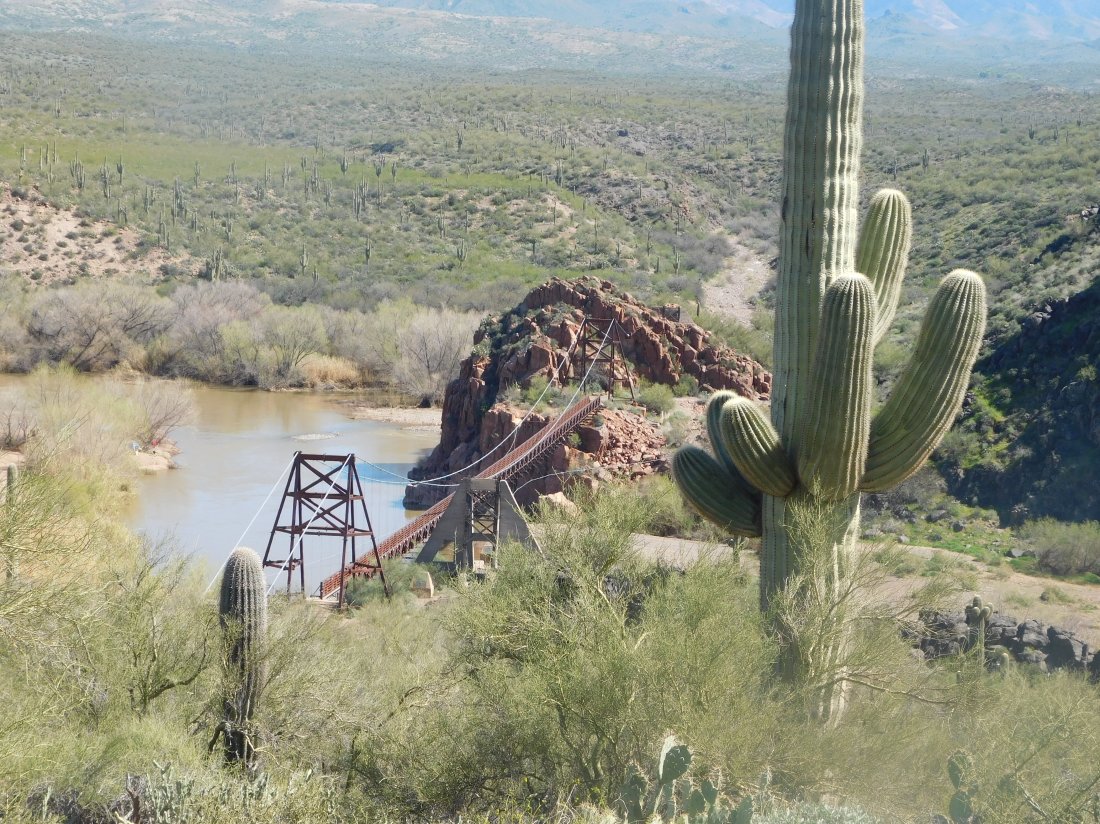
34. Verde River Sheep Bridge 2016

Picture of the Verde River Bridge that was rebuilt in the 1980s.  The bridge became unsafe due to the number of wooden pieces stolen for campers to use for firewood.  This picture was taken January 2017.

I was talking with a friend, Ken, today who said he had a picture of the old Verde River Sheep Bridge he took when he and his dad visited it many years ago.  This would have been the original bridge and not the one that can be visited today (see picture above).  He has a picture, which he needs to find and send me, of a Gila Monster crossing the bridge while they were there.  Ken thought that the bridge had been built in the late 1800s but that is not the case.  Here is part of the story of the bridge.

Frank Auza worked for the Flagstaff Sheep Company owned by Dr. Raymond.  Dr. Raymond had applied to the Tonto National Forest for permission to build the bridge along his trail allotment.  Different sheep companies had assigned trail rights along one of the many designated livestock trails in Arizona.  At one time, there were 66 in Arizona and about this time in the early 1940s, there may have been about 12 trails left. (I’ll write more about this in another blog).  Auza and the other sheep men would cross their sheep along the river which during normal flow, the sheep would cross.  During high water, it was too dangerous for the sheep, donkeys and the men to try to cross the waters.  Many sheep were lost when the men would try to cross the river as the sheep could be easily sweep down the fast moving stream.  Which led to the construction of the bridge.

During WWII, any construction material to build bridges had to be approved by the War Department.  After savaging as much of the material that Frank and the other men could from abandoned mines, they applied to the War Department for the remaining materials.  They were granted permission to buy the materials and the bridge was built.  During WWII, the soldier’s uniform was made from wool and the soldier ate a great deal of mutton.  It was in the best interest of the War Department to insure the survival of as many of the sheep as possible.  There was a movement to have children belong to organizations to raise sheep as it took twenty sheep to supply all the wool needed to clothe one soldier.

This is just a summary of the main events to building the bridge.  I’ll include more pictures in the days ahead.  I have collected more stories over the past couple of weeks and will post as time allows.


Basque sheep herders and ranching families.

DSCN2187

Jose Aleman with sheep.  Jose worked for John Aleman but if I remember correctly, he was not related to the Aleman’s.  Unknown date.

23. Priest praying

Priest praying with Etchamendy family.  Many families told of this practice to ask for safe travels on the trail and for ewes giving birth.  This would have been taken someplace in the east valley of Phoenix where the Etchamendy grazed their sheep in the winter months.  Unknown date.

IMG_5108

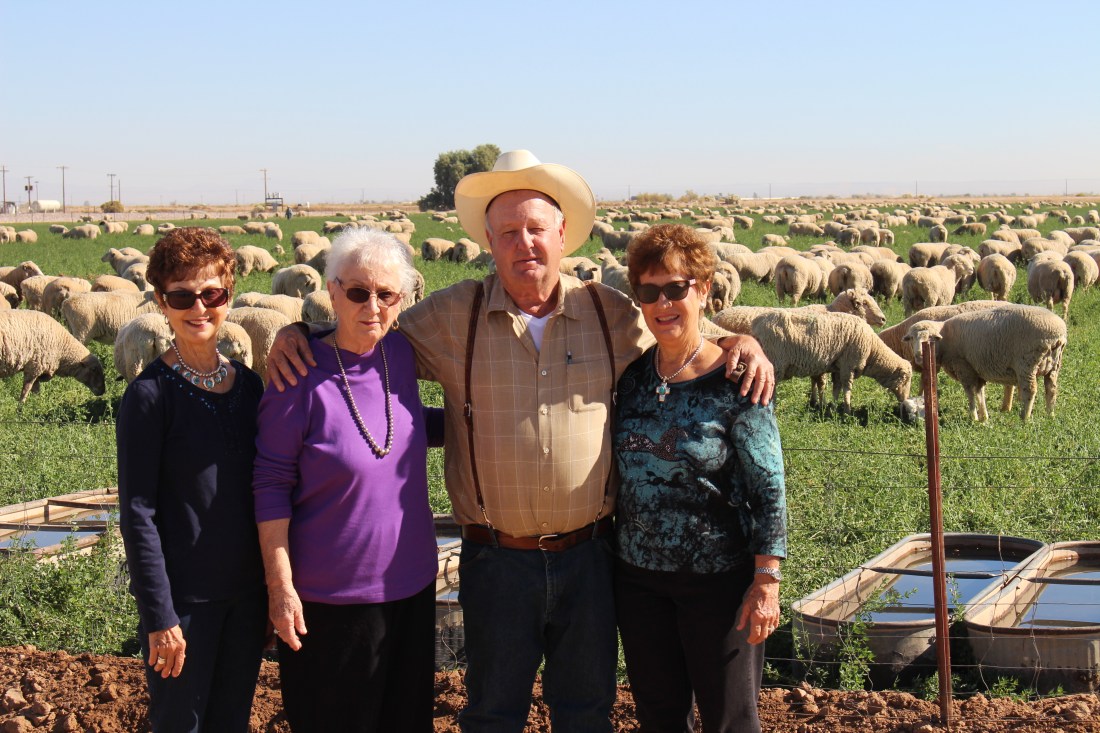
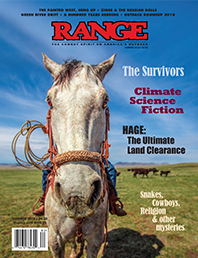
The Manterola family.  left to right – Marie Guappone, Sylvia Manterola, Joe Manterola, Carmen Auza.   Picture taken November 2017 during interview for their family induction into the Arizona Farmer and Rancher Hall of Fame 2018.  Joe Manterola, his parents and family are featured in the article “The Survivors” published in the summer issue of the Range Magazine.

IMG_6459