
The Arizona Wool Growers’ Association marked the 100th anniversary of Arizona sheep trails at their annual summer meeting in Flagstaff. The industry had its beginnings in the 1860s but trails were not established until the northern sheepmen recognized that by “moving of their sheep to warmer winter climates lambing and shearing could be advanced by about three months.” Migration of the sheep would begin mid-October when frost appeared on the mountains.
At one time, there were many trails in Arizona used by the sheepmen but by 1970 there were only four actively used trails: Beaverhead-Grief Hill; Mud Tanks-Government Gap; Heber-Reno and Black Canyon. Most sheepmen were not trailing their sheep by this time as truck or rail were more common methods used. But there was still the hardy sheepman who would walk their sheep on one of these trails.
The trails in Arizona range from 200 to 300 miles in length. The flock will have a change in altitude of about 6,000 feet. The sheep would travel from five to ten miles per day grazing on the available grasses. One herd of sheep would start on the trail and then another would follow at a distance of a few miles to keep the herds separated.
A herder and camp tender would accompany each herd. All their supplies that would be needed for this journey of four to six weeks were carried by burros. Everything was neatly packed in wooden pack boxes which were then secured by rope handles that were tied to the crosspiece of a pack saddle each burro wore. Their boxes would have food, drinking water, and camp equipment, i.e, Dutch oven, coffee pot, bedrolls for both herder and camp tender. The food would consist of food for the two men but also dog food for the ever-important dogs that would accompany each herd southward. These dogs kept the sheep moving, locate strays and stragglers and some of the dogs were to protect the sheep from predatory animals such as coyotes, wolves, or lions.
The procedure was the same no matter if the herd was heading to summer grazing or to the desert for lambing and shearing.
The last time the Heber-Reno trail was fully used was in 2011 when Mr. Dobson, owner of the Sheep Springs Sheep Co., retired from the sheep industry. The Auza Sheep Company is still using a trail when the weather conditions permit – not to dry or the rivers not running to high so men and sheep and burros can safely cross. It has been several years now since they trailed their sheep.


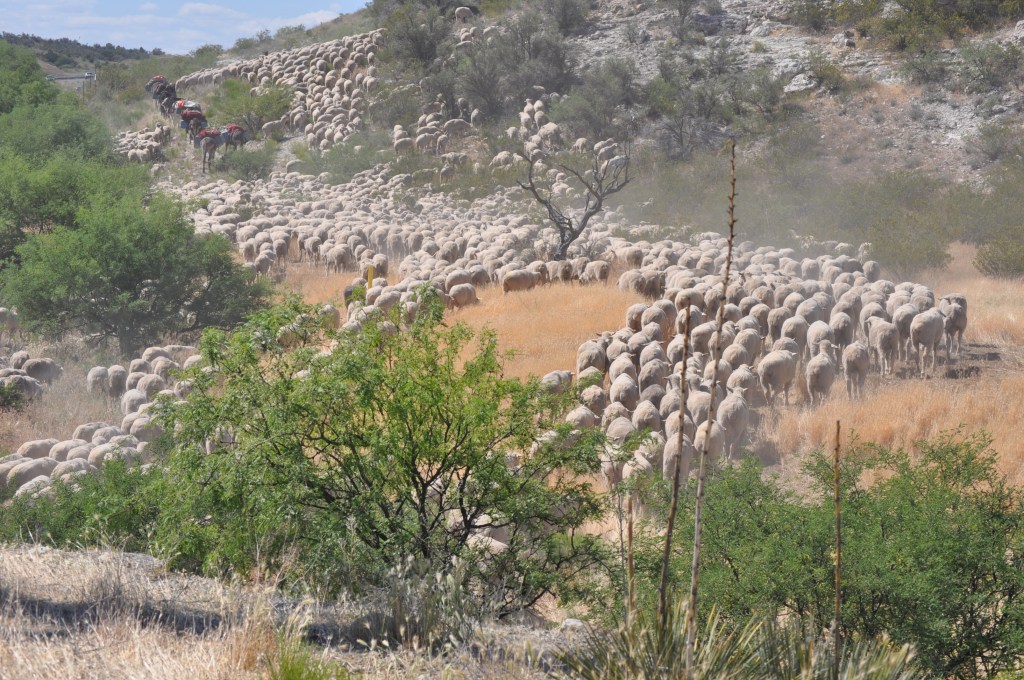
Top picture – Dobson’s Sheep Springs Sheep Co, Dobson’s sheep in Sycamore Canyon (courtesy of Cindy Shanks) and Auza Sheep Co. Sheep near Cottonwood.
At the 100th anniversary of the trails, the sheep men and their auxiliary each held meetings. The sheep men gathered at the Flagstaff Arizona Bank and the women met at the Monte Vista Hotel. The big social event of the meeting was the barbecue of lamb and beans which was held at Ft. Tuthill. The public was invited to the “lamb affair.” Adults paid $1.50 and $1 for children. Frank Auza was responsible for the barbecue of the lamb. Mrs. John Aleman, Jr. and Sylvia Manterola headed up the serving of food. Sheepmen who helped procure the lamb were John Aleman, Sr., John Aleman Jr., Albert Pouquette, Joe Auza, and Joe Manterola. The women’s auxiliary fund-raiser was the wool quilt (written about in previous blogs) with the brands of the sheepmen to be raffled. Mrs. Basilio Aja oversaw the raffle. Mr. and Mrs. Robert Aja of Williams were responsible for the dance held after the barbecue.
 ArizonaSheepHistory.wordpress.com
Interesting history.
LikeLike