Lifetime Achievement Award
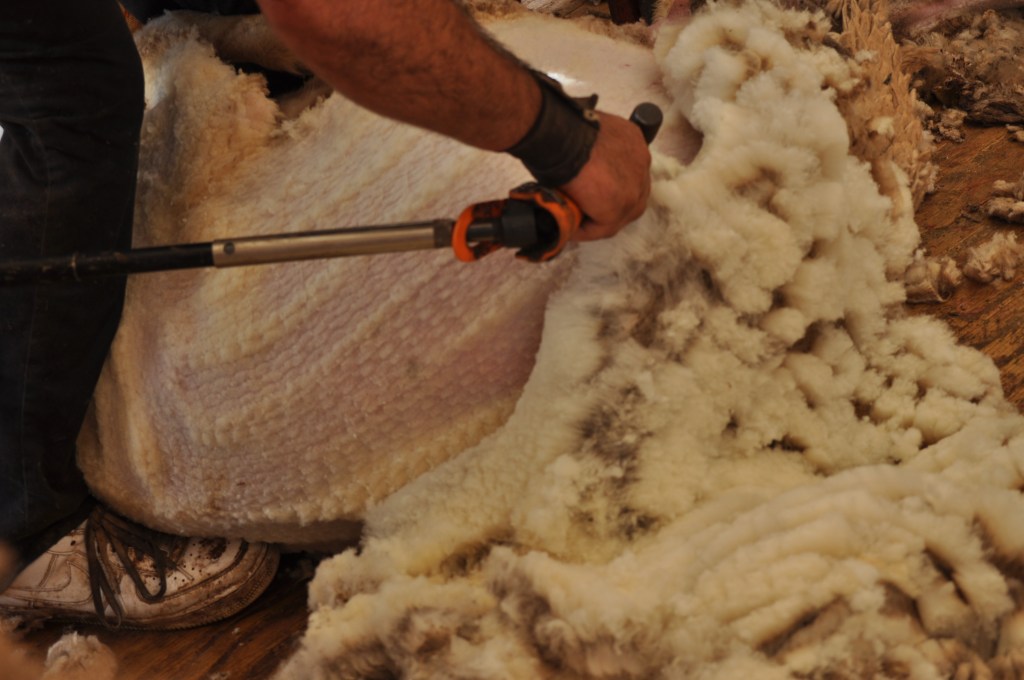
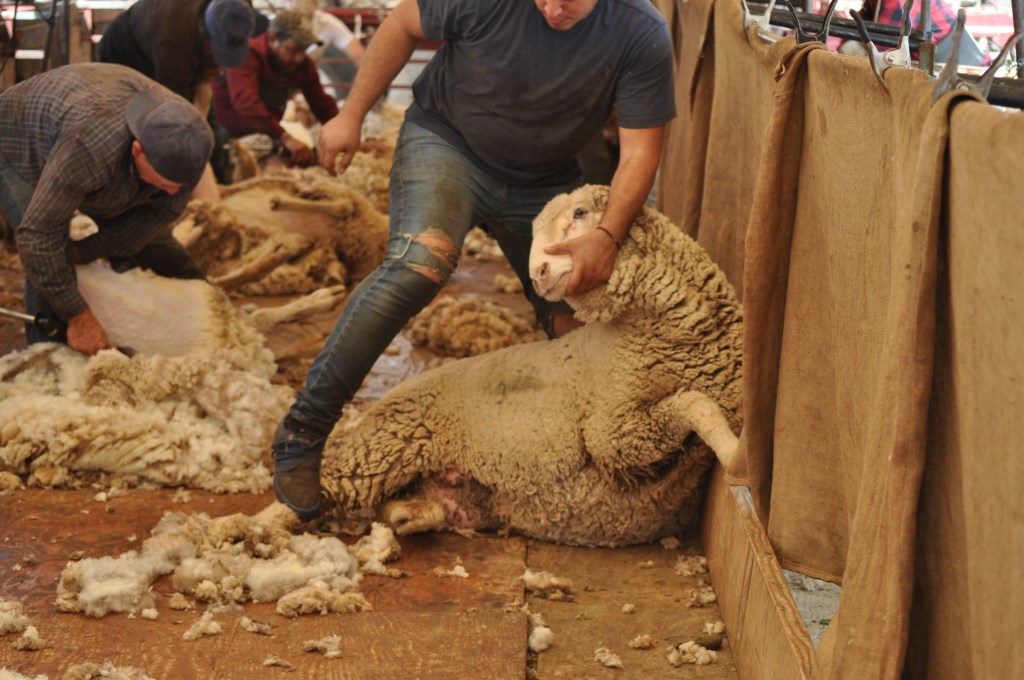
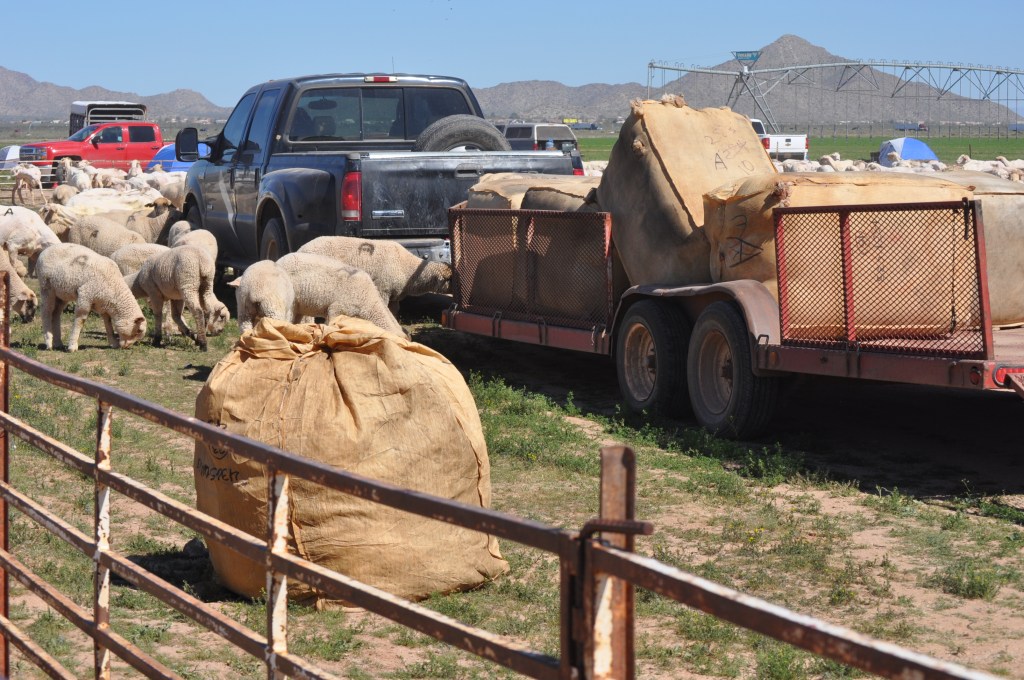
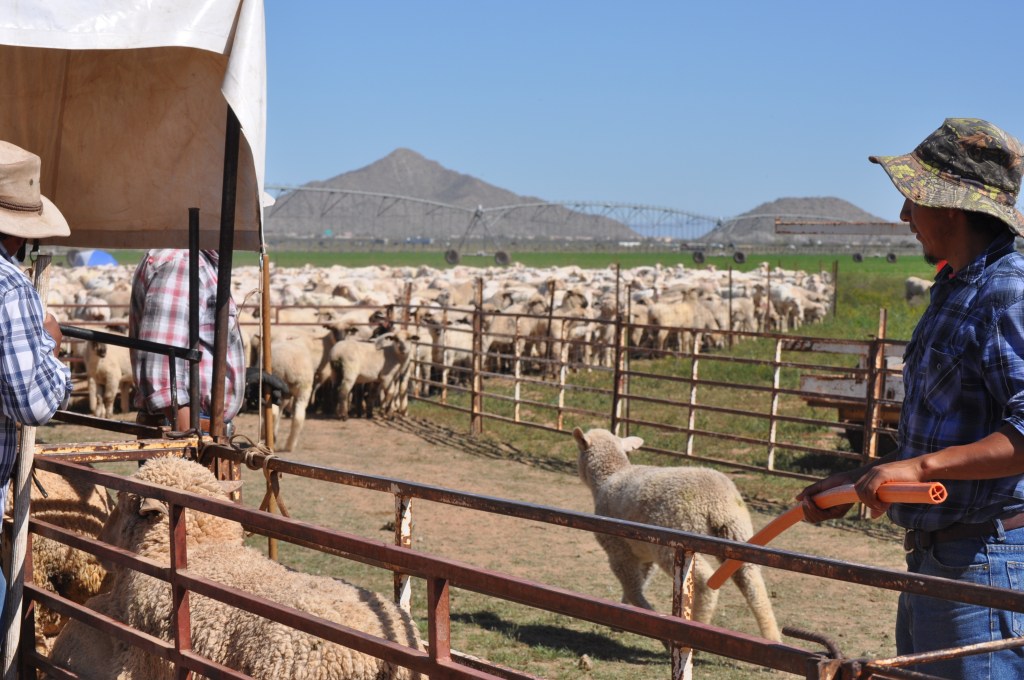
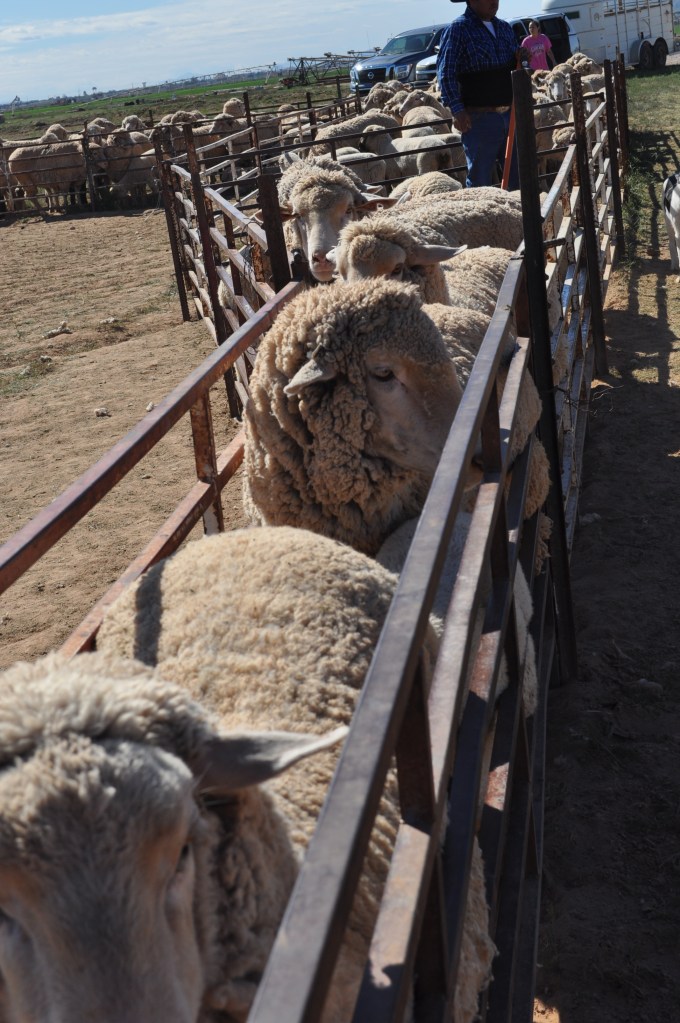
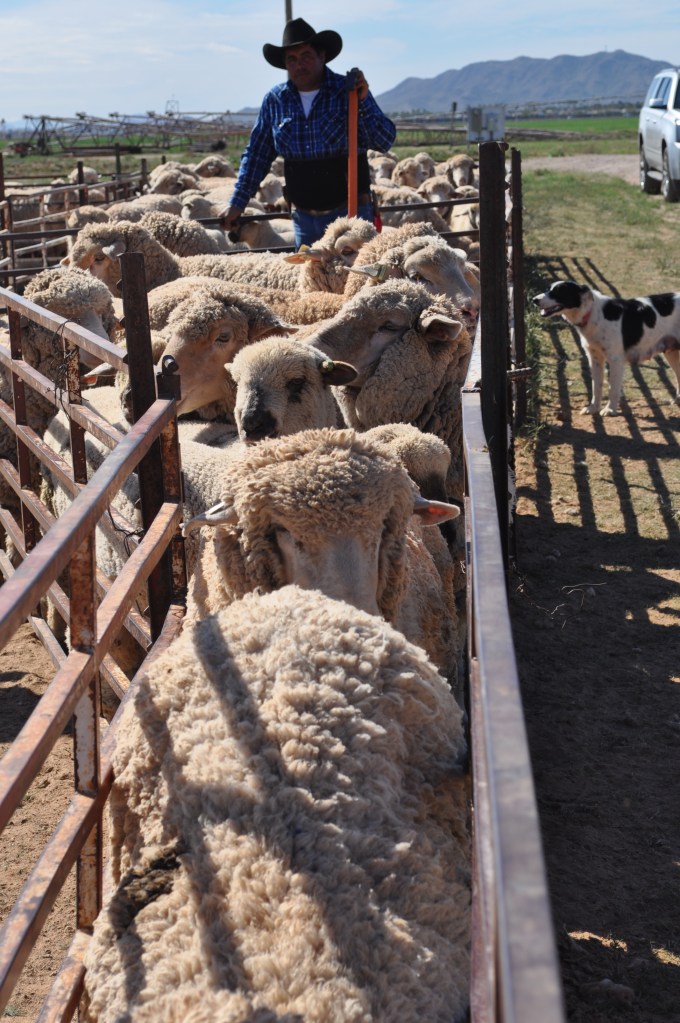
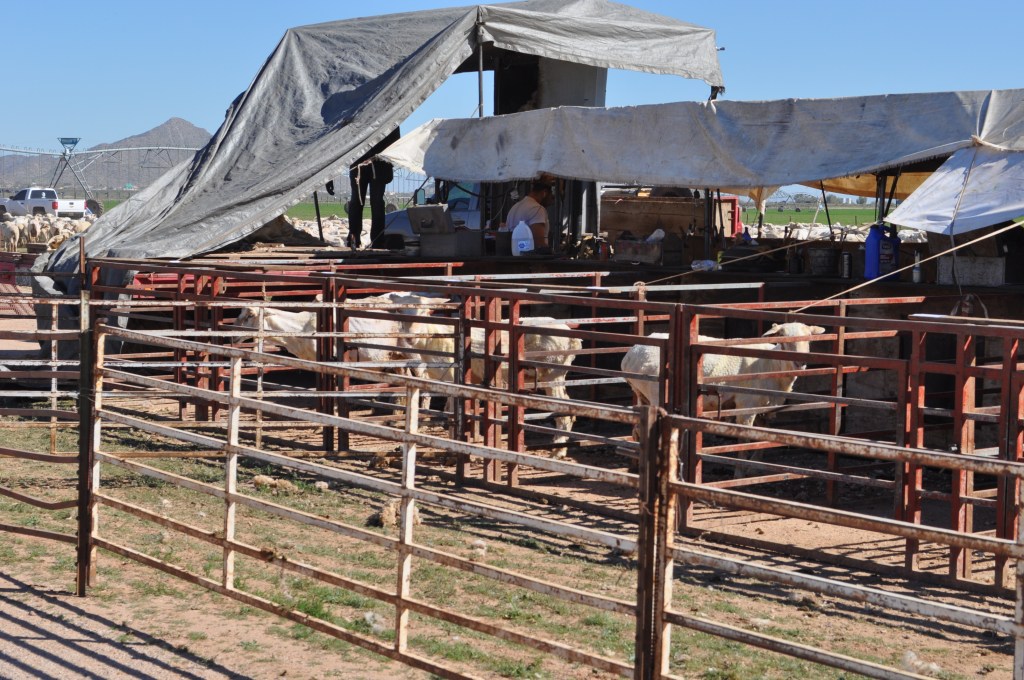
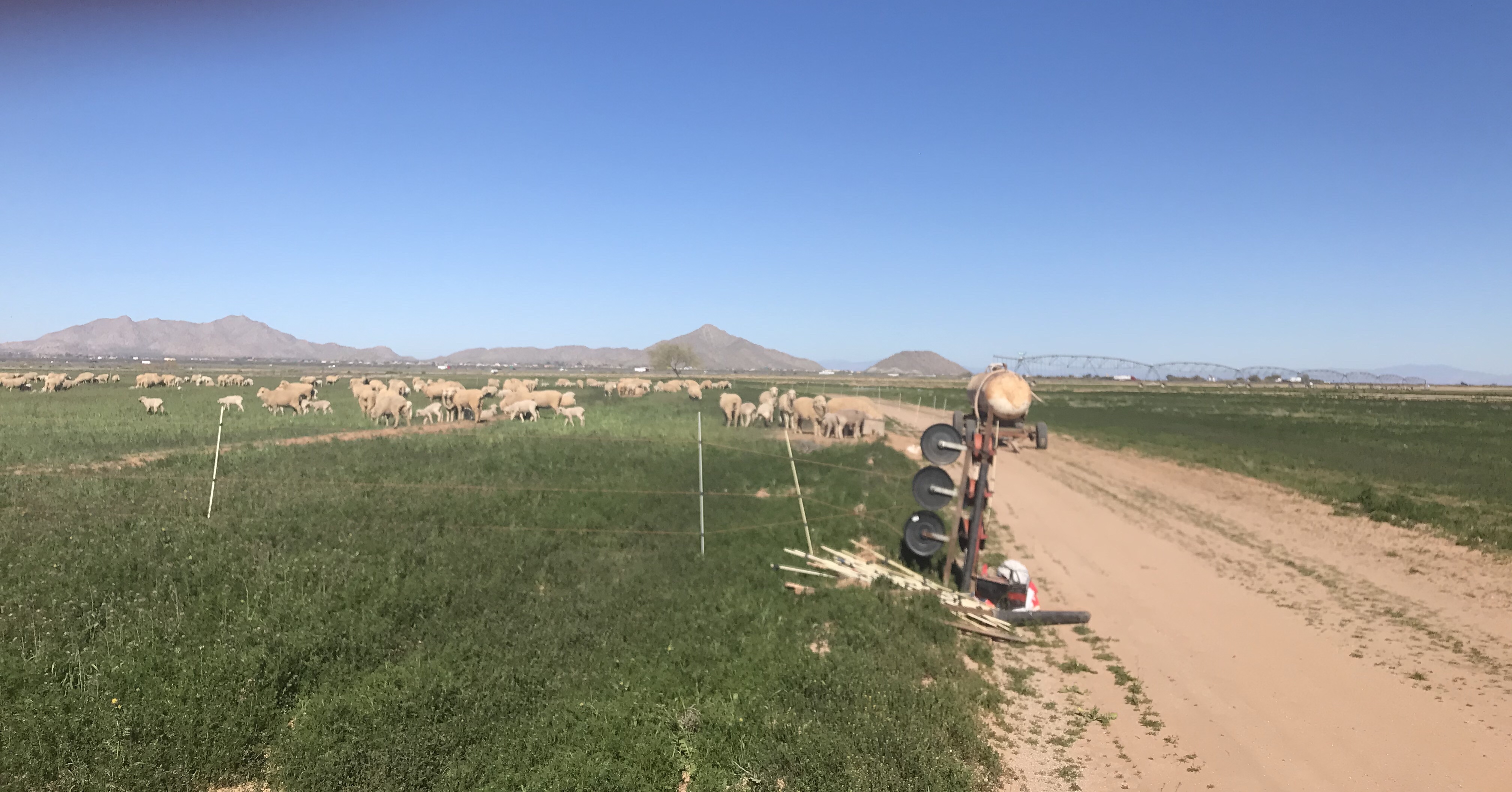
Just pictures from this year’s shearing in Casa Grande. It was another good time spent with the Auza’s and Manterola’s. Enjoy!




A look at the sheep industry at the close of 1924.
The newspaper reported, “Prices for both wool and lambs have been sufficiently large to net producers a fair margin of profit. In fact, a big majority of the sheep men of the state have entirely recovered from the lean years immediately following the war and except for a decrease in the size of flocks, are in better condition now than for a period of many years.
| County | Common Sheep | Bucks |
| Apache | 79,336 | 1,217 |
| Cochise | 11,310 | 220 |
| Coconino | 239,608 | 4,866 |
| Gila | 0 | 0 |
| Graham | 861 | 0 |
| Greenlee | 136 | 2 |
| Maricopa | 22,388 | 414 |
| Mohave | 47,755 | 505 |
| Navajo | 65,121 | 716 |
| Pima | 46 | 0 |
| Pinal | 5790 | 226 |
| Santa Cruz | 0 | 0 |
| Yavapai | 113,046 | 2,403 |
| Yuma | 3,036 | 25 |
| Total | 588,4331 | 10,5942 |
| Valuation | $3,239,267 | $162,755 |
*From the above numbers and verifying the newspaper’s comments, the total population of sheep would have been 599,027 (588,433+10,594).
2 My number was used as there is a discrepancy of 9 when adding the column of common sheep
3 While the article said there were 10,845 bucks the number does not agree when adding the column, a difference of 251.
In the November 17, 1916, Arizona Republic, an article appeared that stated that the sheep industry in the state at that time was a ten-million-dollar industry. It further stated that the industry was well represented at the fair that year. New sheep barns had been built the author of the article stated and at their entrance, a sign read “Arizona’s $10,000,000 industry”. Judging and prize money was complementing the value of the industry. A sheep specialist had been hired from out of state to judge the sheep for the first time. While not germane to the topic, Prof. J. M. Jones came from College Station, Texas, home to Texas A&M University, my alumna school.
Two sheep companies were big winners – Grand Canyon Sheep Company and Sanford Sheep Company.
Prizes included:
Men or sheep outfits who showed sheep included the Daggs (Flagstaff), Sanford Sheep Co. (Seligman), James Bemis showing Persians and Tunis crossbreeds. Sanford showed black faced sheep.
The article stated that the judge, Prof. Jones, was well acquainted with a range of sheep and gave valuable information to the sheep men.
An interesting fact stated at the beginning of the article, was that the sheep population in the state was increasing yearly and was nearly 2 million head. I would like to be able to verify the 2 million number as I don’t think we ever reached more than 1.5 million.
Oh, how I would love to find any of the silver cups won for the Rambouillet or Hampshires mentioned in this article. It would be interesting to know what years were they used as prizes, too Does anyone have one in their attic? Or is there one in a back room of a museum?
Just a few pictures to enjoy for now. I’m working on gathering more early newspaper articles. 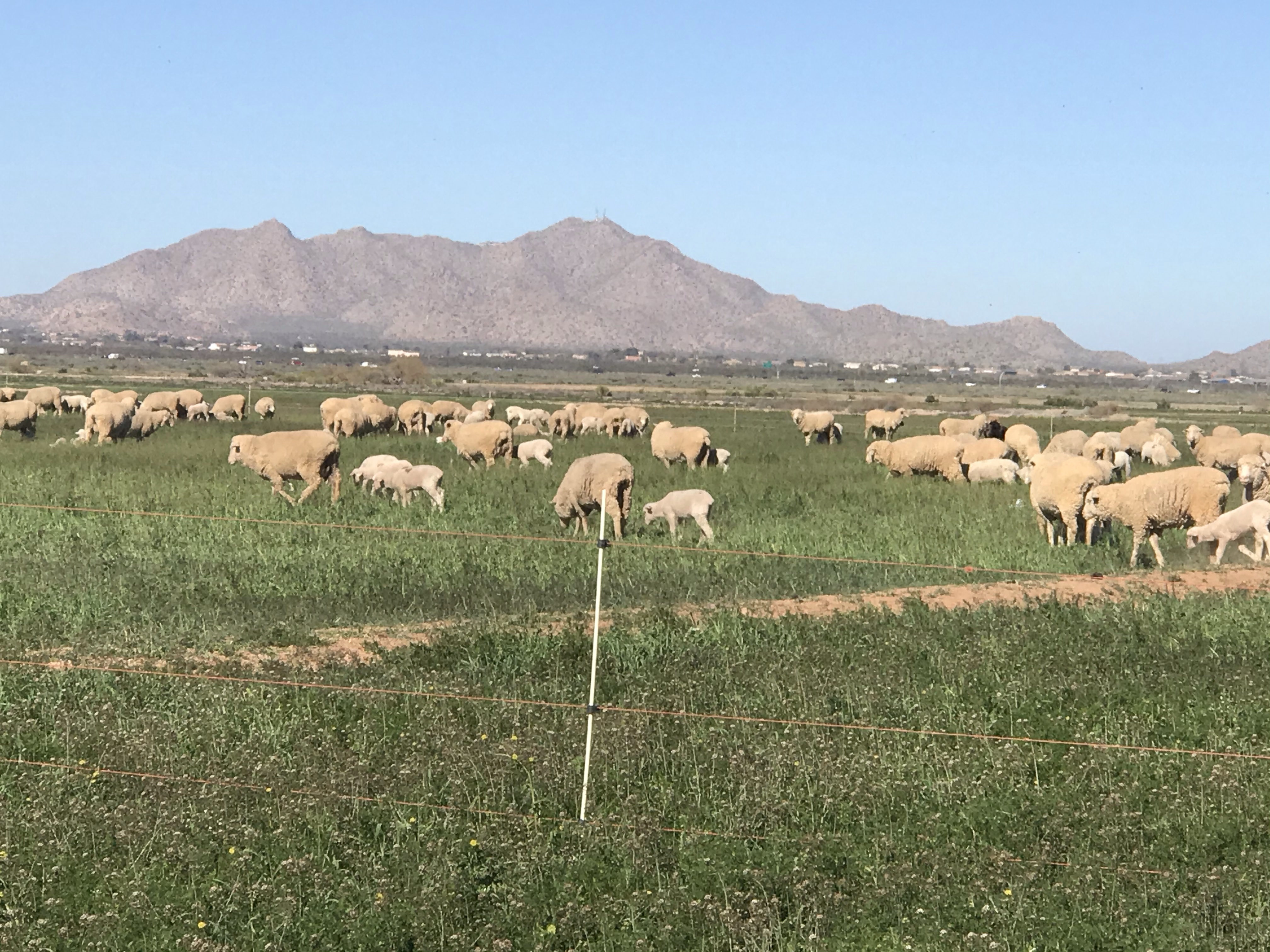
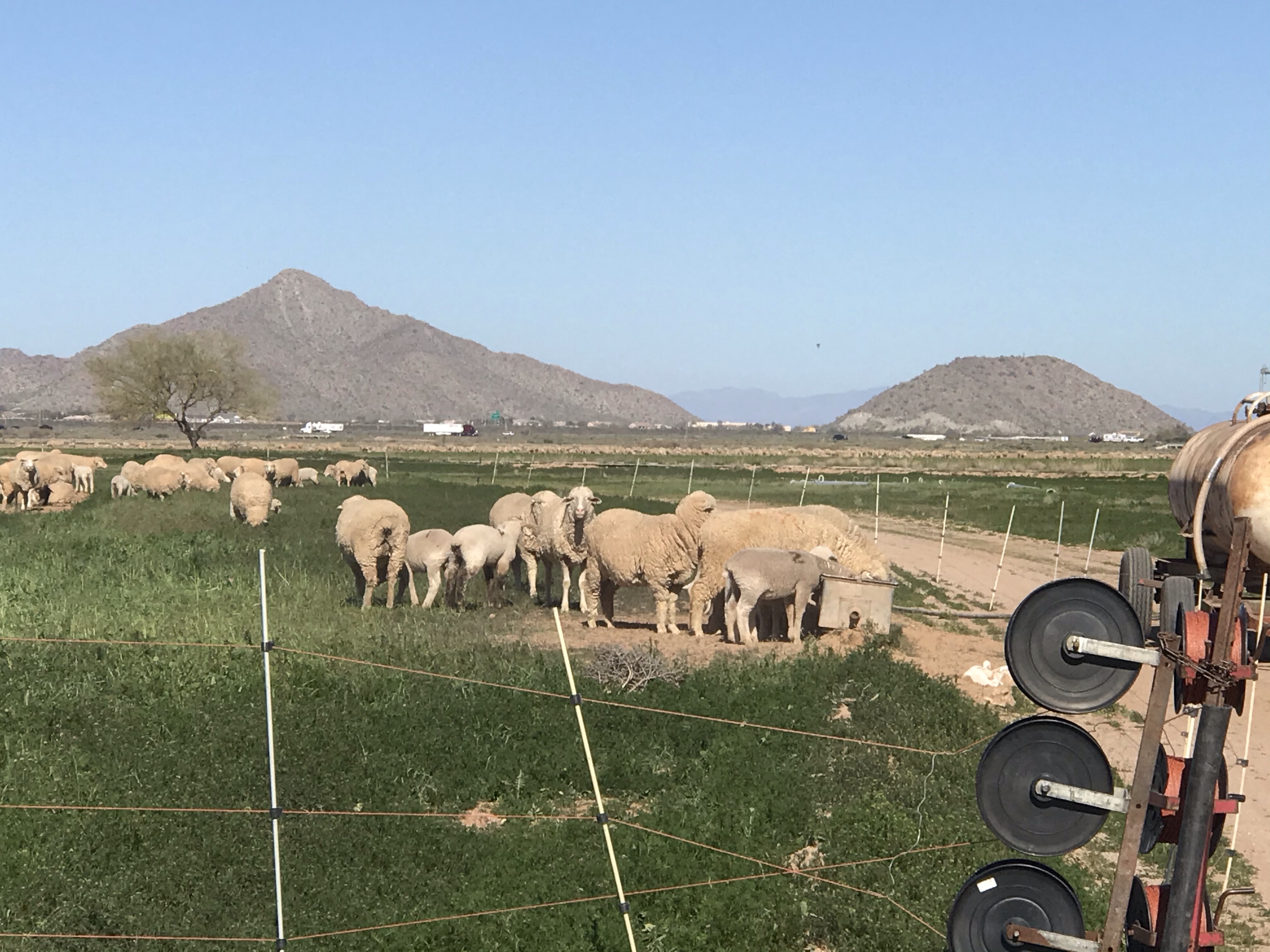
I get some crazy questions during my presentations, but this was really out there. It was a question with an explanation. Are there black sheep? The woman went on to say that a docent at the Heard Museum was describing a Navajo rug. On the rug was a black sheep which he promptly told those in attendance, that there were no such things as black sheep and the Navajo who had woven the rug dyed the wool black. Please note, Virginia, yes there are black sheep! Navajo-Churro sheep come in a variety of colors, including blue, black, brown, etc. And there are all black sheep here in Arizona. I added pictures to prove my point.


Here is what happens when you are asked to talk to a group of history buffs. I was asked to give a thirty to forty minute presentation on the sheep industry for The First Families of Arizona today in Phoenix. The room was pretty full with close to a hundred people attending. Well, I hardly got in the door before John was telling me about the Lockett family and their involvement in the sheep industry. He had copies of several old newspaper articles about the Lockett family and gave me the name and date of a newspaper with a story on the history of the sheep history up to 1929. In the article, he said there was a list of all sheep ranchers at the time. Oh, research here I come!
Then, after arriving home I get a call from a man about three hours after the presentation. His wife had attended the event and bought my book. He had read it from cover to cover; wow, a real history buff! He said he enjoyed the book and he also gave me more information! What a great day.
Can’t wait to get to research all that I learned and I thought I was going to educate them!

Today’s story comes from a relative of Captain George E. Johnson who contacted me a week ago. I will first just put out three family pictures that were sent to me and then work out the story in the next day or so. While it confirms a statement I made in my book, Where Have All the Sheep Gone? Sheep Herders and Ranchers in Arizona – A Disappearing Industry, about two people involved in the sheep industry in the late 1870s, it slightly changes a sentence in my book. I wrote “T. Fred Holden settled in Johnson’s Canyon, which already had sheep when Captain Johnson brought his sheep there in the late 1870s.” Captain Johnson brought his family, a wife and four children, and sheep in 1875 to the Arizona territory. T. Fred Holden married Johnson’s wife, Elizabeth, in 1884 three years after George died. It would be at this time that all the sheep would be sold. The couple would go on to raising cattle. There is more to the story which will be added as I want to confirm a few other facts before I write them. What is exciting is that it adds to the sheep history in the state.


Most of what is going to be posted here comes from a relative of Captain George E. Johnson and a sentence from Platt Cline’s They Came to the Mountain. A little background information – George, born in 1837 in the county of Lincolnshire, England, came to the United States in 1857 at the age of 20. That same year, he enlisted in the US Calvary and was discharged in 1862 as a sergeant. He reenlists a couple of times and finally in 1867 he enlists in Company C, 1st regiment of US Calvary that is assigned to Camp Lowell. Before he leaves for Arizona, he meets and marries Elizabeth Hogg who had arrived in 1867 as a sixteen year old born in Ulceby, England. Elizabeth and George travel to Arizona. Several children are born to the couple while George is in the calvary: Maude (1869, Camp Lowell) and twins, Albert Sidney and a brother who did not survive (1872, Camp McDermitt, NV). He asks and is granted a discharge after 15 years in the military. He contracts with the camp to haul hay and straw from 1872 to 1875. Two more children are born to the couple, Arthur W. (1874) and Gertrude (1875).
In 1875, for reasons that have not been related, George, Elizabeth, Maude, Albert Sidney, Arthur W. and Gertrude with 2,000 sheep head to Arizona. The family compiling the history said, “the trip from Nevada to Arizona covered all kinds of climatic conditions, from deserts to high mountains.” An obstacle was getting 2,000 sheep across the “mad rushing torrent of muddy water” wrote the family. “The man in charge of Scanlon’s Ferry located some small boats and loaded the sheep in them. Tying the boats together, they came across in fairly good condition, a little wet but otherwise unharmed.” Driving the sheep hard day and night, they finally reached Little Tully Basin just as the sun was setting. They believed that this was just the perfect basin for the sheep and raising their family. But, the next year proved otherwise.
On Christmas Eve, 1876, t it began to snow and by morning there were four feet of snow in the basin! Continuing in the words of the family, “Right then and there they decided to leave the basin. It was going to be a hard job to move all the sheep and their personal belongings out. George had to cut trees and pull them over the ground to make a path to be followed.” When they finally reached the rim of the basin near Asher Flat (may be Ashier Flat as both spellings are used in the material given to me by the family) the ground only had a few inches of snow on it. “They stayed in Ashier Flat the rest of the winter, moving to the canyon that bears their name, Johnson Canyon, located 10 miles west of present day Williams, AZ.” A permanent move to Johnson Canyon took place in 1879. The sheep were grazed on grasses in the winter time in Ashier Flat and the summer, they were moved to the Little Tully Basin.
The closest town to purchase supplies and seek medical help was Prescott, as Williams did not exist yet. Twice a year, George would hitch up his wagon and head to Prescott for supplies. This left Elizabeth and the children to care for the ranch with the sheep while George would be gone. It is not mentioned in the family notes how long of a trip it was to Prescott so we can only imagine that Elizabeth had several weeks to take care of all the sheep, her family and worry about any threat from Indians.
While this is not a story of the railroad, it is an interesting sideline to the story of the Johnson’s and how the canyon became known as Johnson Canyon. In the words of the family, “In 1880, the three Johnson children, Maude, Albert and Arthur, were out playing. They looked up and saw four strange men coming down the canyon. The children ran home calling, ‘Father, Father, some men dropped out of the shy,’ they cried in chorus. George came running out of the corral and came to a sudden, sliding halt. With a stunned look on his face, when he saw the men and all the equipment they were carrying. ‘Well sirs, my children said you had dropped out of the sky, and darned if I don’t agree with them. Just where did you come from?’
The men gave a hearty laugh and one said, ‘we’re railroad surveyors for the Atlantic and Pacific railroad. They want to put the railroad through here.’ George shook hands with the men and said to them, ‘Come in to the house and have dinner with us.’ After eating a hearty meal and enjoying the Johnson’s hospitality, the surveyors said, ‘they had to get back to their job.’ Upon leaving they promised to name the canyon “Johnson Canyon” after them in appreciation of the hospitality shown to them by the Johnson family. True to their work, you can find Johnson Canyon on Arizona maps to this day.”
In the 1880 census, the Johnson’s are listed: George E. Johnson, 43, sheep raiser, wife, Elizabeth, 33, two sons, Albert and Arthur, and three daughters, Maude, Gertrude and Helena, who was born in 1879. This information is in both the family recorders and Platt Cline’s book, They Came to the Mountain.
In 1881 tragedy strikes the family as George becomes ill and is even too sick to make the trip alone to Prescott. Leaving the children, Elizabeth hitches the four horse team herself and takes her husband to Prescott for medical attention. George passes away in Prescott in November, leaving Elizabeth six months pregnant and five other children to care for. The family records say, “Elizabeth was left a widow by the death of her husband. Those were days when ranching was dangerous enough for a man, what must it have been for Elizabeth. She faced the future alone with her children and a sheep ranch to care for. Girthing on her husband’s holster, she faced the future bravely. There were times when she had to use the gun in self defense, but she knew how to use it. Albert, his brother, and sisters were educated early in North Arizona ranching. George’s last son was born in March 1882, four months after the passing of his father. Elizabeth named him George W. Johnson!
Elizabeth, with her children, continued to run the sheep for a couple more years. In 1884, Elizabeth meets Thomas Fred Holden, a stage driver. Sometime during the year they married. They sold the sheep sometime during the year and went into the cattle business.
The Johnson’s may not have been in the sheep business long in Arizona, 1875 to 1884, and George may have continued to raise sheep for many more years if he had not died in 1881. Why Elizabeth and T. Fred Holden converted the ranch to cattle was not explained in the family records. It would be interesting to know the answer to that question.
This concludes the story of the Johnson and their part in the sheep business in Arizona. It helps to clarify my statement that I started with at the beginning of this story. I thank the Johnson family for passing this information on to me.
Four sheep families were inducted into the Arizona Pioneer Stockmen Families December 28, 2019. The families – The Aleman’s, Dobson, Espils, and Pouquettes are all families that came in the late 1890s or early 1900s. While Dwayne Dobson was the last of these four families to run sheep in Arizona, selling his outfit in 2011, all the families should be proud of their contribution to the sheep industry in Arizona. Three of the four families I wrote their histories for the 29th Volume: Aleman, Espil and Pouquette. I am working on more stories of the families in sheep industry that will appear in future volumes and I will post that information when the volumes are published. If you ran sheep in Arizona and have not been included in either my book Where Have All the Sheep Gone? Sheepherders and Ranchers in Arizona – A Disappearing Industry or in one of the volumes of the Arizona Pioneer Stockmen Families, please contact me. I am also working on a second volume of the sheep industry history. This will have more information on the families so I would love to tell your story!
The top picture on the right – Carol and Dwayne Dobson (standing), then sitting from left to right Annette, Melanie, a friend of Chedelle, and Chedelle Pouquette.


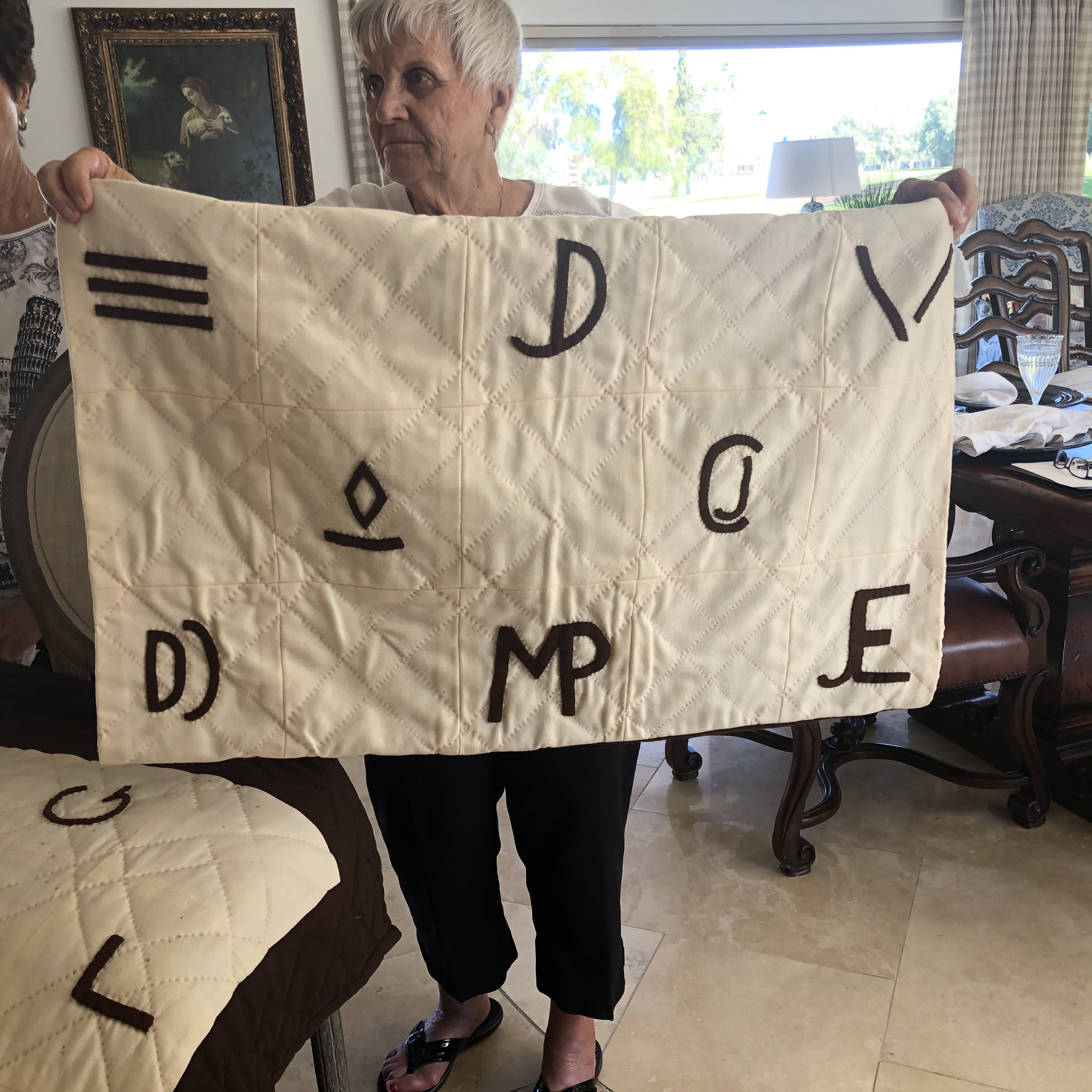
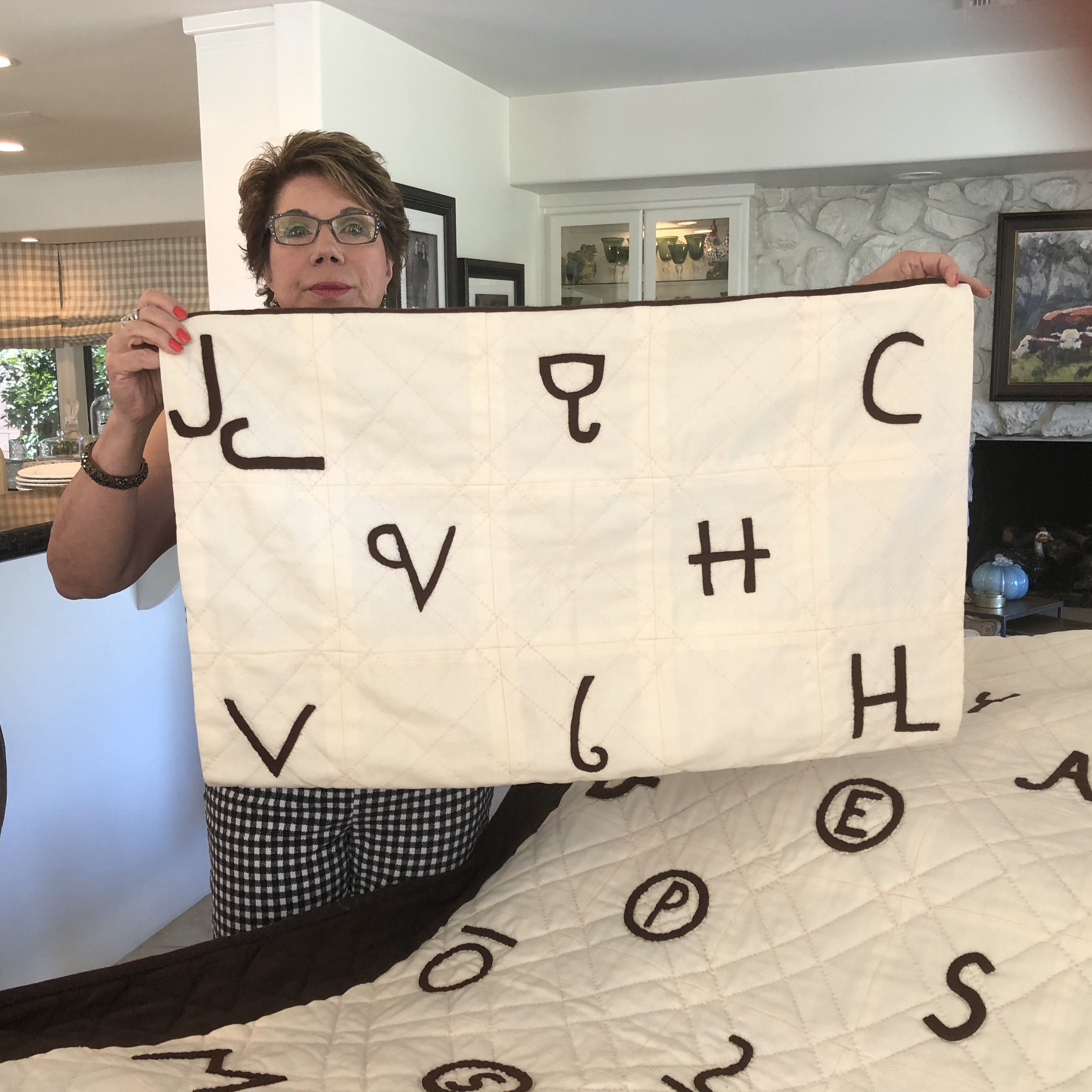
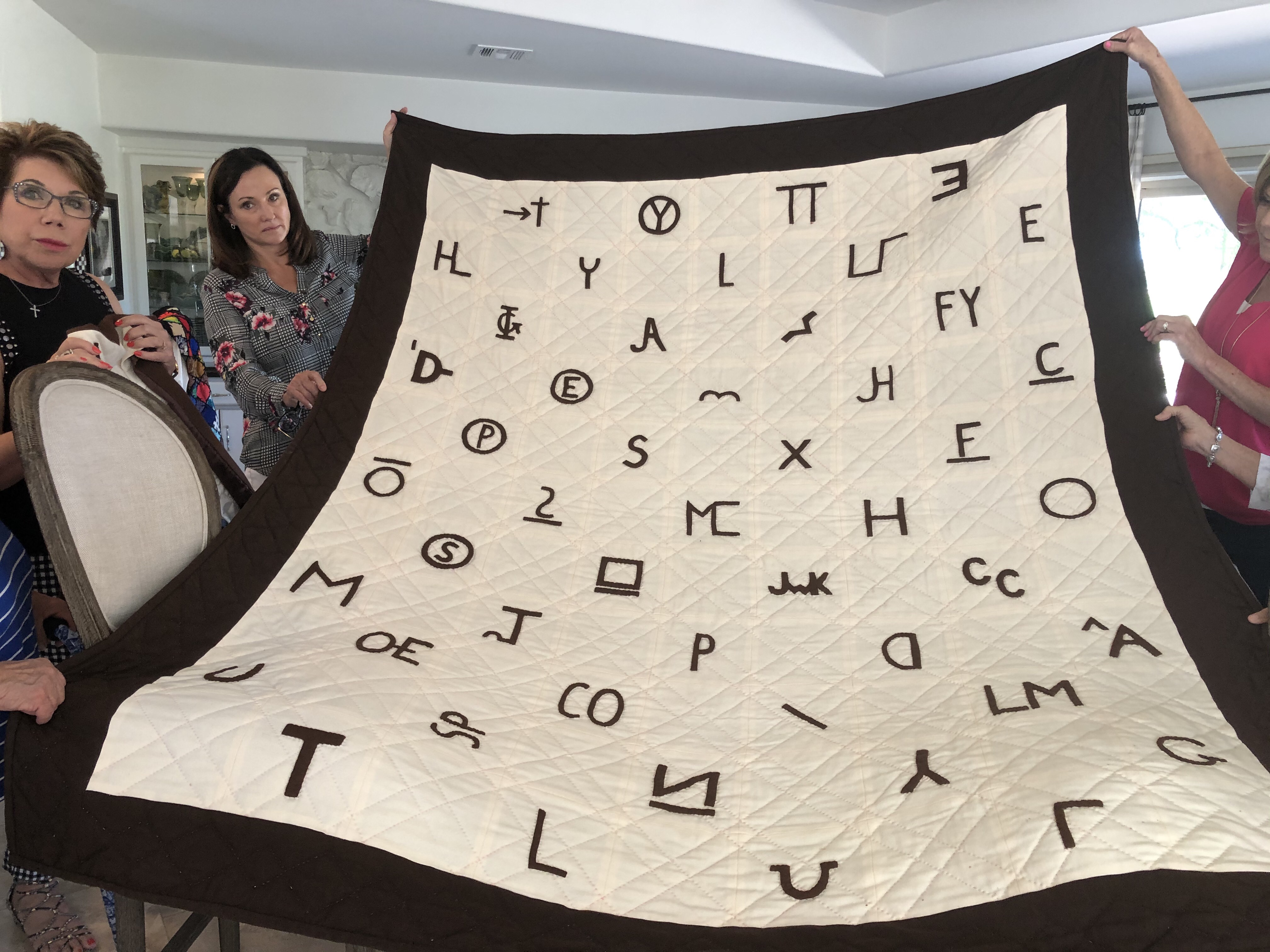
Sometime in the 1960s Frances Aleman made the quilt below. It has many brands of the sheep ranchers at the time in the state of Arizona. Several have been identified, but help is needed on the rest. If you recognize one of the brands, please comment on this blog so we can identify all the brands.
Second row, second from left, the Y belonged to the Thudes.
Third row, second from left, the backwards J with A belonged to John Aleman
Fifth row, first from left, the P in a circle, was Pouquettes.
Last row, third from left, the “U” , belonged to the Thudes.